Summer Squash & Kale Bruschetta

I arrived home in the wee hours of Tuesday morning after a truly amazing study trip to Paris. Eighteen of us spent two weeks examining the performance of Frenchness through food. As you might imagine, we ate quite a bit in the process. We did not, however, encounter fresh vegetables in the quantity that Food Studies scholars are accustomed to eating. By day four, we were all obsessing about dark leafy greens, which were nowhere to be found.

What we did encounter was bread. There were crusty baguettes from the anarchist collective, rustic country loaves steeped in a studied old world charm, slender and elegant ficelles, impossibly buttery croissants a mere three blocks from our uninspired hotel, luscious eggy brioches encased in glass bells, and a particularly memorable seed-encrusted whole wheat loaf that we consumed in an impromptu picnic on the steps of the Musee d’Orsay.

But one bread emerged as the clear winner. My final day in Paris found me stashing my suitcase in a locker and (finally) mastering the bike share system with a single goal. I traveled from the 15th to the 10th arrondissement to purchase a hunk of Du Pain et Des Idees‘ sublime pain des amis.
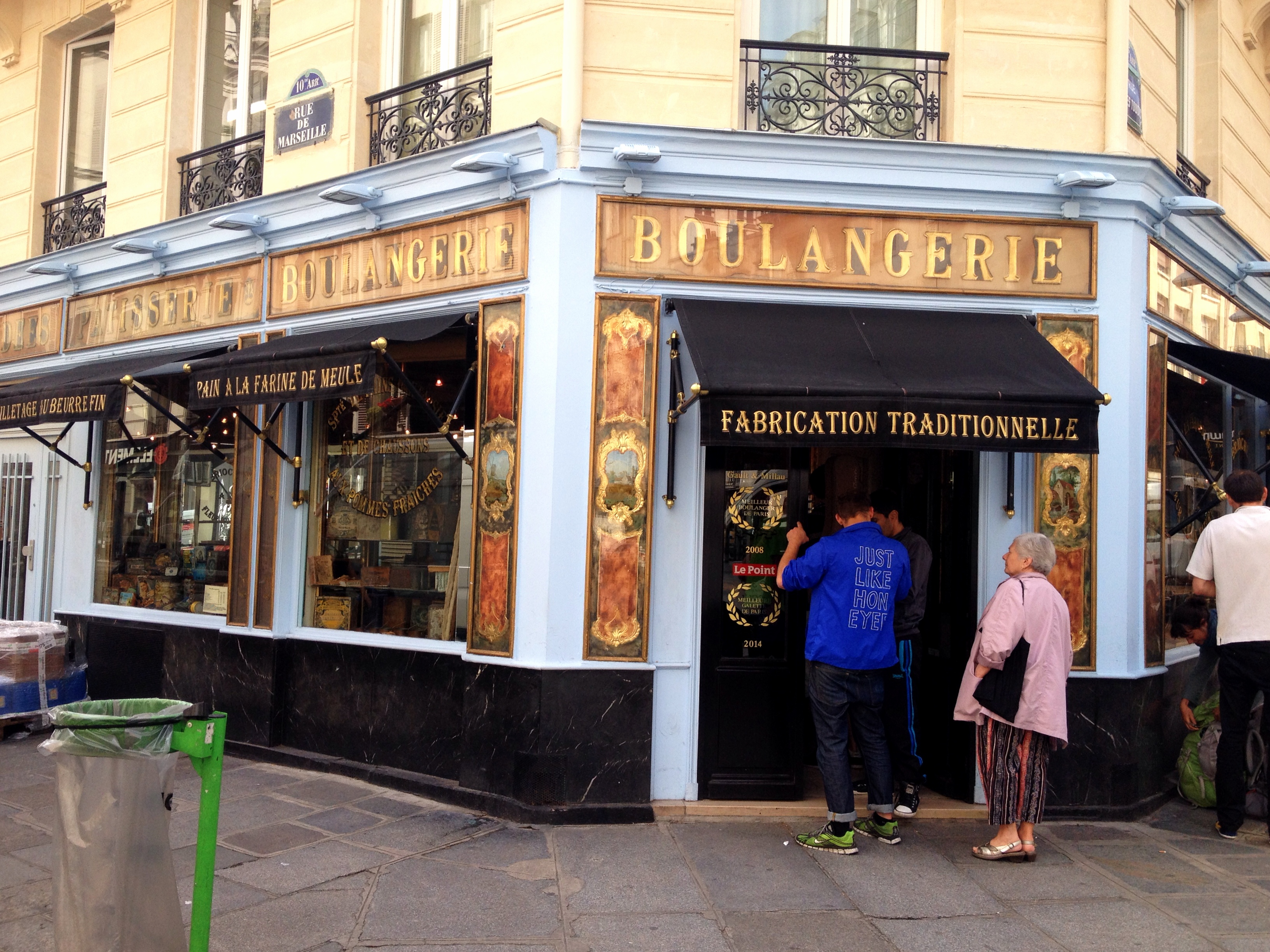
Du Pain et Des Idees

As those who have had occasion to dine with me know, I’m not much of a bread eater. It can be helpful for transporting sandwich fillings into your mouth or sopping up egg yolk, but I prefer to take my cheese straight, or perhaps with a crisp apple slice. Bread fills space in one’s stomach that could be devoted to more tantalizing fare. Or so I thought before I encountered pain des amis. This nutty, toothsome loaf with its confounding bacon aroma is good all by itself. It is even better, I have learned, toasted in a dry cast iron skillet.
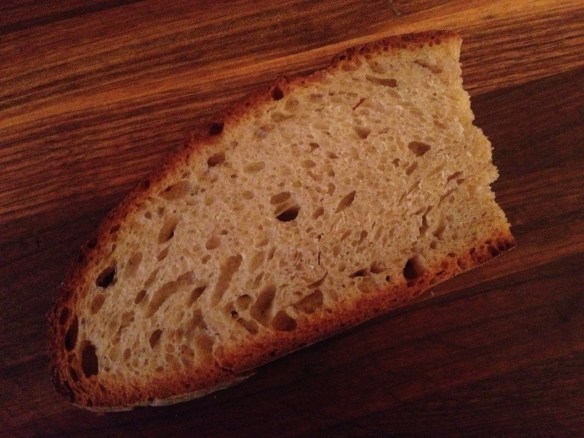
Pain des Amis

The pain des amis and I survived a rather harrowing bike ride on some of Paris’ main thoroughfares, a painfully expensive taxi to Charles de Gaulle airport, a troubling but comical security encounter involving two kilos of artisanal flour, a missed connection in London, a delayed flight, and an even pricier cab ride home from Newark (which was not our intended destination).

Staying awake until a suitable bedtime was about all I was good for on Tuesday. (Well, that and some cat cuddling.) I headed out around 5:30 to pick up my weekly CSA share and nearly wept at the site of all those vegetables. I had some truly spectacular food in Paris. I did not, however, encounter any kale. I returned home eager to introduce my pain des amis to all of this fresh produce.

CSA Vegetables

Summer Squash & Kale Bruschetta

  • 2 scallions
  • 3 thin slices good bread
  • 1 medium summer squash
  • 5 stalks purple kale
  • 1 ounce feta cheese
  • 6 basil leaves (mint or parsley would also be great)
  • 1 1/2 tablespoons good quality olive oil
  • 1/2 lemon (zest and juice)
  • pinch Aleppo pepper (or a little less red pepper)
  • salt and pepper
  1. Bring a cast iron skillet up to medium low heat with half a tablespoon of olive oil. Trim and reserve the dark green portion of the scallions. Slice the white and light green portions lengthwise into strips. Cook, flipping occasionally, until limp and starting to brown. Sprinkle with salt and remove from pan.
  2. Place bread slices into pan and allow to toast, flipping as needed, while you go about the next steps.
  3. Using a vegetable peeler, shave long ribbons of summer squash into a small bowl. Slice the kale as you would for a slaw and add this to the bowl along with the feta, remaining olive oil, lemon juice and lemon zest, Aleppo pepper, and salt and pepper. Mince the scallion greens and fresh herbs. Add these plus the cooked scallions. Stir to combine and let sit for at least five minutes to allow the flavors to meld.

If you were serving this as an hors d’oeuvre, I would recommend piling the kale and squash salad onto small pieces of toast and serving immediately. I went for a deconstructed bruschetta, which ensured that the bread didn’t get soggy before I ate it.
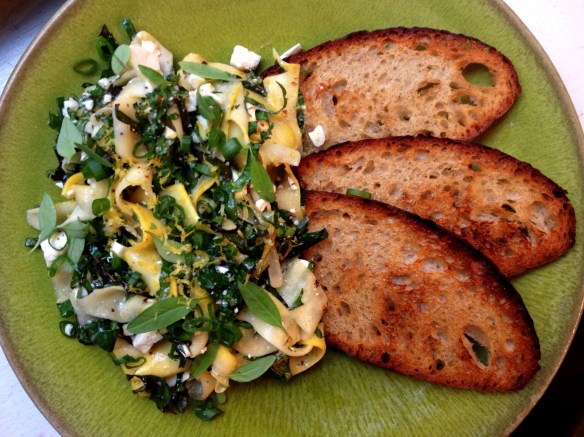
Summer Squash and Kale Bruschetta


Greek-Style Kale Salad

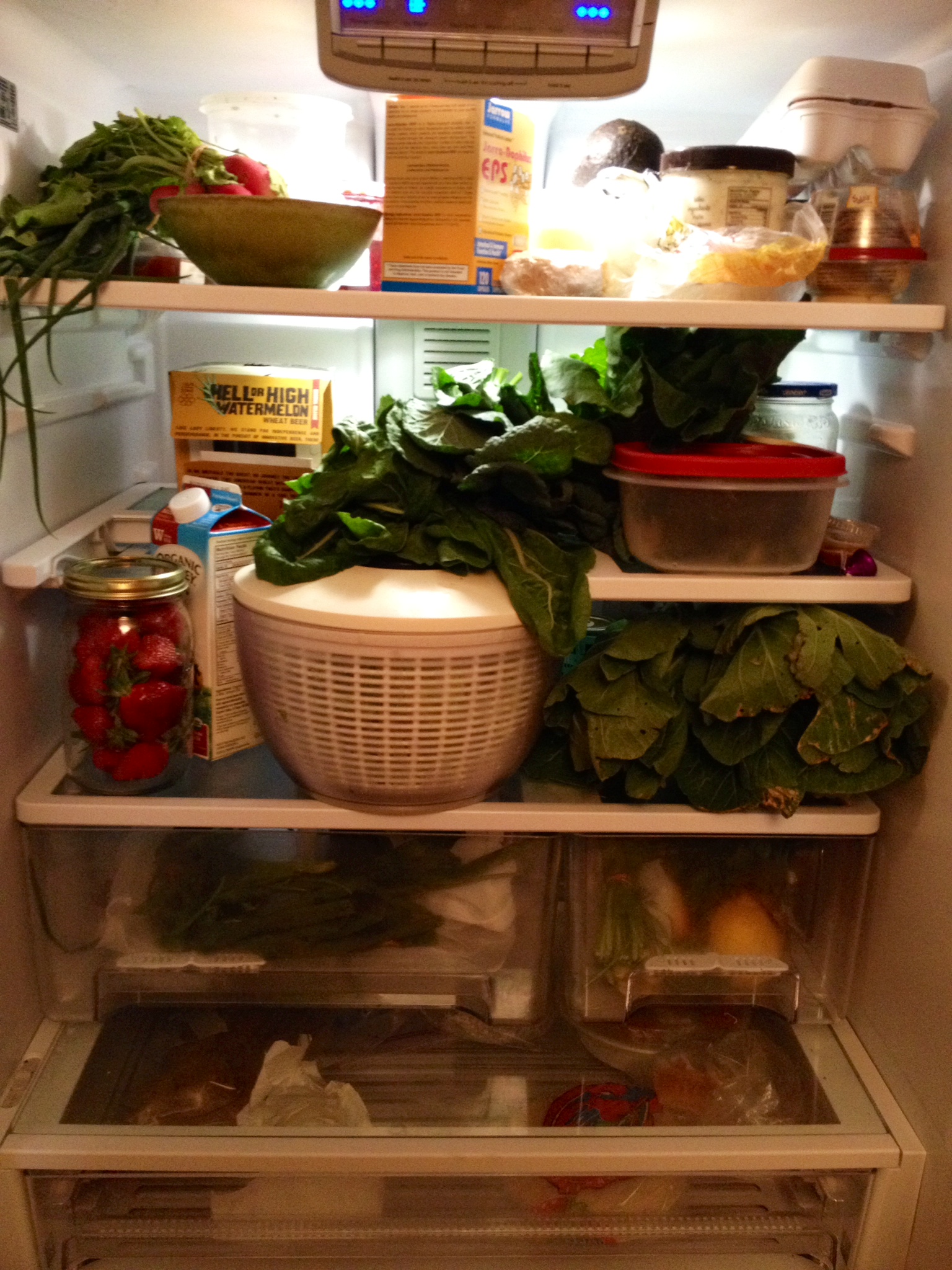
This not the refrigerator of someone about to leave the country for two weeks.

Packed Fridge

I am weak in the face of the season’s bounty. Having already overbought at last Saturday’s greenmarket, Tuesday found me dashing home to Brooklyn after work to collect my first CSA share of the season before hopping a train back into the city for four hours (seriously) of Alison Krauss and Willie Nelson at Radio City Music Hall. I’ve done my best to eat my way through all of these vegetables, but that’s a tall order when you’re pulling a 60-hour week.

Late Wednesday I made myself a salad of red leaf lettuce, radishes, strawberries, scallions and fresh herbs. This was damn pretty, but didn’t quite come together flavor-wise. Had I to do it over again, I’d eliminate the radishes and let some of the strawberries macerate in the dressing for a bit before assembling the salad.

Radish and Strawberry Salad

Thursday night found me at yet another work event. I wrapped my week and celebrated the beginning of a much-needed two-week vacation with swanky hotel bar cocktails and some down and dirty Indian food.

I awoke this morning determined to get through my stockpile of vegetables in the 32 hours before my departure for the airport. Noting that I still had almost a full pint of luscious (and decidedly not cheap) goat milk yogurt, I started the day with this Greek-inspired kale salad. A latte and a hard-boiled egg left over from last weekend’s potato salad extravaganza made it breakfast.

Greek-Style Kale Salad

  • 1/4 cup good quality plain yogurt
  • pinch salt
  • 1 teaspoon honey
  • 2 tablespoons red wine vinegar
  • 1 garlic scape, sliced into thin disks (or a little minced garlic)
  • 1/2 teaspoon Aleppo pepper (or a pinch of red pepper flakes)
  • 1 teaspoon dried oregano (half as much fresh would be great if you have it)
  • 1 bunch lacinato kale, cut into 1/2″ shreds
  • 1/2 cup cherry or grape seed tomatoes, halved
  • 4 scallions, white and light green portions thinly sliced
  • 10-15 kalamata olives, roughly chopped
  • 1 tablespoon of the good olive oil

Combine the first seven ingredient in a small jar, shake vigorously and let sit while you prep the rest of the ingredients. Add the olive oil and give it another good shake. Add everything to a bowl, toss to combine and let sit for 15 minutes or so until kale begins to wilt and take on a glossy color.

Greek-Style Kale Salad

Those ill-fated radishes would have been great here, as would a little sliced cucumber. But it was still a damn tasty breakfast.

EAT THIS: Fig, Avocado & Spinach Salad

Fig Avocado Spinach Salad

Figs, avocado, scallions and baby spinach in a mustard, honey, safflower oil and apple cider vinaigrette can be prepared and consumed in the 20 minutes between your arrival home from a board meeting and your 9:00pm conference call–though you may find yourself in need of a square of Jacques Torres’ Gingerette Bar to help everything settle.

Field Peas & Broccoli Rabe

I spent the latter half of the week upstate on a staff retreat. I knew the food at Omega Institute would be healthy and restorative after the previous weekend’s barbecue and boozefest. But I had no clue how delicious it would be. Each meal featured a bounty of cooked and raw vegetables, whole grains, legumes and some of the best tofu and seitan dishes I’d had since my hippie childhood amidst the Illinois cornfields. Ordinarily, despite my best intentions, I max out at a single plate of food. At Omega, I found myself going back for a second round of fresh, locally grown pea shoots with an addictive mustard miso dressing. Aside from the fifth of Bulleit Bourbon that I smuggled in for a little late night unwinding back in my cabin, it was three days of clean living.

The trip back to the city was gruesome. It took us about three hours to travel the 20 miles from the Northern Bronx to Downtown Brooklyn. You can spend three days on a staff retreat in the woods, but the true team building comes when you’re stuck in a minivan during summer Friday traffic. The rental wasn’t due back until the next day and I had high hopes of using it for a little adventure dining and perhaps an errand or two. But by the time I dropped everyone at their various subways stops and made it back to my neighborhood, I had resolved to ditch the van back at its garage. My friend Molly, who had flown in from San Francisco for a work conference earlier in the week, was waiting at the bar around the corner from my house. I texted her that I’d be there in five minutes. Being a true friend, her reply was simple: “red or white?” Three glasses of a lovely Sauvignon Blanc and a terrine of chicken liver mousse were a fine reintroduction to urban living.

Yesterday we bummed around Brooklyn, as I showed Molly the radical changes that have transpired since we first met here 17 years ago. We grabbed coffee at one of the ten or so coffee shops that now dot the neighborhood. We hit up the Grand Army Plaza Greenmarket, where I picked up asparagus, scallions, shiitake mushrooms, eggs, spinach, fresh thyme, bacon ends and some whole wheat sourdough. We walked over to Clinton Hill for a little flea market browsing followed by white sangria and a snack of lamb meatballs and spicy goat cheese croquettes. Later that night we dined on fiddlehead ferns, orecchiette with flowering mustard greens, and pork shoulder infused with rosemary at a place I’m pretty sure used to serve chicken wings and General Tso’s chicken from behind bulletproof glass. Today’s portion of the neighborhood tour focused on gardens of both the botanic and beer varieties.

Two hours ago I loaded Molly and her suitcases into a Town Car with the requisite cracked leather seats and pine tree-shaped air freshener. (Not everything about Brooklyn has changed.) I am now indulging in a little Sunday night melancholia–and this delicious bean salad, which was inspired by a dish that my neighbor and fellow blogger whipped up for a potluck a few months back. Check him out at Brooklyn Roof Garden.

Field Peas & Broccoli Rabe

  • 1/2 pound dried field peas
  • 2 tablespoons butter (skip this or substitute coconut oil to make this dish vegan)
  • 1 bunch broccoli rabe, roughly chopped
  • 2 stalks celery, finely minced
  • 1 bunch scallions, white and light green portions thinly sliced (greens reserved for some other purpose–a spinach, scallion and shiitake frittata, say)
  • 1/4 cup sherry vinegar
  • 1 tablespoon olive oil
  • 1-2 teaspoons hot paprika
  • salt and pepper
  1. Add the peas to a medium pot and run water until it comes up a couple of inches above the peas. Add the butter, bring to a boil, reduce to a simmer and cook for 40 minutes or so until they are just tender. Add a teaspoon of salt and simmer another 10-20 minutes until the beans are nice and soft but not yet falling apart. Turn off the heat and let sit. 
  2. Add 1/2 inch of water and a large pinch of salt to a large pot. Bring to a boil and then add the broccoli rabe. Cook with the lid on, stirring occasionally, for 3-8 minutes depending on the thickness of your stalks. You’re going for an ever-so-slightly al dente texture. Pour into a strainer and rinse with cold water to stop the cooking process.
  3. Stir the celery, scallions, vinegar, oil, paprika and a good bit of black pepper into the beans. Squeeze any excess water from the broccoli rabe and mix this in as well. Taste and adjust the seasoning with additional salt, pepper, paprika or vinegar as you see fit.

Field Peas and Broccoli Rabe

As you can see, my field peas got a little mushy. They were still quite tasty but, if you have the time, I recommend soaking the dried beans the night before. This will help them to retain their shape and also cut down on cooking time. I used this technique a few weeks ago and the resulting dish was a bit more photogenic, particularly when served alongside marinated and grilled flank steak. Tonight I went for a more humble approach to dinner.

Scallops, Arugula & Tomato-Olive Vinaigrette

This weekend was Beth and Don’s annual epic barbecue in Baltimore. In March Neil and I tagged along on a road trip down to Lang BBQ Smokers in Nahunta, Georgia to collect Don’s new baby.

Lang BBQ Smoker

Don spent the past couple of months seasoning his new cooker with lard and taking it on a few dry runs. But Sunday the beast fulfilled its true calling when a couple hundred people descended on Beth and Don’s home for a twelve-hour festival of meat. Tending the cooker was serious work, as I learned during my six-hour stint. I’ve got a handful of mystery bruises and what I can only assume is heat rash on my chest. When I blew my nose yesterday, it yielded something familiar in texture but black as, um, charcoal. Two days and two showers later, I still have a faint dirt ring in the crease in my neck. And the lovely dress pictured below will likely never be the same.

Jasmine on the BBQ

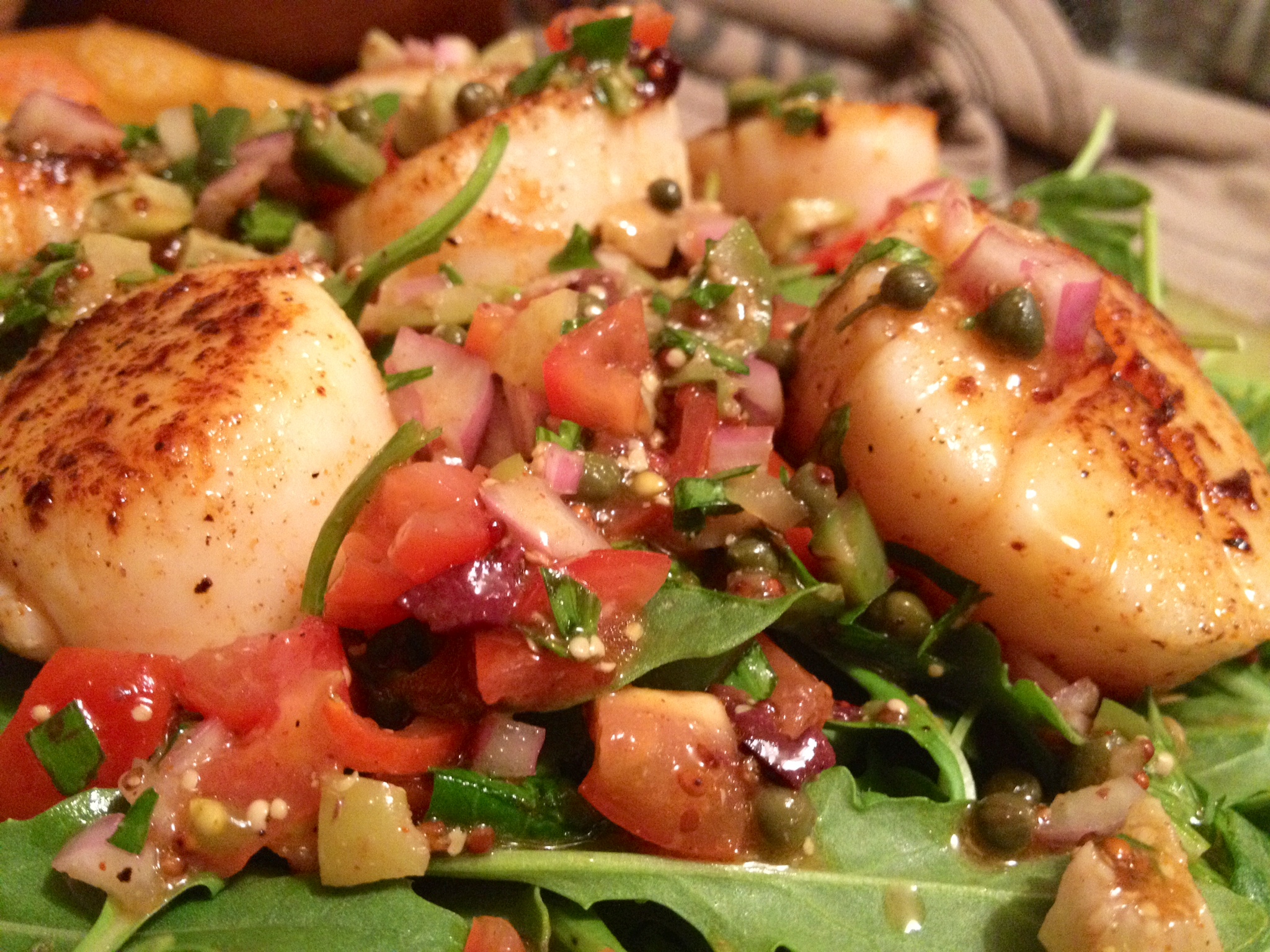
I got home around 8:00 last night and depart for my next adventure around noon tomorrow. Tonight I was craving some time on my couch and a light supper that required minimal heat. I swung by Mermaid’s Garden on my way home from the office and picked up some large and luscious dayboat scallops. Half an hour later, I was sitting down to this delicious salad and cuing up Sunday’s episode of Mad Men.

Scallops, Arugula & Tomato-Olive Vinaigrette

  • 2 tablespoons sherry vinegar
  • 1 tablespoon whole grain Dijon mustard
  • 2 tablespoons olive oil
  • 1/2 teaspoon or so hot Spanish paprika
  • 1 small shallot, minced
  • 8 assorted good quality olives (seasoned, stuffed, etc.), finely chopped
  • 1 medium tomato or 8 cherry tomatoes, finely chopped
  • 1 tablespoon small capers
  • 2 tablespoons chopped flat leaf parsley
  • pinch sugar
  • 1/2 pound dayboat scallops
  • 1/4 cup leftover white wine
  • salt and pepper
  • 3 cups arugula 
  1. Whisk the mustard and vinegar together in a bowl and then slowly whisk in 1 and 1/2 tablespoons olive oil until emulsified. Stir in 1/4 teaspoon or more of the paprika, the shallot, olives, tomatoes, capers, parsley, sugar and a good dose of black pepper. Allow this to marinate while you move on to your scallops.
  2. Bring 1/2 tablespoon of olive oil up to medium heat in a small heavy-bottomed skillet. Pat the scallops dry with a paper towel and sprinkle on both sides with salt, pepper and more of the paprika. Once the skillet is thoroughly heated, place the scallops in gently and resist the urge to touch them for about three minutes. Peek under one and, if it has some nice brown color, flip them all over and give them another three minutes or so. Remove the scallops, return the pan to the heat, add the white wine and stir, making sure to scrape up any crusty bits on the bottom. Reduce the wine to a couple of tablespoons.
  3. Lay your arugula on a plate, spoon the vinaigrette over the greens, place the scallops on top and drizzle them with the reduced wine.

Scallops, Arugula and Tomato Olive Vinaigrette

This would be great with some crusty bread. Alas, I had none.

Asparagus & Ramp Remoulade

Spring is finally here in New York City. The birds are chirping. The trees are in bloom. My toenails are painted (and, more importantly, trimmed). And ramps have returned to the farmers market.

I’ve previously reported on the ramp craze. While some might argue that we have reached the tipping point, after a long winter of turnips, potatoes and more turnips, the sight of anything green is cause for celebration. Plus, ramps are damn tasty.

Asparagus & Ramp Remoulade

  • 3 pounds asparagus
  • 4 good quality eggs
  • 1 large bunch ramps
  • 1 1/2 tablespoons olive oil
  • 3/4 cup mayonnaise
  • 2 tablespoons Creole or other whole-grained mustard
  • 1/2 tablespoon tomato paste
  • 1 celery stalk, finely minced
  • 1/4 cup thinly sliced scallion greens
  • 2 tablespoons finely minced parsley
  • 1 tablespoon prepared horseradish
  • 1 tablespoon white wine vinegar
  • 1 small clove garlic, finely minced
  • juice of 1/2 lemon
  • 2 teaspoons sweet paprika
  • 1 teaspoon hot paprika (or to taste)
  • salt, pepper and (if you think it needs it) a pinch of sugar
  1. Blanch your asparagus in batches in a pot of boiling water. When the stalks are just tender but still al dente, plunge them into a large bowl of very cold ice water. (Do not skimp on the ice–even if it means that you will likely come up a bit short when it’s time to whip up a round of Sazeracs for the evening’s festivities.) Spread the asparagus on dish towels to dry. Then roll bunches in paper towels and stick in the refrigerator until just before serving.
  2. Boil the eggs. If you don’t have your own method, check out the technique I’ve been using since I was seven years old. It has yet to fail me.
  3. Now it’s time to prep the ramps. Rinse them thoroughly, giving them a soak if you see dirt in the folds, and trim the very tip. Bring the oil up to medium low heat in a cast iron skillet. Working in a couple of batches, place the ramps in the skillet so that the white parts are in the oil and the leaves are draped over the edge of the skillet. When one side has browned nicely, use the leaves as a handle to flip. When they’re nice and brown all over, shove them all the way in and allow the green portion to wilt and crisp up a bit. Sprinkle these with salt and set aside.
  4. Combine the rest of the ingredients and let chill for at least an hour.
  5. Just before serving, peel and roughly chop the eggs. Lay the asparagus onto a large serving platter and strew with the ramps. Spoon the remoulade over the top and then sprinkle on the chopped egg. 

This dish made for a lovely presentation as a first course at last night’s dinner party for eight people. While I failed to get a picture of the beautifully arranged platter, I did manage to capture a shot of the leftovers right before I devoured them with my fingers while taking a break from doing the dishes.

Asparagus and Ramp Remoulade

Mutton Dressed as…Mutton

I was raised a vegetarian. My family introduced meat around the time I started middle school, but it took me a while to truly become a carnivore. Once during my senior year of college my mom brought home fried chicken and had to pick the white meat off of the bone for me.

My budding curiosity was put on hold when I entered college, as cafeteria meat was just too gross to ponder. I started cooking in earnest while studying in Jerusalem during my junior year. Israel was a great place to be a vegetarian. Even on my very limited budget, I was able to eat well and even feed others. For a long time after college I ate (rather pedestrian) meat outside of the house but continued to cook vegetarian dishes at home.

Eventually I became too interested in food not to explore. I found myself frustrated by my own taboos and squeamishness. And so I began to push at my own boundaries. While I might not order it as my entrée, I would taste anything. I moved beyond chicken breasts and ground beef in my own meat cookery. I worked hard at confronting meat that looked like what it was: part of an animal. I delved into braises and barbecuing. I ordered a leg of lamb from an old school pork store and brought it home in the basket of my bike. I bought an untrimmed pork loin and tackled it early one morning in a pre-caffeine haze. The more I worked with meat, the more it became a part of me and my identity.

Today I had the opportunity to attend a daylong intensive workshop on butchering sheep as part of Just Food‘s annual conference. The workshop was led by Adam Danforth, who just published two books on butchering. He talked us through slaughter, animal welfare and what makes meat delicious. After a burrito and margarita break (did I mention how awesome this workshop was?), Adam set to work breaking down a whole sheep and answering our endless questions. A chef was on hand to prepare the various cuts in a simple manner that really highlighted the lamb-y goodness. We rounded out the day with beer, socializing and the chance to pack up a meat cut or two to take home.

Sheep Carcass

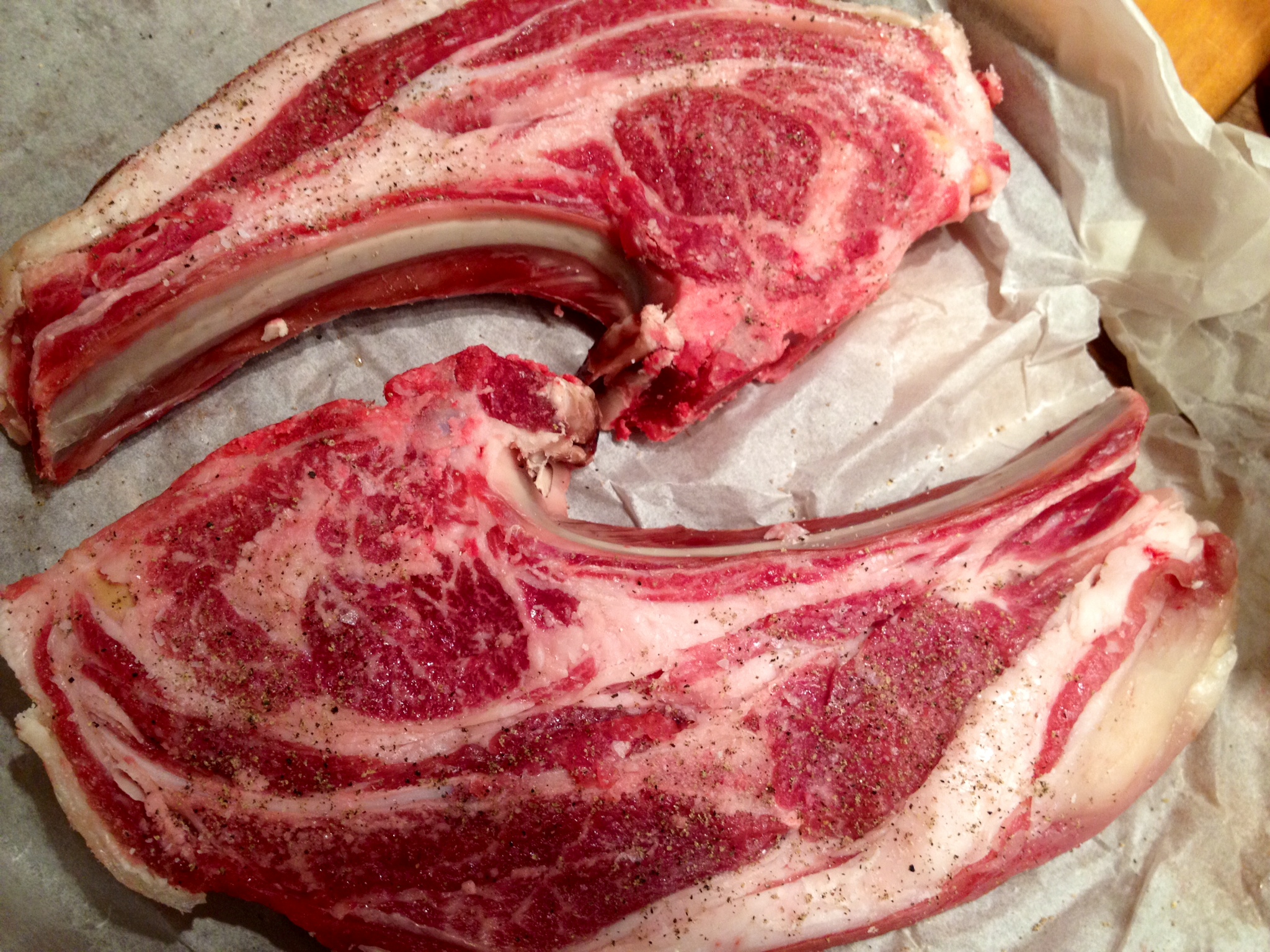
I went for the shoulder chop, which Adam had explained was far more flavorful than the more conventional (and expensive) loin or rib chops. Adam is a big proponent of the complex flavor and marbling that come with a muscle that works hard. He also encourages the consumption of older animals and challenges the commonly held notion that they are tough. It turns out that a sheep is classified as lamb up until it reaches a year old. Between one and two years old, it is a hogget. And, after two years, it becomes mutton. This older meat is darker in color and offers the deeper flavor that lamb aficionados seek.

Mutton Shoulder Chops, Raw

I had plans to go out to dinner. On my way to the train, I dropped my friend a text that there was a change in plan and that he should meet me at my apartment for some serious meat. An hour later Justin arrived bearing the ingredients for Hemingway Daiquiris and I set to work preparing our feast.

Hemingway Daquiris

With the winter CSA season behind us and summer still months off, I find that I have to go to great lengths to get my quota of good quality fresh vegetables. Luckily, I had swung through the Union Square Greenmarket on my way to the workshop (which, incidentally, was in a very cool test kitchen behind an unmarked door).

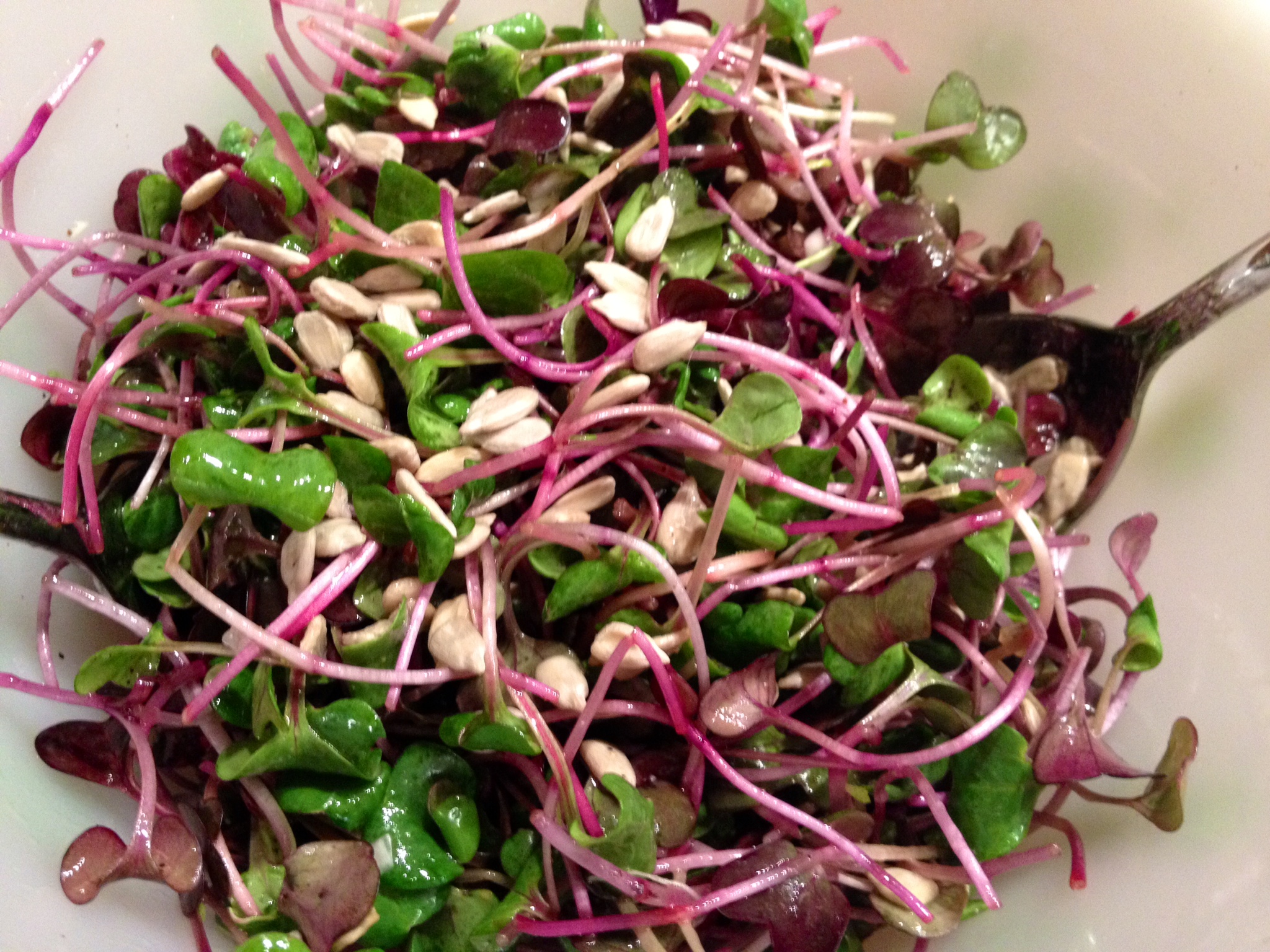
I kept the preparation of the meat and the accompanying dishes simple to highlight the mutton flavor. I stuck a cast iron skillet in the oven while it pre-heated. Meanwhile, I peeled and chopped a celeriac bulb, a couple of parsnips and a large sweet potato. I tossed these root vegetables with some sprigs of fresh thyme, a tablespoon or two of olive oil, and a good dose of salt and pepper directly in the hot skillet and left them to roast, stirring occasionally. I tossed radish sprouts with sunflower seeds and a simple shallot, rice wine and sesame oil vinaigrette.

Radish Sprout Salad

I brought a large skillet up to medium heat with a tablespoon of olive oil and seasoned the room temperature chops liberally with salt and pepper before tossing them into the pan. I seared them for about five minutes per side and then set them aside to rest while I made a quick pan sauce. I poured off all but a tablespoon of the fat, placed the pan back over the heat, and added a couple of tablespoons of finely minced shallots and garlic. After a couple of minutes of constant stirring, I deglazed the pan with the dregs of a bottle of white wine. Off the heat, I stirred in two tablespoons of finely minced parsley and the zest of an old lemon that I unearthed from the crisper bin. I drizzled the sauce over the chops and we sat down to some truly delicious mutton.

Mutton Shoulder Chops, Cooked

Pea Shoot & Radish Spring Salad

It’s 55 degrees in Brooklyn this afternoon. After a week in which we dipped back into the single digits, there is a giddiness in the air. By noon people were spilling out of the ice cream shop around the corner and the Grand Army Plaza Greenmarket was full of eager shoppers. The farmers seemed happy to be standing in the sunshine, even as they answered endless questions about what was on offer besides root vegetables and apples. (Not much.) It seems that our appetite for spring isn’t quite in step with the realities of the growing season.

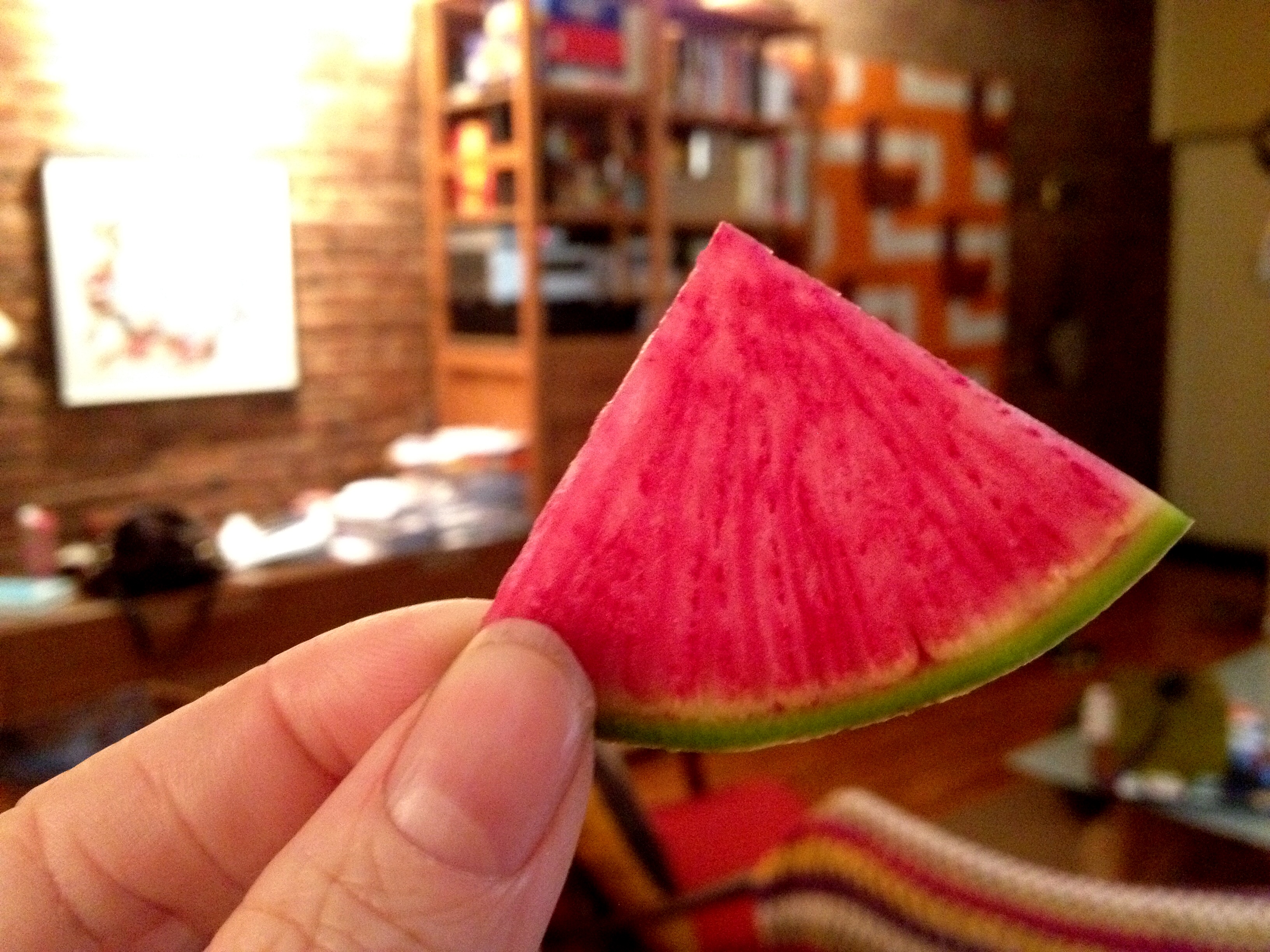
The good folks at Evolutionary Organics in New Paltz had fresh pea shoots and some wickedly spicy, not to mention beautiful, radishes on offer. I selected a medium watermelon radish and a long thin one that had a rich purple skin.

Watermelon Radish

Pea Shoot & Radish Spring Salad

  • 1 tablespoon dark sesame oil
  • 2 tablespoons rice wine vinegar
  • 1 teaspoon honey
  • 1/2 tablespoon soy sauce
  • salt and pepper
  • 2 handfuls pea shoots, rinsed and dried thoroughly
  • 2 medium radishes (the prettier, the better)
  • 2 scallions
  • 1 tablespoon sesame seeds
  1. Whisk the first four ingredients in a medium bowl along with a pinch of salt and some freshly ground pepper.
  2. Thinly slice your scallions and then your radishes. If you’ve got a mandoline gathering dust in the cupboard, this is the time to bust it out. Or, if your radishes are narrow enough, a vegetable peeler can work wonders.
  3. Add your vegetables and the sesame seeds to your bowl and toss gently so as not to bruise the tender shoots. Grab a fork and dig in to the taste of spring.

Pea Shoot and Radish Salad