Guest Post: Boiled (Yes, Boiled) Chicken

Alex and I met during our junior year of college when we were both studying in Jerusalem. Inspired by the local bounty, we were just starting to hone our cooking skills and we delighted in exploring food together. In particular, I recall a dinner party in Alex’s dorm room that centered around a canister of Kraft Grated Parmesan that his parents had smuggled into the country. (What can I say? We were young and it tasted like home.)

When We Were Young

At the end of the semester, we headed back to the States to finish school. Alex returned to Northern California and I to Upstate New York, but we kept in touch. I would visit him in Berkeley, where we would host lavish (by broke twenty something standards) dinner parties and tool around the Marin Hills. Alex would come to New York City for long walks and down and dirty Chinese food. For a few glorious years, Alex moved to Brooklyn, but the Bay Area called him back for a PhD in Urban Planning.

After a stint in Paris, Alex recently began working as a Lecturer in Geography at Leeds University. Somewhere in the eighteen years since we first met, it seems that we became adults. Fretting over the health of his students, Alex asked whether he might contribute a post or two. The recipes that he offers below are as suitable for starving college students in England as they are for an overworked New Yorker who finds herself suddenly pushing 40.

The Boiled-Chicken Method – Courtesy of Dr. Alex Schafran

Now that the Drunken Fig is required reading for my first year tutees (the Jewish grandmother in me worries that they aren’t eating well), it seems time to contribute some of my favorite tricks for brilliant eating on the simple. This is a super technique for the harried life, very friendly for finicky children/housemates/lovers. It also makes multiple meals at once or a classy two-course.
  1. Remove your hard-as-a-rock frozen chicken parts from freezer. Works with all types of frozen bits–light, dark and turkey too.
  2. Place in decent size pot – big enough that you can cover with water thoroughly and boil the hell out of it. I like to add a little salt at this stage, and sometimes a of bay leaf or some oregano, depending on what I am doing with it (see below).
  3. Boil. Yes, get over your fear of boiled meat and just do it. As it begins to soften up, you can start inserting a sharp knife to make the process quicker, but don’t cut it up too much. This should take about 30 minutes for deeply frozen breasts, longer if they are frozen together into an Übermass of poultry. (If you want to poke at your chicken, press down on it with a spatula rather than cutting into it. If it gives in easily, chances are it is cooked.)
  4. When your chicken is fully cooked, turn off the heat, and use tongs to remove the chicken pieces. Place them on a wooden cutting board or something that can take the heat. 
  5. When the chicken is cool enough to work with, take a fork in one hand and the tongs in another. Hold the chicken bits with the tongs, and press down and to one side with the fork to shred the chicken. The longer you cook it, the easier it will shred. But the meat will also be a little drier and less flavorful. This takes a bit of getting used to, but you will get the hang of it.
  6. Place your shredded chicken in a bowl. Now you have two awesome ingredients: a ton of shredded chicken and some fresh chicken broth.

So what do I do with my poultry bonanza?

  1. Tacos now, soup later option: Mix some olive oil, a touch of salt and pepper, plenty of oregano and a bit of chili powder into the chicken. You can do garlic instead of chili, or both if you like. Heat up tortillas, sprinkle on some cheese (or not, if you want to be traditional), a touch of cilantro and onions and voilà. Freeze broth.
  2. Dinner tonight, tomorrow’s dinner cooking while you eat: Use the chicken how you will. (Last night it was with garlic spinach over brown basmati rice.) Before you sit down, chop up a bunch of veggies. If you can stand waiting a bit for dinner, a light sauté is generally recommended for the veggies, but it’s not essential. Let the soup simmer while you eat. By the time you are finished, the soup will be ready for pureeing – if that is your way of doing things. Now tomorrow’s dinner is done, save for the hard-crusted bread.
  3. Soup and chicken together option: Take a can of black beans, and purée it in the chicken broth with some garlic, a touch of cumin and some oregano. Serve with heaping amounts of chicken, a dollop of sour cream for sluttiness and a touch of cilantro, unless you hate it. Works with other beans and pretty much any leftover veggies you have.
  4. The simple two-course option: Shredded chicken takes almost any sauce and any cuisine well. I have done Japanese style over noodles and then added a touch of miso into the broth for a new take on miso soup. Sautéed vegetables and chicken over couscous with a vegetable soup is also excellent. Quinoa and chicken with a broccoli soup. Ad nauseam.
  5. The top class Mexican meal: Since this method is inspired by Mexican and Salvadoran cuisine, they get the top class version: Chicken enchiladas with a roasted corn and tomato soup. Actually pretty easy, especially if you cheat and buy enchilada sauce.

After admitting that I have yet to get over this past weekend’s head cold, I came home early today with comfort food on the brain. Alex’s recipes had been sitting in my email inbox for a couple of weeks and there was a three-pound chicken in my freezer. It took about five minutes to get to this stage. (I added onions, garlic, some wilted carrots and a couple of bay leaves.)

Boiling ChickenAn hour later (though, in hindsight, 45 minutes would have been sufficient), I was shredding the meat. I threw the bones and skin back in to simmer while I did some work. After another half hour, I strained the broth, put it back on the heat, and added turnips, shredded collard greens, carrots, dried porcini mushrooms, pearled barley, red pepper flakes, salt and pepper. Half an hour later, I mixed in some of the shredded meat and dinner was served.

Thanks, Alex, for taking care of me across the many miles.

Chicken Barley Soup

Kale, Sausage & Potato Stew

This recipe was inspired by caldo verde, a traditional Portuguese soup of kale and potatoes garnished with spicy sausage. While caldo verde is usually served for celebrations, I was able to whip this up in under an hour with ingredients I had on hand, making it a fine midweek supper. The ingredients are simple and the recipe is straightforward, but the resulting dish is delightfully complex.

Kale, Sausage & Potato Stew

  • 2 tablespoons olive oil
  • 12 ounces fresh spicy sausage (I used some loose hot Italian turkey sausage from Di Paola Turkey Farms, which sells its wares at greenmarkets throughout New York City, but whatever you’ve got in the freezer is cool.)
  • 2 leeks, thinly sliced and rinsed
  • 2 cloves garlic, thinly sliced
  • 1 teaspoon crushed red pepper flakes
  • 1 tablespoon herbes de provence
  • 2 bunches kale, thinly sliced (I used lacinato, but pretty much any kind of kale or collards would work.)
  • 2 cups chicken broth (I used about six cubes of frozen contracted stock.)
  • six small yellow potatoes, halved and cut into quarter-inch slices
  • 1 tablespoon hot paprika
  • salt and pepper to taste
  1. Bring the oil up to medium heat in a large dutch oven. Add your sausage and stir until cooked through. Add the leeks and garlic and cook until limp. Stir in the herbes de provence and red pepper flakes.
  2. Add the kale in batches, stirring until there is room for more. Add the chicken stock and bring to a boil. Add the potatoes and enough water to cover. Stir in the paprika, a generous amount of fresh black pepper, and salt if needed
  3. Let simmer until the potatoes are tender, approximately 30 minutes. 

Kale, Sausage and Potato Stew

Corn & Seafood Chowder

Barbara and I met through our mutual support of the New York Abortion Access Fund (NYAAF). This past spring she invited me to be a guest on the Park Slope Food Coop cooking show that she hosts. We had a great time making shrimp and grits and discussing the critical role that abortion funds play. A couple of weeks ago we decided to reprise our cooking date–only this time (mercifully) the cameras were off.

Barbara emailed me a few days before our date asking what we should make. I mentally reviewed the various foodstuffs cluttering my fridge: corn, potatoes, and a wide variety of peppers. This could have gone any number of ways. Then I remembered that I had several corn cobs stripped of their kernels jammed into my freezer because I had read something about corn broth. Bingo!

Corn & Seafood Chowder

  • 8-12 cobs of corn
  • 3 ounces slab bacon, diced
  • 1 large onion, diced
  • 3 stalks celery, finely diced
  • 1 green pepper, diced
  • 1 cubanelle pepper, diced
  • 1 jalapeño pepper, minced
  • 3 cloves garlic, minced
  • 8 medium russet potatoes, cut into half-inch cubes
  • 1 pint lobster stock or 1 jar clam juice
  • 18-24 cherrystone or littleneck clams
  • 2 large filets of flounder (about 1 pound total)
  • 2 tablespoons butter
  • 1 bunch curly parsley, chopped
  • salt and pepper
  1.  Husk the corn and then strip off the kernels using a sharp knife. (I find that doing this over a shallow bowl keeps the kernels from rolling away and also allows me to capture any of the milky liquid that they exude.) Reserve about four cobs’ worth of kernels for your chowder and freeze the rest for succotash, cornbread or the like. Throw the denuded cobs into a large pot with enough water to cover, bring to a boil, reduce heat, and simmer for half an hour–or as long as it takes you to get through the next couple of steps.Corn Broth
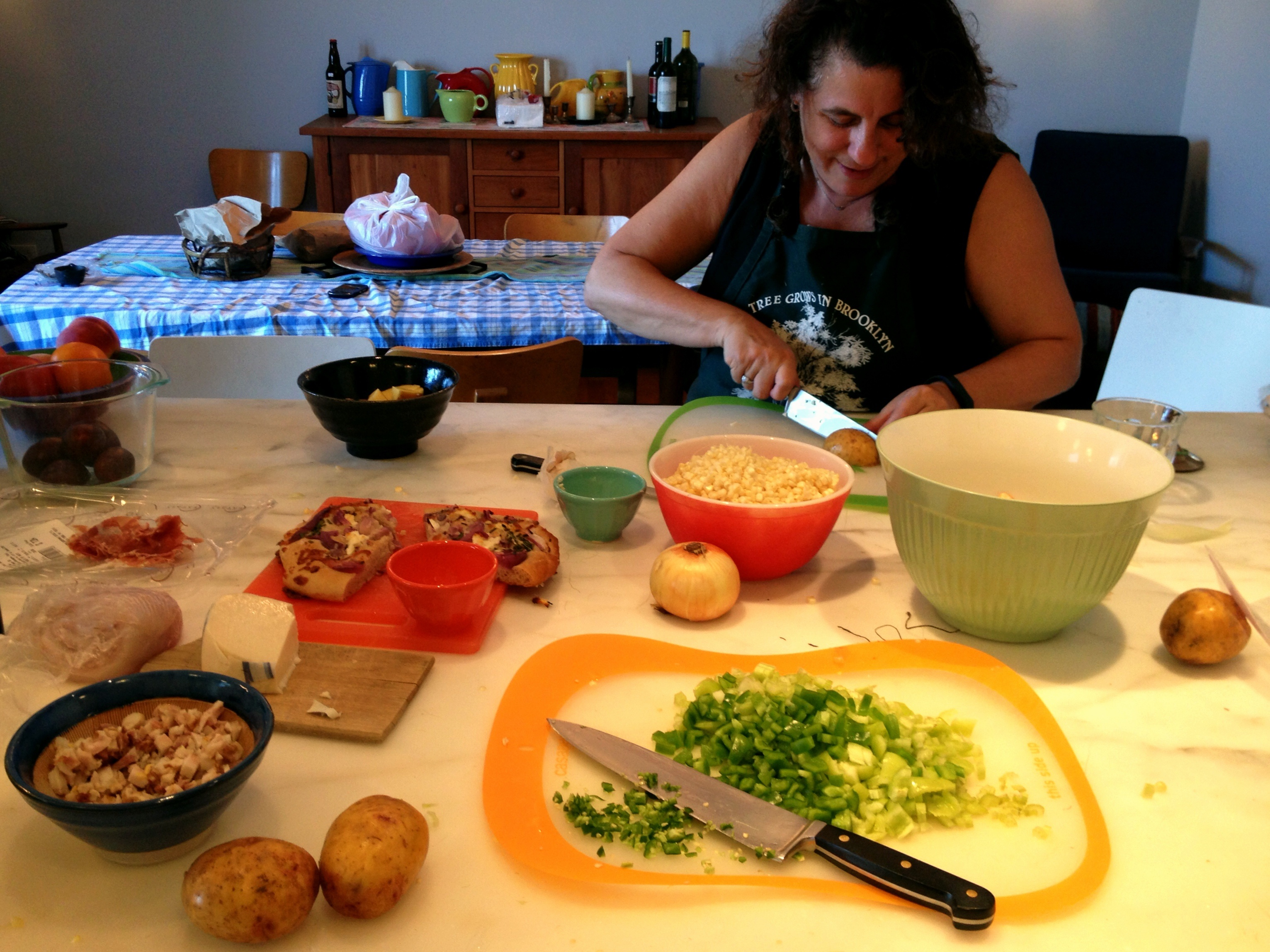
  2. Dice your bacon, onions, celery, and green peppers. Mince the garlic and jalapeño. Chop the potatoes. Chat about anything and everything. Have a nosh if you like.Barbara Chopping
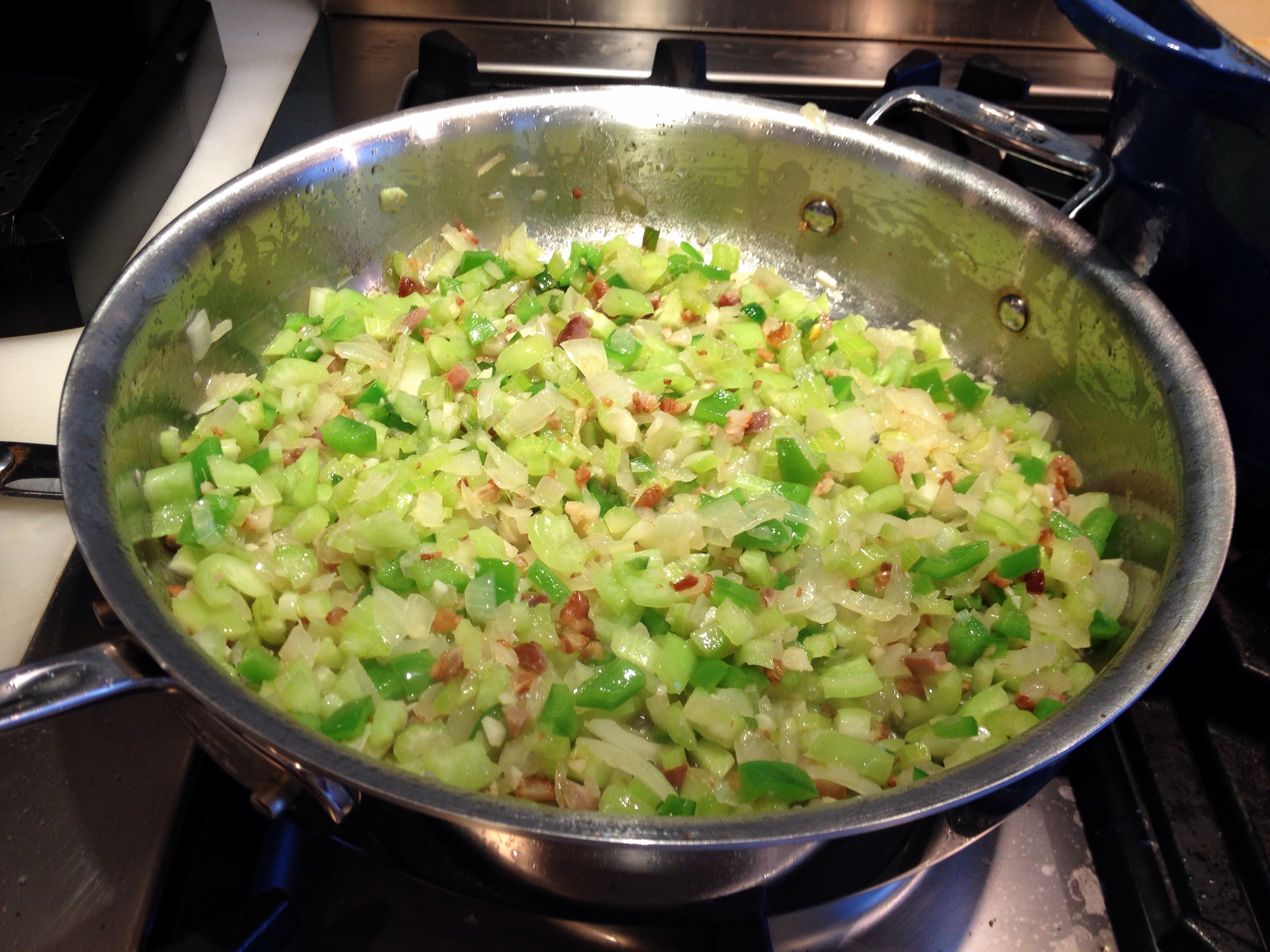
  3. Add the bacon to a large pan and bring up to medium-low heat. Once the fat has mostly rendered and the bacon pieces are just starting to firm up, add the onions. Saute until they are starting to soften and then add your celery and various peppers. Once these have started to soften, add the garlic and cook for a few minutes. The key is to soften everything up without allowing it to brown. Season with salt and pepper.Chowder Base
  4. Pull the corn cobs out of your soup pot using tongs and then dump your vegetable mixture into the pot along with the diced potatoes. Add the lobster stock or clam juice, bring to a boil, and then lower to a simmer. Put the clams in a bowl, cover with cold water, and add some black pepper or cornmeal. (This step, while not strictly necessary, will encourage the clams to spit out their sand, avoiding a certain amount of grit in the finished product.) Leave the pot to simmer for a half hour or more while you retire to the living room for some more chatting.
  5. Now is a good time to wake Barbara’s husband Chris up from his nap so that he can ready himself for chowder.
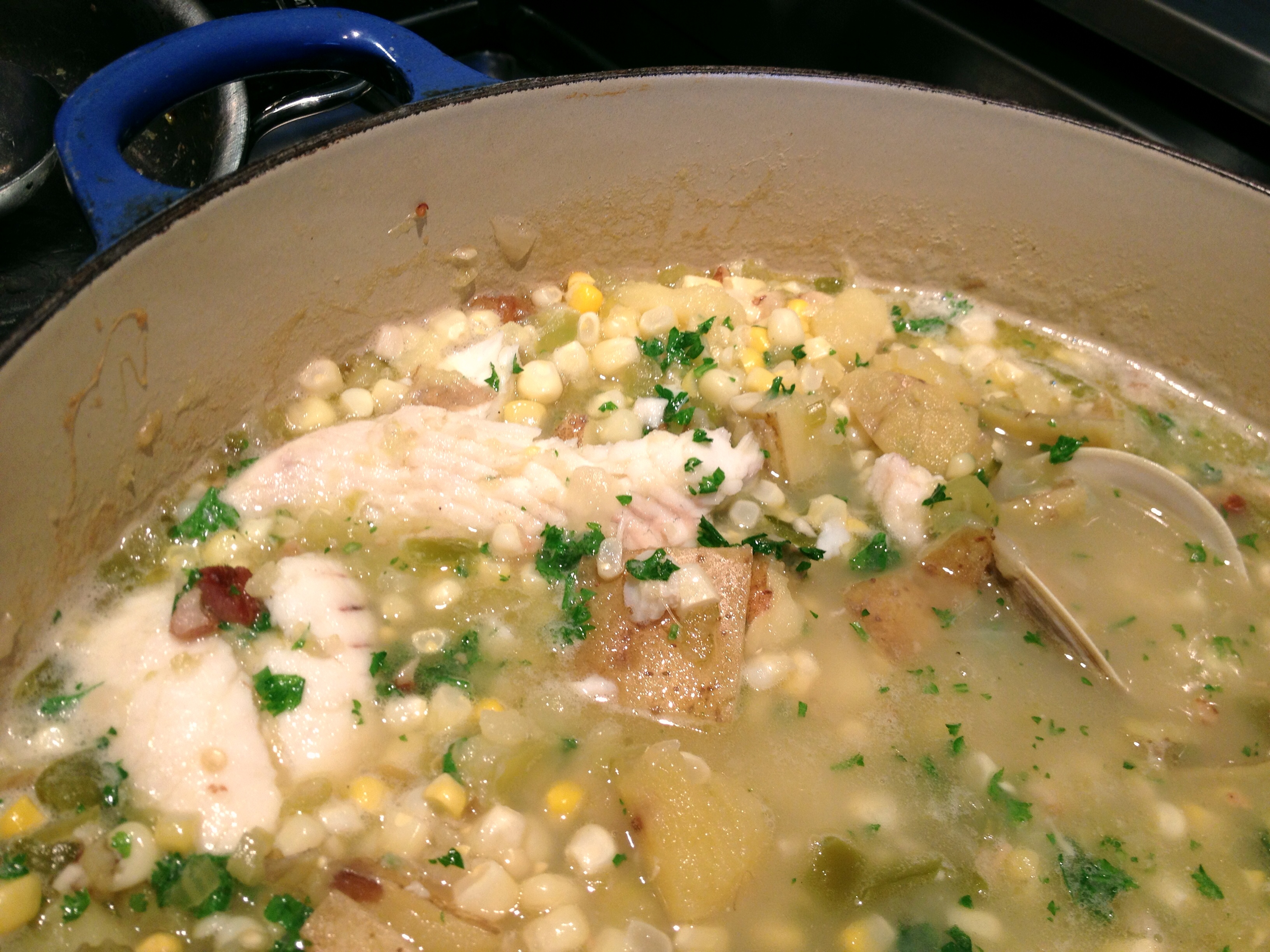
  6. Add the butter. Taste the broth and adjust the seasoning with salt and pepper. Add your clams and then lay the flounder in gently. Cook until the clams pop open (roughly 15 minutes), by which time your flounder should be white and opaque. Finish with the corn kernels and some fresh parsley.Corn and Seafood Chowder

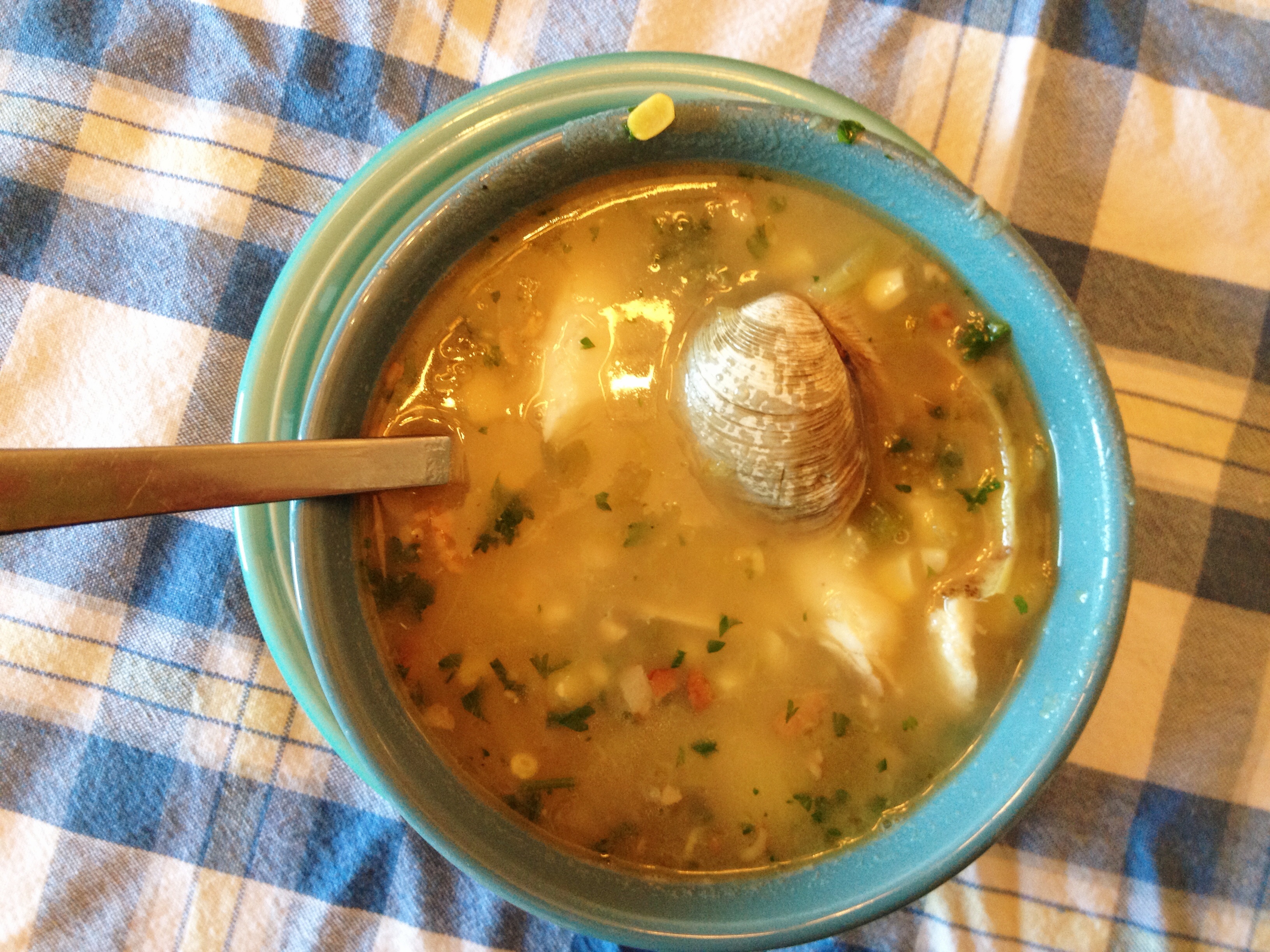
We ate our chowder in Barbara’s rather perfect Fiestaware bowls, using hunks of bread to soak up the delicious broth. It made for a truly excellent early autumn lunch.

Corn and Seafood Chowder 2

Kale & Quinoa

I’m working from home today in a desperate bid to focus on the 300-page curriculum that needs to be edited by Friday. Fortunately, I picked up a new stash of CSA vegetables last night, so I had plenty of food on hand for my working-from-home lunch.

And so, in honor of National Kale Day, I present you with a recipe fit for ladies who lunch (in their sweatpants)…

Kale and Quinoa Salad

  • 1 cup uncooked quinoa
  • 4 tablespoons olive oil
  • 2 small onions, thinly sliced
  • 2 garlic scapes or garlic cloves, thinly sliced
  • 1 jalapeño, seeded and minced
  • 2 sweet peppers, any color but dark green, diced
  • 2 tablespoons Dijon mustard
  • 2 tablespoons white wine vinegar
  • 1 bunch kale, cut into thin strips
  • 1 bunch curly parsley, roughly chopped
  • 1/4 cup raw sunflower seeds
  • Salt and pepper
  1. Thoroughly rinse the quinoa, add two cups of water, and bring to a boil along with a good pinch of salt. Lower heat and simmer for 10-15 minutes until quinoa is tender and water is absorbed.
  2. Heat 2 tablespoons of the olive oil in a cast iron skillet over medium low heat and add the onion, stirring frequently until soft and starting to brown. Then add the garlic and cook for a few more minutes before adding your peppers. Cook until the peppers are tender but still firm. Turn off the heat and add some salt and black pepper.
  3. Whisk the Dijon mustard, white wine vinegar and some black pepper in the bottom of a large bowl. Gradually whisk the remaining two tablespoons of olive oil into your dressing and then add the kale, stirring to ensure that each piece is coated.
  4. When the kale is just starting to wilt and the quinoa, peppers and onions have all cooled a bit, mix them together along with the parsley and sunflower seeds. Let sit for 20 minutes or until you need a copyediting break.

Kale and Quinoa Salad

This recipe makes enough for three or four lunches and is perfectly happy to marinate for a few days in the fridge. Double it and you’ve got a great contribution to a potluck picnic. I threw some halved cherry tomatoes on top for my lunch and may add some feta cheese when I have it for dinner.

EAT THIS: Late Summer Vegetable Melange

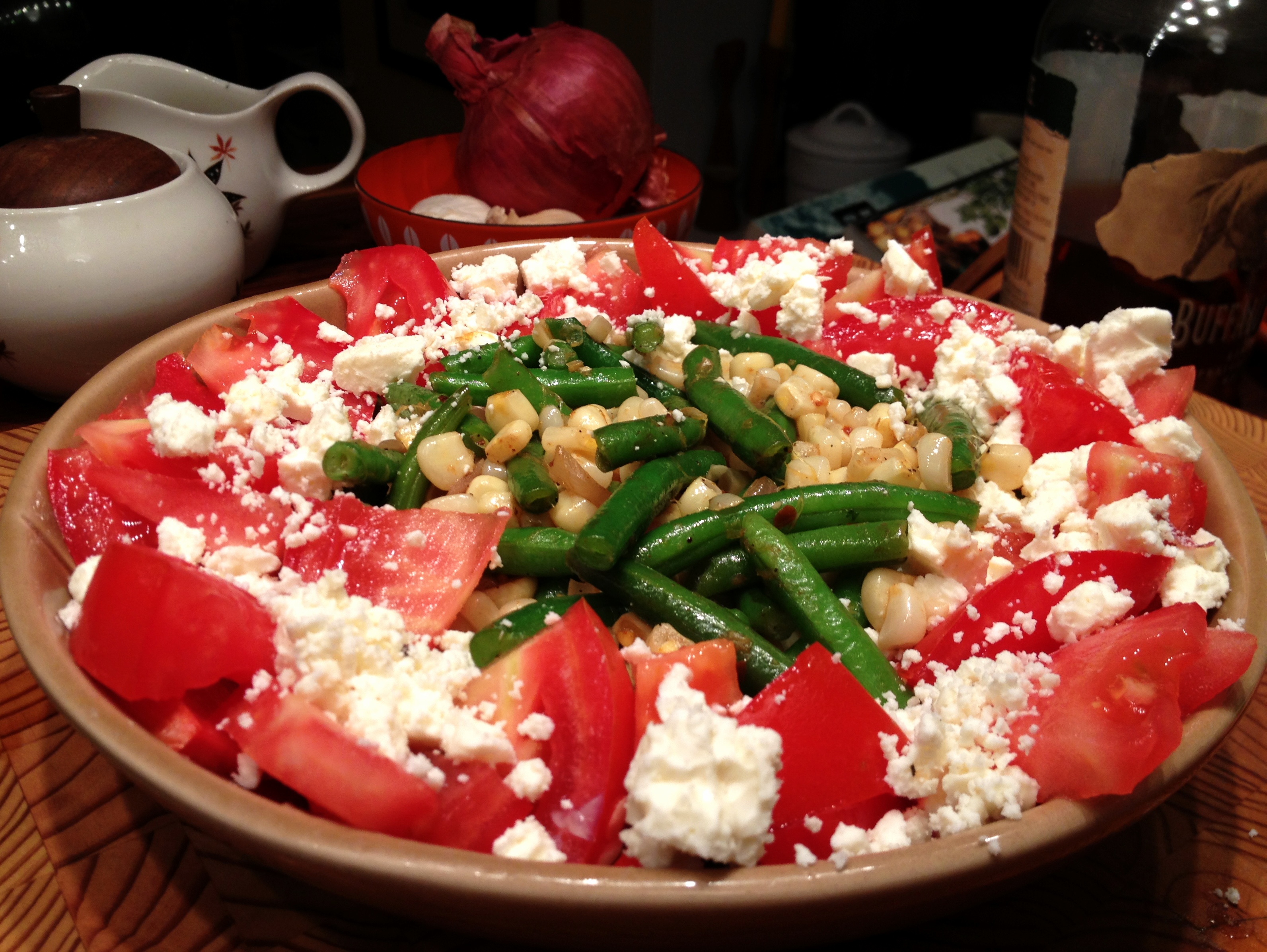
Late Summer Vegetable MelangeSautéed red onions, green beans and corn seasoned with red pepper flakes, hot paprika, black pepper and smoked salt and topped with sliced tomato and a sprinkle of feta cheese can be your dinner in about 20 minutes–leaving plenty of time for the 200 pages you have left to read before tomorrow’s class.

Greek Casserole

Between a broken ankle and the beginning of a new school year, I’m a bit behind on consuming my CSA vegetables. This weekend found me with a cooking date with my dear friend Leila and an abundance of green beans, tomatoes and potatoes. My first thought was some sort of Indian curry. But I seem to be out of rice.

Autumn has arrived in New York City. The sunlight is a distinct shade of gold and the air is crisp. My apartment, which is excessively hot in both summer and winter, has finally dropped below 76 degrees. (I know this because the coconut oil in my pantry has begun to crystallize.) After months of chopped salads and quick cooking on the stovetop, I found myself longing for a hot dish and the heady aroma that accompanies an oven bake.

Thus was born this potato, lamb, green bean, tomato and feta casserole.

Greek-Style Casserole

  • 8 new potatoes
  • 1 large yellow onion, diced
  • 1 tablespoons ground cumin or to taste
  • 1/2 teaspoon cinnamon or to taste
  • 1/2 teaspoon nutmeg or to taste
  • 1 teaspoon red pepper flakes (plus some cayenne and/or Aleppo pepper if you’ve got it)
  • 2 garlic cloves, minced
  • 1 pound ground lamb
  • 1 pound green beans, trimmed
  • 3 large tomatoes
  • 2 teaspoons dried oregano
  • 1 tablespoon minced basil
  • 4 ounces feta cheese
  • 3 tablespoons olive oil
  • salt and pepper
  1. Preheat oven to 425.
  2. Bring a pot of water to a boil and add the potatoes. Cook approximately five minutes until the skin gives easily under your fingernail. Remove the potatoes and add the green beans. Cook for one to two minutes just until bright green. 
  3. Add 1 tablespoon olive oil to a large skillet over medium heat. Add the onion and sauté until soft. Then add the cumin, cinnamon, nutmeg and hot pepper, stirring constantly to toast the spices without allowing them to burn. Do the same with the minced garlic. Add the ground lamb and cook until the meat is thoroughly browned and any excess water has evaporated. Season with salt and pepper and add more cumin, cinnamon, nutmeg or hot pepper as needed. (You want a very flavorful mixture.)
  4. Slice the potatoes into 1/4″ discs and arrange in a single layer at the bottom of a shallow casserole pan. Sprinkle with salt and pepper. Spread the lamb mixture on top of this and then layer the blanched green beans. Add a layer of thickly sliced tomatoes. Sprinkle oregano, basil, salt and pepper over the tomatoes and then drizzle with 1 tablespoon of olive oil. Lay a slice of feta on each tomato and drizzle with the remaining 1 tablespoon of olive oil. 
  5. Bake until the intoxicating aroma rouses you from the couch and the feta is well browned (approximately 30 minutes). 

Greek Casserole

Thai Beef with Eggplant

Since my first cardboard box of Lemonheads (slipped to me by my grandmother when my natural-foods-pushing parents weren’t looking), I’ve been hooked on sweet and sour. Give me a package of Fun Dip or some Haribo Gummi Grapefruit Slices over a piece of chocolate cake any day. And my dad’s deep love of peanut butter (all natural, stirring required, of course) introduced me to the notion of sweet and salty at an early age. It took me a little longer to find my way to spicy food but, once I did, it was with the zeal of a convert.

When I first discovered Thai food, it was a revelation. You mean I can have salty, sweet, sour and spicy all at once? In college, my stepdad’s brother Daniel took me to South Berkeley’s famed Thai Buddhist Temple brunch. Daniel being Daniel and me being a religious scholar, we somehow got to eat inside with the monks. This was my first introduction to Thai food cooked for Thai people–and it was HOT. I was seated somewhere in the middle of three long tables arranged in a horseshoe, flanked by serene men in saffron robes. I did my best to smile sweetly while tears and worse poured down my face. And still I loved it.

At the beginning I was satisfied with just about any Thai food but, over the years, I’ve become more discriminating. While I still love that unique flavor bomb (did I mention umami?), I find that many places dish up gloppy, sickly sweet sauce, overly starchy noodles, and way too much low-grade cooking oil for my stomach to properly process.

And so I save myself for those special Thai meals when the ingredients are fresh and each dish is like a symphony where you can pick out and appreciate the individual components but the whole is somehow greater.

In the meantime, I’ve figured out that I can make a reasonable facsimile of Thai food at home using whatever protein, vegetables and herbs I have on hand. The key is in the condiments. The shelves on my refrigerator door always contain fish sauce, soy sauce, Sriracha, rice wine vinegar and sesame oil–all of which will last pretty much forever. A few weeks back, I deployed these ingredients to whip up a Thai Beef Salad and Quick-Pickled Kohlrabi.

Yesterday was my first day off in two weeks. Sheer exhaustion and a badly sprained ankle compelled me to stay home. Luckily, I had plenty of CSA bounty with which to feed myself. For breakfast I had scrambled eggs and tomatoes lightly dressed with salt, pepper, balsamic vinegar, olive oil, and a little fresh basil. Lunch was the aforementioned Plum and Ricotta Salata Salad. By dinner time, I was ready to tackle the eggplant, green beans, onions, Thai red chilies and more of that basil.

This year, my CSA struck up a partnership with Lewis Waite Farm. One can order their pork and beef à la carte along with chicken and dairy products from neighboring farms. Overwhelmed by the choices, I opted for a monthly Carnivore Share. I’ve been trying to eat more meat and have made a commitment to focus on meat that is good for me and good for the planet. My freezer is starting to fill up as, even with dinner guests, four pounds is a lot of meat for me to go through in a month. But I imagine the stash will be quite welcome come winter.

Carnivore Share

I’m having fun toying with new cuts. Earlier this week, I cooked the lamb rib chops pictured above and ate them over an arugula and tomato salad. Last night, with my friend Louis on his way over, I was ready to tackle the eye round beef from my previous month’s share. While I was unfamiliar with eye round, I could tell by eyeballing it that this was a lean cut probably best suited for stewing or braising. But there was only half a pound of it, which didn’t seem worth a slow and low cook. I decided to try to tenderize it by slicing it thinly against the grain, cooking it quickly at high heat, and using a marinade with a good bit of acid. The resulting dish was so good that, sadly, there were no leftovers to pick at this morning.

Eye Round Beef

Thai Beef with Eggplant

  • 4 tablespoons soy sauce or tamari
  • 1 tablespoon fish sauce
  • 1/2 teaspoon sugar
  • 1 tablespoon rice wine vinegar
  • 1 tablespoon Sriracha
  • 2 tablespoons thinly sliced basil leaves
  • juice of 1 lime
  • 1 Thai red chili, seeded and thinly sliced
  • 3 tablespoons canola/vegetable oil
  • 1 large Japanese or other long skinny eggplant, cut into discs
  • 8 ounces eye round beef, sliced thinly against the grain
  • 1 tablespoon minced ginger
  • 1 tablespoon minced garlic
  1. Combine 3 tablespoons of the soy sauce along with the fish sauce, sugar, rice wine vinegar, Sriracha, basil, lime juice, and half of the ginger, garlic and chili in a small bowl.
  2. Heat 1 tablespoon of canola oil in a large pan over medium-low heat. You want it hot enough that a drop of water sizzles but not so hot that the oil is smoking. Add half of your eggplant, cook until lightly browned, flip and then cook until the other side is also browned. (They may seem a bit firm, but should soften up as they slowly steam.) Place the cooked eggplant in a shallow bowl and drizzle half of the marinade over the top.
  3. Repeat Step 2 with the remaining eggplant slices, taking care to shift them to the bottom of the shallow bowl so that they get a chance to soak up the marinade and soften.
  4. Turn the heat up to medium and add your last tablespoon of oil. Then add the remaining ginger, garlic and chili. When these are fragrant but not yet browning, add the beef and cook for three minutes or so, stirring or flipping as needed, until you don’t see any red. Add the remaining tablespoon of soy sauce. Toss the eggplant with its sauce into the pan and stir to combine.
  5. Empty the contents of the pan into a serving bowl and drizzle with the remaining marinade.

Thai Beef with Eggplant

I served this with brown Jasmine rice and some green beans that I had sautéed with onion, garlic, ginger and the other half of the chili pepper. Off of the heat, these were dressed with a sauce made from peanut butter, sesame oil, Sriracha, and soy sauce. Fresh basil leaves went over the top.

Green Beans with Sesame Peanut Sauce

This meal paired wonderfully with a Vinho Verde. Afterwards, we retired to the couch with a bottle of Prosecco, an ice pack, and a Barbara Stanwyck film. Louis was snoring within 30 minutes.

Leftover Chicken Tikka Salad

After a three and a half hour drive in bumper to bumper traffic followed by a rainy walk home laden with bags, I was in no mood to cook last Thursday. Apparently I was not the only one seeking the comforts of delivery. My chana masala and chicken tikka took well over an hour to arrive. On Saturday I ate the leftover chickpeas, with a liberal helping of goat milk yogurt, for breakfast. By 4:00 I was hungry again. Luckily, I still had a few hunks of chicken and some mango chutney left, along with plenty of fresh vegetables.

Leftover Chicken Tikka Salad

Combine 3 tablespoons of plain yogurt, 1 tablespoon of mango chutney, 1 tablespoon of apple cider vinegar, 1/2 tablespoon of olive oil, a pinch of salt, some black pepper, and 4 thinly sliced scallions. Let the dressing sit while you prep the salad. Wash and dry a small head of romaine and slice into ribbons. Peel and slice one very large cucumber. Slice your leftover chicken. Combine all of the ingredients along with any crispy onion bits left in the takeout container in a bowl, tossing to combine.

Chicken Tikka Salad

This hit the same pleasure center as a curried chicken salad sandwich. And the dressing held up well against what were arguably some rather toothsome lettuce leaves. All around a great use of leftovers.

The Art of Assembly

This time of year one’s cooking skills are a bit of a fifth wheel. The produce is so varied and abundant that the real challenge is narrowing it all down to a single meal. From there, it’s mere assembly.

I’m hosting a fancy fundraiser in the Hamptons next weekend, which necessitated a midweek trip to Sagaponack. Turns out that the drive out isn’t so bad if you hit the road at 10:00pm on a Tuesday. By midnight I was in bed munching the last of my blueberries and perusing a magazine.

The next morning was a flurry of espresso and emails. I knocked off in time to hit the amazing Breadzilla for lunch before my noon meeting. In my experience, the Hamptons is rife with overpriced and lackluster food. But I happily forked over $16.50 for the best lobster roll of my life, which I ate on a bench in the adjacent garden. I also picked up a baguette, assuming it would play a roll in the evening’s dinner.

The afternoon was back-to-back meetings. I selected flatware and linens, discussed the logistics of transporting a baby grand piano, and wandered around Wölffer Estate Vineyard with a tape measure while vacationers enjoyed wine flights. I did manage to squeeze in a stop at a farm stand, picking up Italian eggplant, zucchini, young shallots with the green shoots still attached, basil, and some unimaginably sweet small yellow tomatoes. I was saved from buying even more by their cash-only policy. This is what I could get for the $16.50 in my wallet.

Veggies

I got a bit lost trying to take the back roads home, but was rewarded when I passed a fish shop selling all sorts of local delights. Mercifully, they took credit cards, so I was able to pick up a pound of wild sea scallops, a couple of balls of burrata, and a lemon for good measure. I still didn’t know what I was going to make, but it would be hard to go wrong with these ingredients.

The day was a hot one and my last meeting had been on an unshaded terrace. I got back to the house where I was staying around 5:00 and rewarded myself with a dip in the pool.

Another hour of furious emailing and it was off to collect my dear friend Louis at the train station. On the way home, we picked up the two final ingredients for our evening meal: rosé and rosé. We made short work of the first bottle, a Côtes de Provence, while gabbing poolside as the sun set.

Sunset

Time to uncork the next bottle and start assembling dinner. I cut the shallots in half, leaving the green ends intact, and tossed them with olive oil, salt and pepper. The scallops got the same treatment, minus the slicing. (Had I been able to locate a grater of some sort, they would have gotten some lemon zest too.) I cut the eggplant and zucchini on the diagonal and added fish sauce and tamari to my simple marinade.

While I fired up the grill, Louis got busy halving the tomatoes, chiffonading a bunch of basil, and pouring another round of wine. Once they were ready, I arranged the grilled veggies and scallops in stripes alongside the tomatoes and burrata, which I tore into hunks. The whole platter got a drizzle of olive oil and balsamic vinegar and some fresh cracked pepper.

This being a casual and intimate meal, we dined at the kitchen table, each armed with a soup spoon to ladle things onto our plate, a lemon wedge to dress our meal, and a baguette hunk to sop up the juices.

Summer DinnerThe evening concluded with a midnight swim.

The next morning found us back at the kitchen table, where we worked until lunchtime. Then it was off to Breadzilla, where Louis enjoyed the lobster roll while I moved on to the delightful shrimp salad. In the afternoon, I downed an espresso and swam laps, which was a shockingly pleasing combination. A few more hours of work and it was time to bid the pool adieu and head back to the city. But first, one more farm stand…

Louis Melons

Jasmine Melons

Thai Beef Salad and Quick Pickled Kohlrabi

On Tuesday I returned from a deliriously fun and much-needed vacation to Montreal. That evening, I worked my CSA shift in a steamy warehouse. It is a testament to both the friendliness of my neighbors and the agricultural skills of the good folks at Windflower Farms that I do not begrudge my mosquito-bitten legs. I headed home around 8:30–itchy, dripping in sweat, and laden with fresh vegetables.

The rest of the week is a bit of a blur. I did my best to catch up at work, coming home late in the evenings to assemble a quick salad. The heat finally broke on Friday and I seized the opportunity for some actual cooking as well a joyride from my office in the Village to my home in Brooklyn courtesy of Citibike.

I’d invited a friend for dinner, assuming I could piece something together from the odds and ends in my fridge. I had red leaf lettuce, scapes, green onions, basil, and kohlrabi. I also needed to get a move on the meat socked away in my modestly-sized freezer before this month’s share arrived. I threw a block of ground beef into warm water to defrost, poured a glass of Riesling, and got to work on the kohlrabi, which looks like a cross between an alien spaceship and a deepwater sea creature.

Kohlrabi

Quick Pickled Kohlrabi (or Carrots or Whatever)

  • 1 cup rice wine vinegar
  • 1/2 cup water
  • 10 black peppercorns
  • 20 whole coriander seeds
  • 2 pinches red pepper flakes
  • 1 tablespoon sugar
  • 1/2 teaspoon salt
  • 2 kohlrabi bulbs (and/or carrots, turnips, etc.)

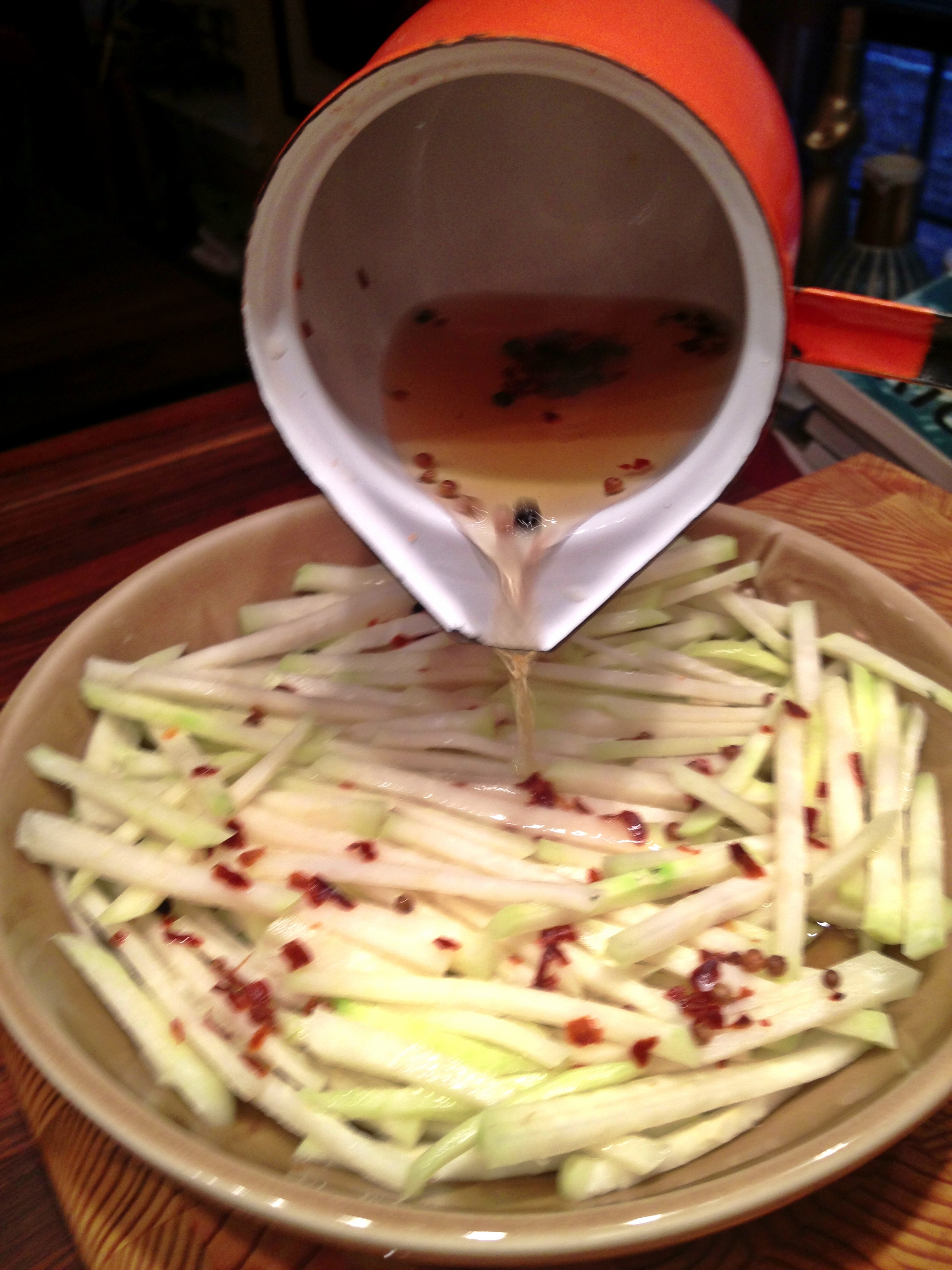
Combine all but the kohlrabi in a very small saucepan and bring to a simmer over medium heat. While you’re waiting, peel the kohlrabi and cut into matchsticks. Pour the hot brine over the kohlrabi and let stand for an hour or so, stirring occasionally. If you have the time, toss it in the fridge to chill.

Quick Pickled KohlrabiAt some point, I decided to make some rice. I brought 1/2 cup of brown Jasmine rice, just under a cup of water and a pinch of salt to a boil, tossed a lid on, turned the heat down, and let simmer until we were ready to eat. I also rinsed and dried a head of red leaf lettuce.

Justin arrived a little after 7:00, by which time I had polished off the wine. Justin busied himself making a batch of gin cocktails with sweet vermouth and the poaching liquid from my foray into homemade maraschino cherries. I got to work on my best approximation of Larb, a dish that I associate with Thai food, although the internet tells me that it is actually Laotian.

Thai Beef Salad

  • 1 tablespoon coconut oil (or some sort of vegetable oil)
  • 1 garlic scape (or a couple of cloves of garlic), thinly sliced
  • 1 onion (in this case a fresh green onion), cut into slivers
  • 1 pound lean ground beef
  • 2 tablespoons fish sauce
  • juice of 1 lime
  • 1 tablespoon rice wine vinegar (or another lime, but I could only unearth a single dessicated fruit)
  • 2 teaspoons sugar
  • 1 tablespoon Sriracha or other chili sauce 
  • 20 leaves fresh basil and an equal amount of fresh mint
  1. Bring the oil up to medium heat in a cast iron skillet and then add the garlic scape, onion, and beef. Stir frequently, taking care to break up the meat.
  2. Mix the remaining ingredients, save for the basil, in a small bowl.
  3. When the onions are wilted and the beef is cooked through, dump the mixture into a bowl along with the sauce from the smaller bowl. Thinly slice the herbs and toss everything together.

Thai Beef Salad

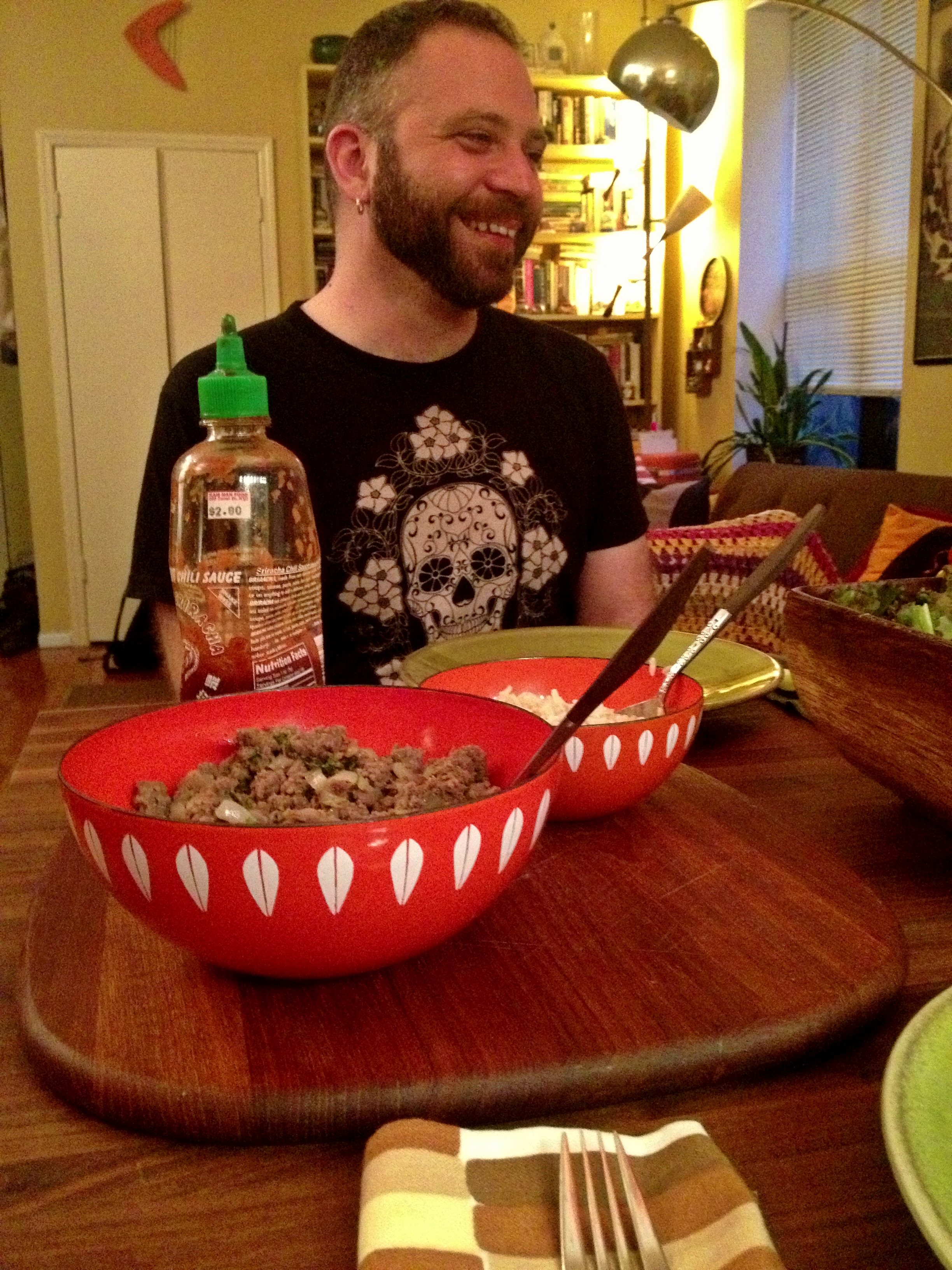
I had intended to serve the beef mixture in lettuce wraps, but the lettuce turned out to be more spikey than leafy, so we mounded it on our plates, adding the rice, beef, and additional Sriracha. This would have been even more delicious had I remembered the pickled kohlrabi (blame it on the gin), which ended up making a solo appearance as the second course.

Happy Justin

From there, we whipped up a couple of Gibsons with radishes that I pickled during last autumn’s bumper crop and headed up to the roof for some fresh air. Back downstairs and having polished off the vermouth, we moved on to rye mixed with Campari and bitters–or something like that.