Provencal Roast Chicken

I adopted Jezebel around 1999. She was so small that I quite reasonably assumed she was a kitten. But the vet put her at about three years old. Jezebel remains a delightful companion, despite her recent propensity for late night yowling. (The internet suggests that dementia is likely.) As you can see, whatever’s happening in her brain, she’s managed to hold onto her good looks.

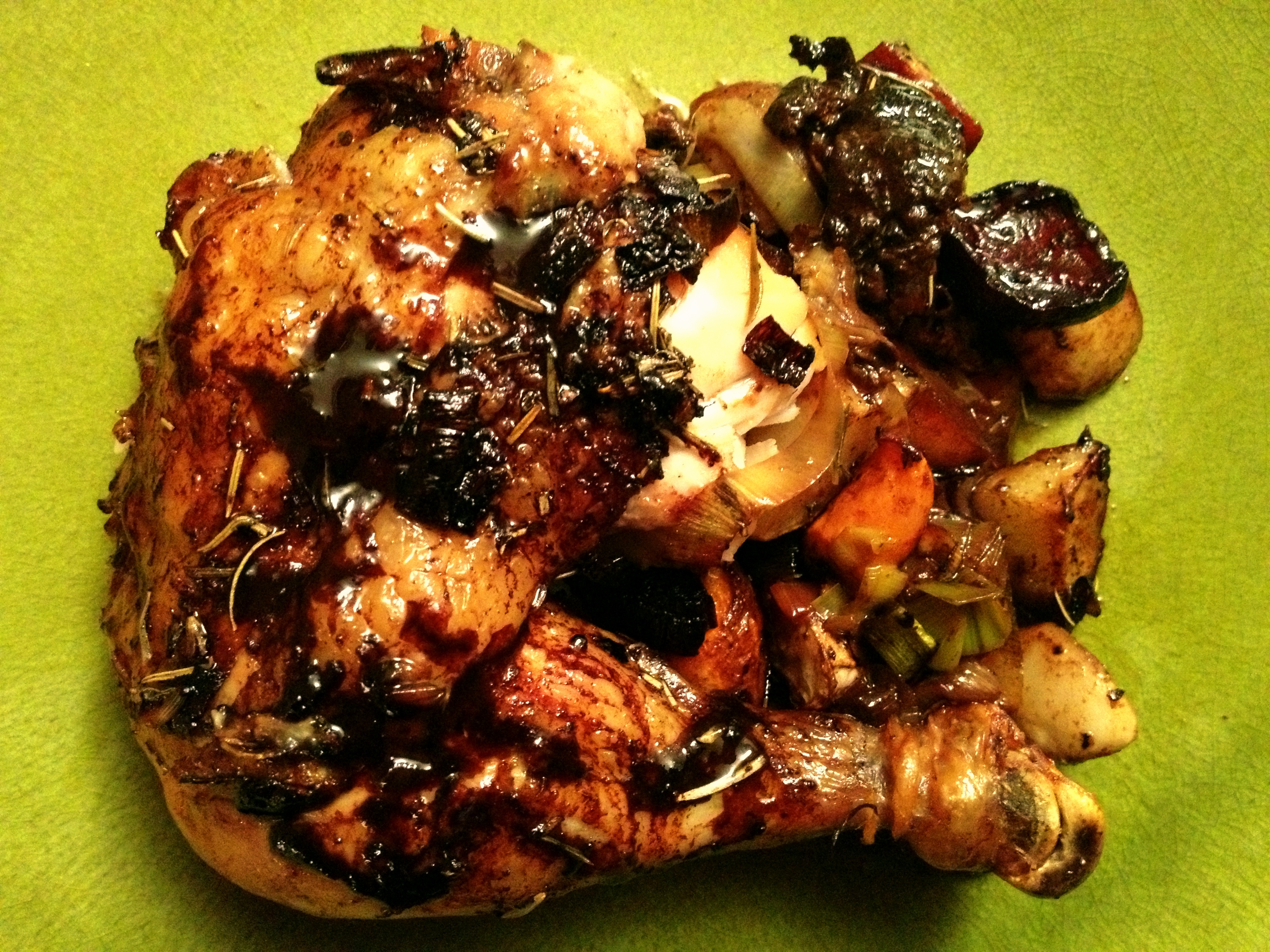
As tiny as she was when she found me, Jezebel is now down under five pounds, so I tend to feed her whatever she wants. She and I only made our way through a small bit of this truly scrumptious Provencal-style roast chicken tonight, but I am confident that it will be just as good throughout the week.

While I once confined myself to white meat off the bone (a holdover from my vegetarian upbringing and subsequent squeamishness), I love roasting a whole chicken. The smell permeates the house. It’s economical. It leaves you with bones to make stock. And a whole chicken can be communal–even when it’s just you and your cat.

Roast Chicken with Porcini, Leeks and Root Vegetables

  • One whole chicken (5-7 pounds), rinsed and patted dry
  • 1.5 ounces dried porcini mushrooms
  • 1 lemon
  • kosher salt
  • black pepper
  • 1 1/2 tablespoons Herbes de Provence (lavender, savory, fennel, thyme and rosemary or some combination thereof)
  • 1-2 tablespoons olive oil
  • 2 large leeks, white and light green portions sliced and rinsed thoroughly
  • 4 cups of chopped root vegetables (turnips, carrots, parsnips, beets, potatoes, etc.)
  1. Preheat the oven to 375 degrees. Bring a cup of water to a boil and pour over the dried porcini.
  2. Slice the ends off of the lemon, score the sides and stuff it inside the bird. Combine a tablespoon of kosher salt, a good amount of freshly-ground pepper and a tablespoon of the Herbes de Provence in a small dish. Rub this all over the bird, being sure to get under the skin to massage it into the breast meat. If you’ve got some kitchen twine and you can find a way to access it while your hands are covered in raw chicken, truss the legs. If not, whatever.
  3. Set the bird in a roasting pan breast-side down, drizzle some olive oil over the top and pop it in the oven. After 30 minutes or so, flip the bird over and baste with the pan juices. If the bird hasn’t released much fat, you can use a little more olive oil. You might also sprinkle the top with additional salt, pepper and herbs if you like.
  4. After another 30 minutes, slide the bird to the side and add your leeks and root vegetables. (I went with turnips, carrots, beets and potatoes because that’s what I had on hand.) Stir these with the pan juices and then add 1/2 tablespoon of the Herbes de Provence, salt, pepper and the porcini along with their liquid. Mound the vegetables in the center, flip your chicken so that it is once again breast-side down and place it on top of the vegetables.
  5. Continue cooking, basting the bird with the juices approximately every fifteen minutes and stirring the vegetables if needed. It should take roughly 20 minutes total cooking time per pound, but start checking your chicken whenever you get anxious or when the aroma starts to make you dizzy. I recommend ignoring whatever guidelines your thermometer may suggest and, instead, aim for getting the deepest part of the thigh up around 165 degrees. Be sure to let it rest for about five minutes out of the oven. If you’re worried about the bird getting cold, tent it very loosely–lest you steam that beautiful, crisp skin–with foil.
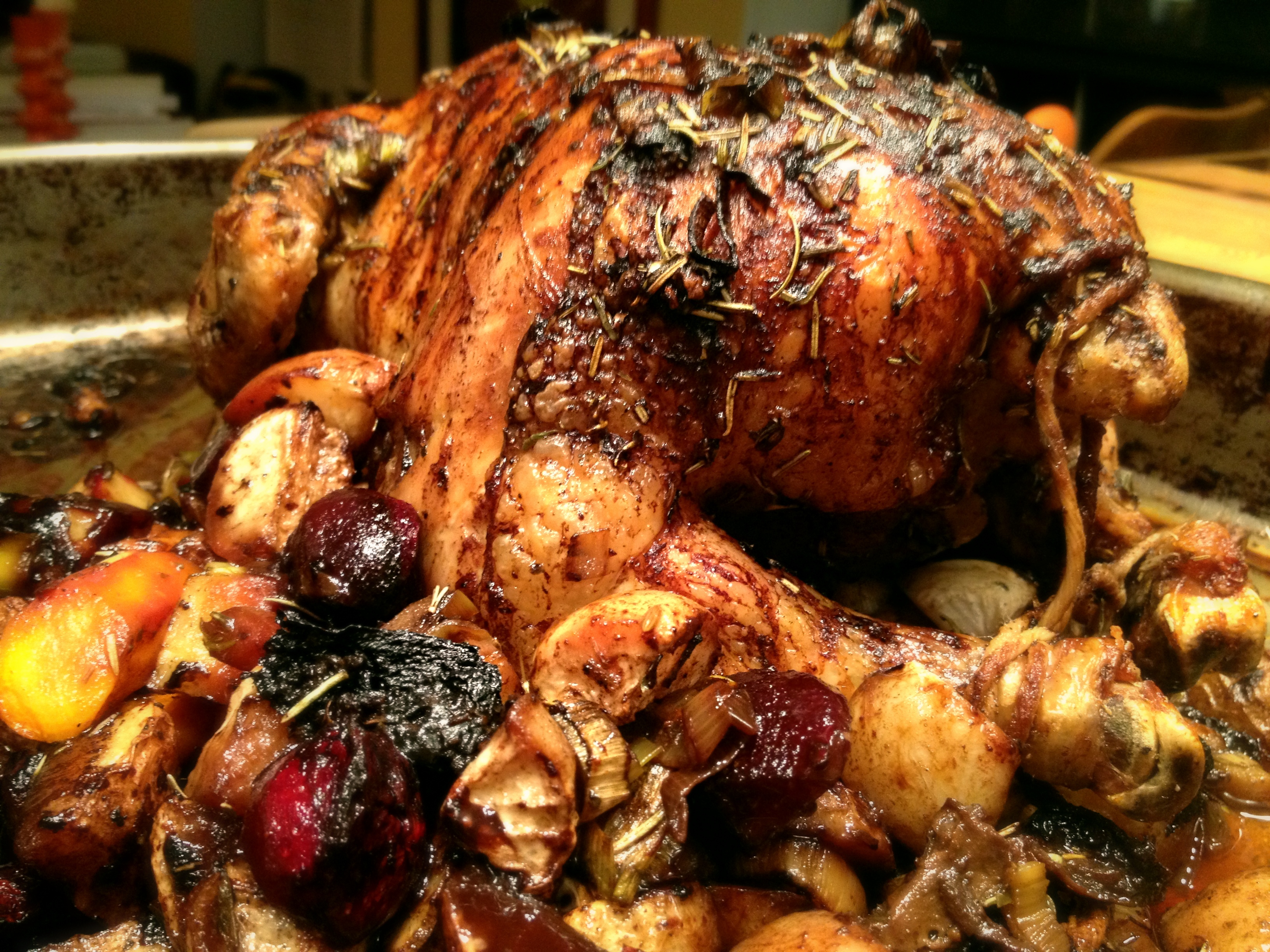
Were I serving this to a crowd, I would have placed the chicken on a platter, mounded the vegetables around it, and carved at the table. Instead, I hacked off of a leg and got to work.
Turnip, Shiitake, Leek and Tofu Stir-Fry

Turns out working full time while going to graduate school is challenging. One of the articles we discussed in class tonight was about New York Jews and Chinese Food. I got home around 8:00 with Chinese food on the brain and a determination to cook some of the vegetables that were rapidly deteriorating in my crisper.

Turnip, Shiitake, Leek and Tofu Stir-Fry

  • 6-8 dried shiitake mushrooms
  • 2 tablespoons high-heat cooking oil (peanut, canola, etc.)
  • 2 large leeks, white and light green portions sliced and rinsed thoroughly
  • 6-8 small turnips cut into 1/4″ half-moons
  • 1 block drained and frozen* extra firm tofu, cut into fat sticks
  • 1/4 cup rice wine vinegar
  • 2-3 tablespoons tamari or soy sauce
  • 1-2 tablespoons Sriracha or other chili sauce
  • 1 teaspoon sesame oil
  • Sichuan peppercorns (black would work too, but you’ll miss that fun tingling)
  • 1 teaspoon concentrated chicken stock or 1 small cube chicken bouillon (Use vegetable stock/bouillon to make this dish vegan.)
  • 1 small bunch flat-leaf parsley or cilantro
  1. Start your rice to cooking. (My new favorite is brown Jasmine rice.) Pour a cup of boiling water over the shiitakes and let sit, weighing down with a jar to keep them submerged. (Be sure not to discard this liquid!)
  2. Add a couple of tablespoons of oil to a wok or sauté pan over medium heat. (I opted for a tablespoon of canola oil and a tablespoon of chile oil.) Add the leeks, stirring frequently until they start to brown. Toss the turnips in and continue stirring until they have softened. Slice your rehydrated shiitakes, add them in and keep cooking.
  3. Add the tofu, vinegar, soy sauce, Sriracha, sesame oil, ground peppercorns, chicken stock/bouillon and the liquid left from your mushrooms, stirring to combine. Let simmer stirring occasionally until your rice is done. Toss the chopped parsley or cilantro in at the last moment.

I had planned to eat this accompanied by a Brooklyn Pilsner that had mysteriously appeared in my refrigerator. But, by the time I sat down to eat, the beer had just as mysteriously disappeared.

* See A Salad for Sailing for a brief discussion of this most excellent technique.

Rice and Peas de Provence

I’ve been laying low since getting home from the beach, resting up in preparation for my return to work and–after a 16-year hiatus–my return to school. I’m starting the Master’s Program in Food Studies at New York University tomorrow. My weekend goals included finishing the baby blanket for my nephew (just need to weave in the loose ends), the juicy novel I started at the beach (33 pages to go), and season 3 of Mad Men (done).

Ordinarily, my little corner of Brooklyn is a pretty quiet place. But each Labor Day millions (yes, millions) of people descend on my neighborhood for the West Indian Day Parade. The bump bump of giant speakers loaded onto flatbed trucks and the aroma of jerk chicken cooking on steel drum grills waft through the air on what I’ve come to view as the last day of summer.

But a week and a half of vacation eating have left me craving vegetarian fare and the cupboard is pretty bare. Rooting through the fridge, I found some celery, garlic and red onions left over from my CSA share. On the counter were dried French lentils that I’d bought on a whim just before leaving town, some unnamed Caribbean hot peppers my stepmom had picked up at Spence’s Bazaar (a must if you find yourself in or around Dover, Delaware) and dried porcini mushrooms that I’d bought at Byler’s (a country variety store in Dover that’s also worth a visit).

Clearly, a West Indian-Provencal mashup was in order…

Rice and Peas de Provence

  • 1/2 cup dried porcini mushrooms
  • vegetable stock (I’ve taken to keeping a jar of Better Than Bouillon on hand)
  • 1 bay leaf
  • 1 tbsp herbes de provence (or an equivalent amount of thyme, rosemary, savory, fennel and/or basil)
  • 2 whole allspice berries, crushed into a fine powder
  • 1 cup red wine
  • 5 cloves garlic, peeled and sliced
  • 1 Scotch bonnet or other hot pepper, cut in half and seeded
  • 3 stalks celery, diced
  • 1 cup French lentils (the small ones)
  • 1 1/2 cups long-grained rice
  • 1 1/2 tablespoons butter (you could use canola or vegetable oil to make this a vegan dish)
  • 1 large red onion, thinly sliced
  • 1/2 lemon
  • salt and pepper
  • Scotch bonnet or other Caribbean hot sauce
  1. Bring 4 cups of vegetable stock or 4 cups of water with bouillon to a boil in a medium-sized heavy pot and add dried mushrooms, breaking up any large pieces. After five minutes, add the bay leaf, spices, wine, garlic, pepper and celery and let boil for an additional five minutes.
  2. Add lentils, lowering heat to a simmer. After five minutes, add rice. Let simmer for 25-35 minutes, stirring gently and adding small amounts of water as needed, until lentils and rice are just tender. Turn heat off and top with a tight-fitting lid.
  3. Melt butter over medium-low heat in a small pot and then add onion. Cook until onions are very soft, stirring frequently. 
  4. Remove bay leaf. Add cooked onions, lemon juice salt and pepper to taste. If the dish is spicy enough for you, remove and discard the pepper. Alternately, you can mince it up and add it back to the pot, which is what I did.

I’m meeting a neighbor at 7:00 for a little rooftop dining. I plan to serve this with some Scotch bonnet pepper sauce that I picked up in the Bahamas and a Vinho Verde that I have on hand, although I suspect that some ice-cold beer would also do the trick.

Pasta Alla Eliana

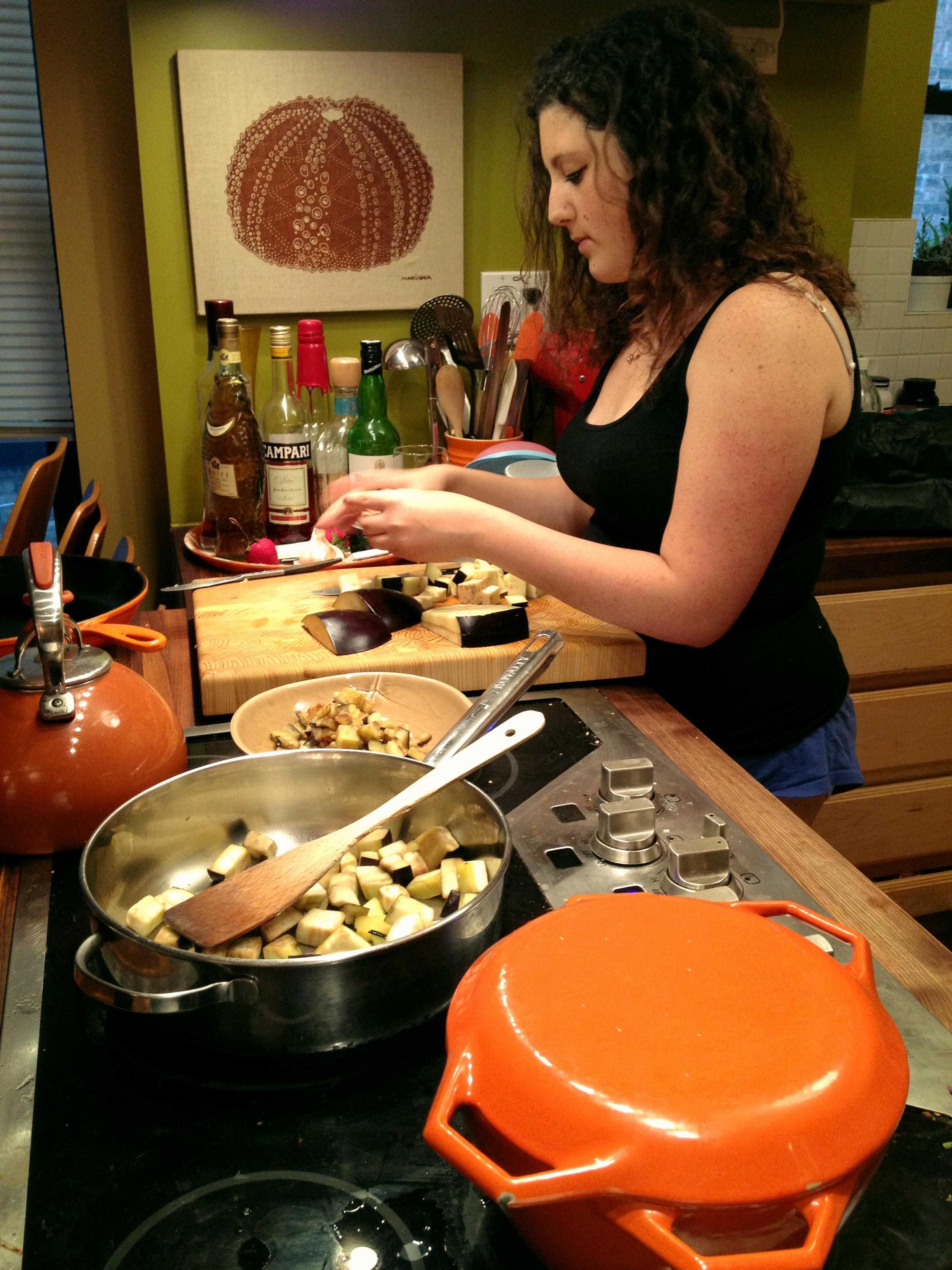
My sister Eliana continues to camp out on an air bed where my dining table usually resides.  The regular reader (anyone?) will recall that she is 16 and vegan.  One of my goals for Eliana’s visit is to teach her some cooking fundamentals so that she can feed herself healthy meals at college and beyond without relying on exorbitantly priced prepared items from Whole Foods.

Today’s CSA share included a giant eggplant, some purple basil and an abundance of glorious tomatoes.  I was thinking Pasta Alla Norma, which is a traditional Sicilian pasta dish with fried eggplant, tomatoes, basil and ricotta salata.  Ricotta salata is an Italian cheese that’s a lot like feta in its crumbly texture but with a less sharp flavor.

But I am feeding a vegan…

Pasta Alla Eliana

  • 1 large or 2 medium eggplant, cut into cubes
  • 4 tbsp (or so) olive oil
  • 5 cloves garlic, minced or pressed
  • 1/2 tbsp crushed red pepper or to taste
  • 4 ounces tempeh, cut like lardon (roughly half the size of a matchstick)
  • 1/2 tbsp soy sauce
  • 3 large tomatoes, roughly chopped
  • 1-3 tbsp red wine vinegar (depending on acidity of tomatoes)
  • 10 ounces whole wheat ziti or other large tubular pasta
  • 20 fresh basil leaves
  • 3/4 cup vegan mozzarella shreds
  • 3 tsp nutritional yeast
  • salt and pepper
  1. Heat 1 tablespoon olive oil in a large heavy-bottomed pan over medium heat.  (Nonstick would be easier, but I don’t own one and it was fine so long as we made sure to scrape the bottom regularly.)  Add the eggplant in batches so as not to crowd the pan, pouring another tablespoon of olive oil into the pan before each batch.  Cook eggplant, stirring occasionally until browned and softened.  Add all of the eggplant back to the pan along with the garlic, red pepper flakes and salt and pepper.  Cook, stirring constantly and scraping the bottom of the pan, for a few minutes until you smell the garlic toasting.  Remove from pan.
  2. Put a pot of salted water on to boil.  Heat another tablespoon of olive oil and add your tempeh as well as the soy sauce.  (I know that the soy sauce seems odd here, but it will help give the tempeh a flavor that mimics the guanciale or other cured pork product I would ordinarily be tempted to include.)  Cook stirring constantly until the tempeh is nicely browned and then add your tomatoes.  Cook for a few minutes, throw the eggplant back into the pan, stir in a tablespoon of red wine vinegar and let simmer, adding a little water if it starts to dry out.  
  3. When the water boils, add your pasta and cook until just before al dente (about two minutes less than the package instructs).  Scoop the pasta directly into your sauce, allowing some of the pasta water to transfer, and simmer for a couple of minutes, stirring occasionally, until sauce begins to stick to pasta.  Taste and adjust seasoning with salt, pepper and vinegar as you see fit.
  4. Dish pasta into individual bowls, topping each with 1/4 cup of the vegan mozzarella, torn up basil leaves and a teaspoon of nutritional yeast.  (While this last ingredient is definitely not necessary, it will lend a cheesy flavor.  And, since it was a staple of my childhood, I’m going to assume that it has some nutritional value.)

This provided a solid dinner for two people with enough leftovers for Eliana’s lunch tomorrow.  Here’s what it looked like once we mixed it up.

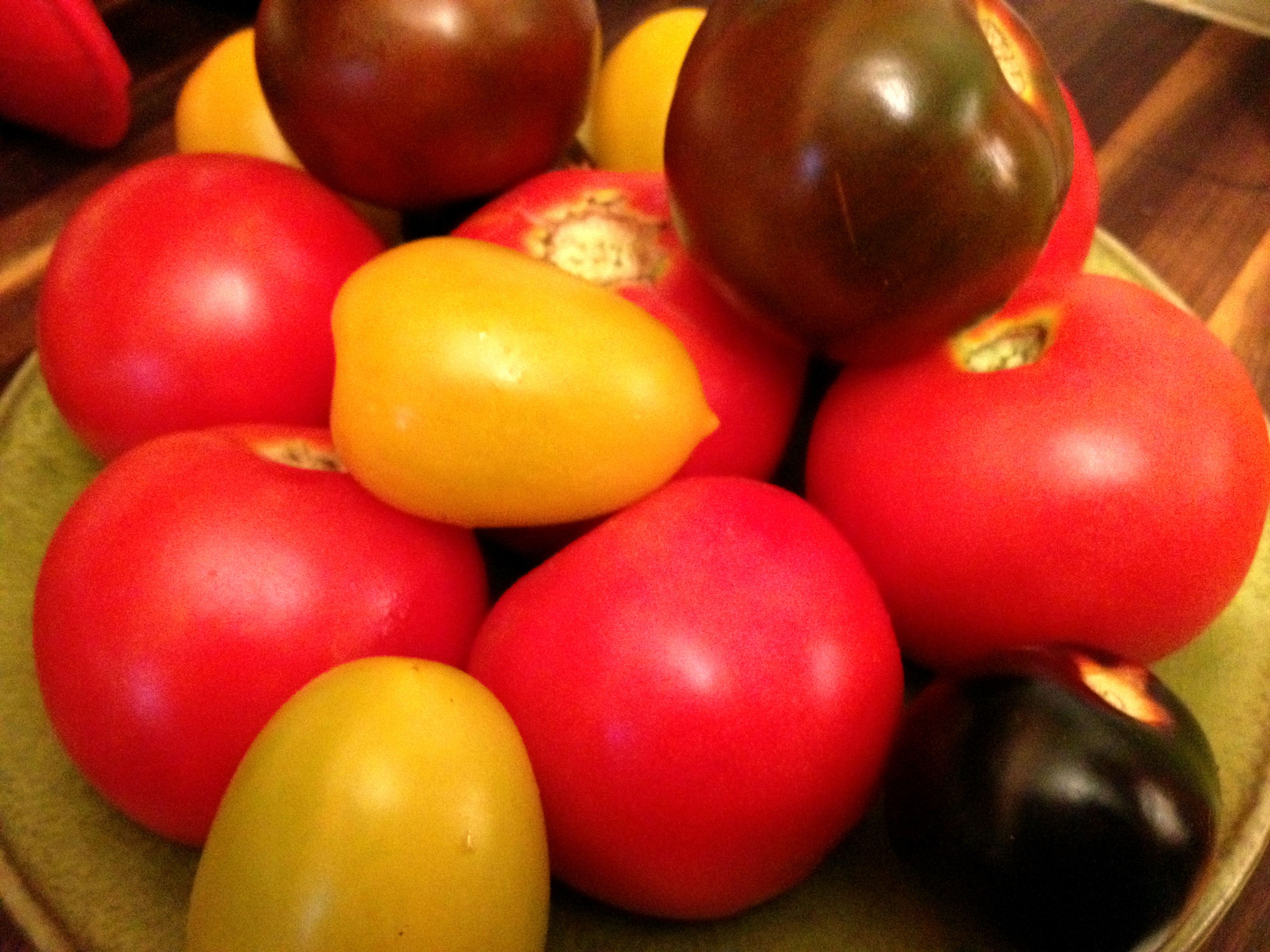
And here’s a little tomato porn, just because.

Tomato Time: Pizza!

Yesterday I worked the second of my two volunteer shifts as a member of the Prospect Park CSA.  I get the sense that not everyone is a fan of this membership requirement, but I find it to be great fun.  While the good folk at Windflower Farm do all the work, I get all the glory.  This week was particularly glorious, as tomato season is upon us.

My 16-year-old sister is staying with me for a couple of weeks while she attends a Shakespeare camp.  She’s coming up on her first anniversary as a vegan so I’m cooking a bit differently than usual.  Tonight we managed to polish off six plum tomatoes, one medium-sized tomato and four ping pongs (cutest tomato name ever).

Vegan (or not) Fresh Tomato, Sweet Onion and Corn Pizza

  • 1 small batch whole wheat pizza dough (half a ball of dough from the Whole Foods freezer case worked perfectly for a midweek meal, but you can easily make your own)
  • 1.5 pounds fresh tomatoes
  • 1 large sweet onion (Walla Walla, Vidalia, etc.)
  • 1 cup shredded vegan mozzarella (fresh mozzarella, feta or even goat cheese would also be great)
  • 3-4 tbsp olive oil
  • 2 ears sweet corn
  • 10 leaves fresh basil
  • salt and pepper
  1. Turn broiler to high and place a large cast iron skillet with one tablespoon olive oil in oven.  Line a roasting pan or a baking sheet that has sides with foil and drizzle one tablespoon oil across it.  Slice tomatoes and onion approximately 1/4″ thick and spread on baking sheet in a single layer.  Drizzle another tablespoon of olive oil over the top, add salt and fresh-ground black pepper and place on the top shelf directly under the broiler. 
  2. While this is cooking, cut the kernels off of the corn.  (If your corn is as sweet and fresh as mine, go ahead and munch on some while you wait.)  Check on your roasting veggies and, if your oven is a little uneven, rotate the pan.
  3. When the tomatoes begin to dry out and the onions turn brown at the edges, pull them out.  Turn off the broiler and set your oven as high as it will go.  Remove the cast iron skillet and tilt to spread the oil.  Stretch dough into a disc roughly the size of the skillet by rotating your hands along the edges and allowing gravity to pull it down.  If the dough sizzles when you place it in the pan, great.
  4. Sprinkle all but a couple of tablespoons of the cheese over the dough then top this with a layer of roasted tomatoes followed by the roasted onions.  Add the corn and then sprinkle with the remaining cheese.  (Were we not going vegan, some Romano would have been the way to go here.)
  5. Place your pizza on the bottom rack of the oven and bake until the crust just starts to brown.  Sprinkle with chopped basil and, if you are so inclined, a bit of good quality olive oil.

We ate this with a simple salad of red leaf lettuce and tomatoes dressed with red wine vinegar, good olive oil, Dijon mustard and black pepper.

This is what a happy vegan looks like.

Living Room Picnic

Last night I was supposed to meet friends in Prospect Park for a screening of The Muppet Movie. Mother Nature had other plans. I’d been prepping for a picnic, but a blanket over the coffee table would have to suffice. On the menu: a Pressed Picnic Sandwich, Quick-Pickled Kale and Beets, Potato Chips (lifted from Thursday’s Prospect Park Alliance fundraiser) and a boatload of rosé.

Pressed Picnic Sandwich

This isn’t so much a recipe as a concept. The idea here is to layer a bunch of tasty ingredients in a logical order and then to press the sandwich with a weight.

I started with a round, day-old olive loaf from BKLYN Larder, but imagine you could use any rustic loaf with a nice crust. I sliced the loaf in half horizontally and scooped out most of the soft stuff with my hand, leaving about 1/2 inch all the way around. I then slathered the inside, top and bottom with a homemade tapenade (oil-cured black olives, anchovies, basil, garlic scapes, almonds, balsamic vinegar, Dijon mustard, capers, and whatever else was lurking in my fridge.). You could use prepared tapenade or pesto or even some herbed mayonnaise. The key is that you need a layer with some fat in it to prevent the bread from getting soggy.

I then added a layer of browned onions followed by strips of grilled summer squash. (I like to do this in a hot cast iron pan and then sprinkle the vegetables with smoked sea salt to give them the depth that comes from outdoor grilling). Next up was an Italian cow’s milk cheese. I’m blanking on the name, but it was creamy and a little tart, which provided a nice counterpoint to the sweetness of the veggies. Then layers of hot sopresatta, prosciutto and peppadew peppers.

I wrapped the sandwich in a couple of layers of aluminum foil and placed a cast iron grill pan over the top. Periodically, I would flip the sandwich and apply pressure to the pan until the sandwich looked like a UFO. I would guess that you want this to sit for at least an hour. (Had we been successful in dining outdoors, I would have stuck the sandwich in the bottom of the picnic basket, allowing the weight of the other items to do the pressing.)

As you can see, it sliced beautifully.

Quick-Pickled Kale and Beets

  • ½ cup apple cider vinegar
  • 3 Tbsp sugar
  • 3 garlic cloves
  • 2-3 Tbsp combined of whole pickling spices (such as coriander, fennel, allspice, cloves, cumin, fennel, peppercorns, cinnamon stick, bay leaf, mustard seed, etc.)
  • 1 pinch red pepper flakes
  • 1 thinly sliced red onion
  • 4 large beets
  • Small bunch kale including stems, roughly chopped

Combine all but the last two ingredients along with ½ cup of water in a small saucepan, bring to a boil, reduce heat to low and let simmer for 20-30 minutes to give the spices a change to release their flavor into the brine. In a separate pot, add the beets, cover with water, bring to a boil and cook until they give when pierced with a fork (approximately 30 minutes). Pull the beets out and add the kale, starting with the stem pieces. Let this boil for a few minutes and then drain. When beets have cooled, peel and slice them. Combine beets, kale and brine in a jar or plastic container and let sit for at least one hour, making sure to stir if the brine doesn’t fully cover the vegetables.

The living room picnic continued with a trip to the wine shop for reinforcements, a Barbie styling session and fresh nectarines and rum over salted caramel ice cream. Regrettably, it did not conclude with any efforts to clean up.

Scapes and Squid

I’ve been traveling a lot, but this weekend was all about Brooklyn. Prospect Heights, Crown Heights, Park Slope, Clinton Hill, Williamsburg, Bushwick, Boerum Hill, Sunset Park and a 24-hour diner in Bay Ridge were all on the agenda. My friend Dana and her girlfriend Kathleen were coming for dinner on Sunday, so I swung by the Grand Army Plaza Greenmarket. It was, indeed, quite green. I came home with three kinds of kale, mint, chives, baby red jacket potatoes, radishes, sugar snap peas, and garlic scapes. (I also bought squid, hot turkey sausage and slab bacon, but had a tough time working them into this composition.)

Image

I was first lured into buying scapes a few years ago; something about their sinuous curves proved irresistible. A scape is a stem that shoots up from the garlic bulb and produces a small flower. Farmers trim them so that their garlic bulbs will continue to grow. They’re similar to garlic in flavor, but not as sharp. Scapes are tasty cooked, but I think they really shine when eaten raw. Here’s just one in an endless number of riffs on scape pesto. (Note that it freezes beautifully.)

Scape Pesto

  • 6 garlic scapes, ends and tips removed
  • 1/3 cup marcona almonds (you could use regular almonds, walnuts, pine nuts, etc., though I would recommend lightly toasting them first)
  • zest and juice of one lemon
  • 3 tablespoons olive oil (good quality, because this isn’t going to be cooked)
  • 30-40 fresh mint leaves (this could be basil, parsley, cilantro, etc.)
  • salt and fresh-ground black pepper (to taste)
  • pinch of sugar (if needed)

Blend the first five ingredients in a food processor, adding water a little at a time  to loosen the mixture enough that it becomes a rough paste. (You could also just add more olive oil, but we’ve got bacon and butter coming further down the page.) Add salt, pepper and, if needed, a pinch of sugar to taste.

I’d texted Dana from the greenmarket to confirm that she eats squid. Her reply came just as I walked in the door: “I eat squid, but am not the hugest fan ever.” The pressure was on. I didn’t really have a plan, but had gotten it in my head that I wanted to make a single dish that married the scapes, squid, potatoes and sugar snap peas into a sort of warm composed salad.

Image

A lot of people find the prospect of cooking squid intimidating, but it’s easy. The key is to cook it very quickly (grilled, fried, boiled or sautéed) or to cook it very slowly (in a traditional Italian red sauce or a fisherman’s stew perhaps). Anything in between yields the rubbery texture of late-night diner calamari.

Scapes and Squid

  • 3 cloves pressed garlic
  • 2 tablespoons olive oil
  • 1 tablespoon red wine vinegar
  • pinch each of dried oregano, Aleppo pepper and red pepper flakes
  • smoked sea salt and fresh-ground black pepper
  • 1.5 pounds cleaned squid

Combine all ingredients and let sit for at least one hour and up to six hours.

  • 1 batch scape pesto (see above)
  • 15-20 small red potatoes, cut in half
  • 3 cups sugar snap peas, strings removed
  • 3 ounces slab bacon (or other smoked fatty pork product)
  • 1 preserved lemon (a regular lemon would also work), flesh removed and rind sliced into slivers
  • 1 tablespoon butter
  • 8-12 fresh mint leaves

While the squid marinates, slice the potatoes and parboil them in salted water until they are just fork tender. Removed the strings from the sugar snap peas and blanch them in the salted water for just a couple of minutes, taking care to cool them down quickly so that they stay crisp and bright green.

At this point, you can knock off and enjoy a glass or two of a nice crisp white wine or a rose until just before you’re ready to eat.

Cut the bacon into small pieces (you may recognize these as lardon) and render them in a cast iron skillet over medium heat.

Meanwhile, in a second pan, melt the butter with the preserved lemon rind over medium heat. When it has stopped foaming, add the potatoes, cut side down.

When the bacon is starting to crisp but is still meaty, push the pieces to the edge of the pan and add as many of the squid bodies as will fit in a single layer. Cook until the squid turns an opaque white on the bottom and then flip. When the other side turns white, pile them at the edge of the pan and add another layer, repeating the process until all of the squid is cooked.

When the potatoes have browned, add the sugar snap peas and stir until they are just heated through.

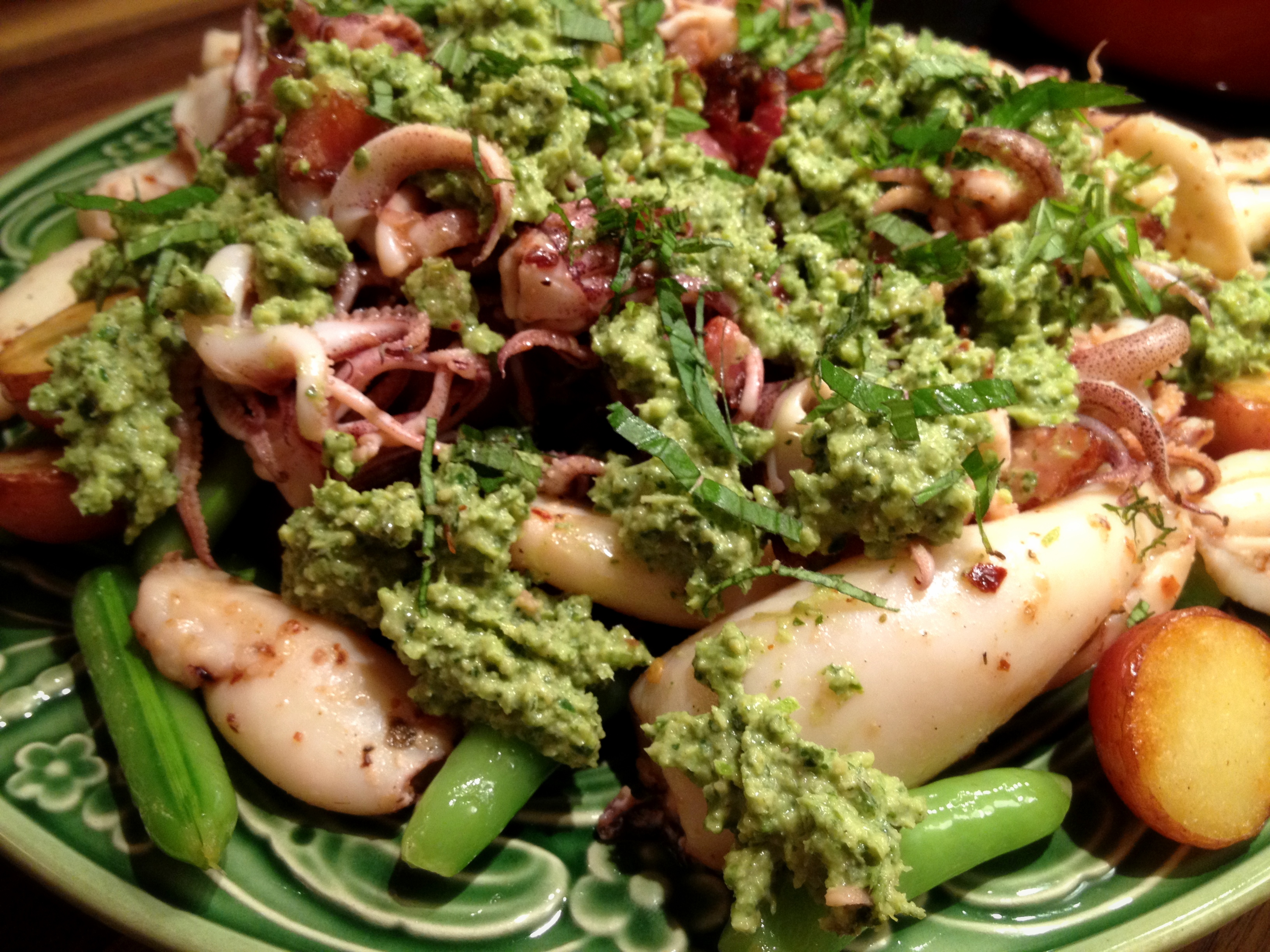
Spoon the potatoes and peas onto a platter and then add the bacon and squid as well as any juices left in the pan. Drizzle the whole thing with scape pesto and top with some thinly sliced mint leaves.

Dana, the squid skeptic, went back for thirds.

Image