Happy Rich, Seitan and Skiitake Stir-Fry

This is a big week. CSA season started and the teenage vegan is making her annual pilgrimage to New York. Rather than camp out on an air bed in my living room, my baby sister will be interning with the Powerhouse Theater for six weeks and, much to my delight, bunking in my old dorm. She was scheduled to fly into LaGuardia at 3:00 this afternoon. It is now after 8:00pm and her flight to White Plains (yes, White Plains) has yet to depart. This is Eliana and the plane that may or may not bring her to New York tonight. 

Eliana and the Plane

I had planned a lovely vegan dinner for two. Alas, it looks like I will be dining alone.

Happy Rich, Seitan and Shiitake Stir-Fry

  • 1/4 cup dried shiitake mushrooms
  • 1 tablespoon corn, canola or peanut oil
  • 1 tablespoon chili oil
  • 1 tablespoon minced garlic (3-4 small cloves)
  • 1/2 tablespoon minced ginger
  • 15 or so sichuan peppercorns
  • 1 small onion, halved and cute pole to pole
  • 1 small bunch Happy Rich (shoutout to Windflower Farm and Prospect Park CSA!), broccolini, Chinese broccoli or other sturdy greenery, chopped
  • 8 ounces seitan (which, incidentally, freezes brilliantly)
  • 1/2 tablespoon concentrated vegetable stock (If you have remembered to replace the tamari you used up last week, you could probably use that instead.)
  • 2 tablespoons rice wine vinegar
  • 1/2 tablespoon sesame oil
  • parsley (optional)
  • 1 cup brown Jasmine rice or whatever else tickles your fancy, cooked
  1. Boil a little water, pour it over the shiitakes and let stand while you get your rice going.
  2. Bring a wok or large heavy-bottomed skillet up to medium-low temperature with the vegetable oil, chili oil, garlic, ginger and sichuan peppercorns. (I might recommend crushing the peppercorns up a bit, which I did not.) Once your pan starts sizzling and from then on, be sure to stir almost continuously. Cook for a couple of minutes until the oil is infused, add the onion, crank up the heat to medium high, and stir-fry until the onion starts to brown around the edges. Add the Happy Rich and cook until just starting to go limp. Toss in the seitan.
  3. Add the vegetable stock or tamari, rice wine vinegar and the shiitakes with their liquid. Cook, stirring constantly, for a minute or two until the liquid has boiled off.
  4. Remove from the heat and stir in the sesame oil and some fresh flat-leaf parsley if you happen to have some languishing in the fridge.

Happy Rich, Seitan and Shiitake Stir-Fry

Polish off half of this with the remainder of the surprisingly full-bodied Pinot Gris you’ve been nursing all week. Pack the rest in a recycled takeout container to present to the teenage vegan–if and when she arrives.
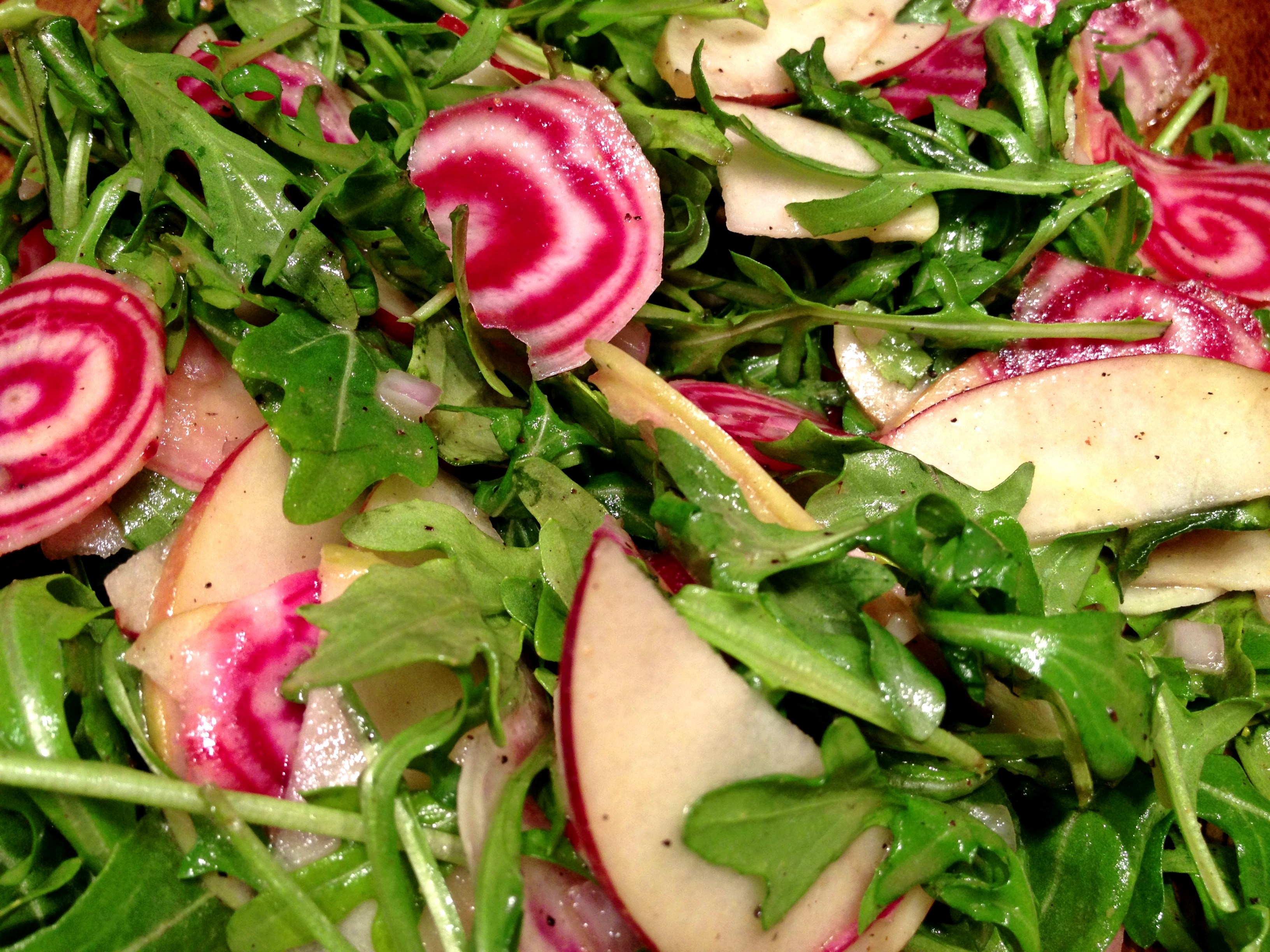
Beet, Apple and Arugula Salad

I just got back from an indulgent long weekend in Baltimore. Vacation eating included fried catfish and collards, crab cakes, oysters, half a bacon cheeseburger, dim sum, and shrimp and grits–washed down with a Bloody Mary, several bottles of Natty Boh and a whole lot of red wine. I had just one day to recover before today’s lunchtime tasting at The Four Seasons Restaurant for an upcoming gala. Somehow I managed to power through the afternoon despite having sampled five wines, six appetizers, six entrees and six desserts.

I worked late and still wasn’t all that hungry by the time I got home, which is good because there wasn’t much left in the cupboard. I had some arugula that had miraculously survived the two weeks since the roast chicken dinner I made for my sister. And I had plenty of apples and root vegetables from my winter CSA share.

Beet Apple Arugula Salad

Beet, Apple and Arugula Salad

  • 1 small shallot, minced
  • 1 tablespoon good quality olive oil
  • 1 tablespoon honey vinegar or apple cider vinegar
  • 1 teaspoon honey
  • 1 teaspoon creamy Dijon mustard
  • 1 pinch salt
  • black pepper
  • 5 small beets (The Chioggias pictured above were lovely, but regular beets will taste just as good.)
  • 2 small, firm apples
  • 4 cups arugula

Combine first seven ingredients in a jar and shake vigorously. Arrange arugula in a wooden bowl. Peel and rinse beets. Using your peeler (or a mandoline if you’re fancy like that), shave the beets into the salad bowl. Quarter your apples, slice out the core, and use the peeler to shave thin slices into the bowl. Give the dressing one last shake, drizzle it over you salad, and toss to combine.

I suspect that this salad would be great with orange or grapefruit pieces that had been supremed, but the desiccated clementines on my dining table didn’t make the cut. Goat cheese or burrata would give it some heft. Whatever variation you choose, this salad would be a lovely way to start a romantic dinner for two. It also makes a fine meal for someone recovering from serious gluttony.

End-of-Semester Snacks

It’s the tail end of my first semester of graduate school. In hindsight, it should have occurred to me that this would coincide with the end-of-year fundraising push at work. I have a lot to accomplish over the next eleven days and very few unscheduled hours during which to accomplish it all. My dining table has been converted into a staging ground for my research papers. My sink is full of dirty dishes from the snacks that I’ve been meting out as rewards. Actual meals have fallen by the wayside, primarily because cooking would just be another form of procrastination.

Tonight for dinner, I reverted to two of my favorite snacks. The first is a graham cracker with crunchy peanut butter and raw honey. (Sometimes I substitute raisins for the honey, but I am out of raisins owing to an unfortunate pantry moth situation.) I chased this with half of an avocado filled with half a tablespoon of very good quality aged balsamic vinegar and sprinkled with fleur de sel. These two snacks provide solid nutrition and, when paired with a glass of Spanish Garnacha and a streaming episode of 30 Rock, will hopefully ward off that dream about showing up to your last class with an incomplete research paper and no pants.

Avocado

Moroccan Meze, Part 2

From what I can tell, communities surrounding the Mediterranean each have their own variation on an eggplant dip. I have yet to meet one I didn’t like. This version is seasoned in a Moroccan style and pairs quite nicely with my date and lamb kaftah, but you could easily use the same technique to very different effect by altering the spices.

Roasted Eggplant Dip

  • 3 large eggplant
  • 1 large red onion
  • 2 tomatoes
  • 1 tablespoon harissa (sriracha or other chile paste would do in a pinch)
  • 1/2 tablespoon toasted cumin seeds, ground
  • 1/2 tablespoon dried sumac (or some lemon zest)
  • 1 teaspoon smoked paprika
  • 1 teaspoon smoked salt
  • 4 tablespoons olive oil
  • red wine vinegar
  • salt and pepper
  1. Preheat oven to 350 degrees. Prick eggplant all over with a fork and place in jelly rolls pans or roasting pans in oven. Roast until the eggplant start to collapse (approximately 45 minutes to one hour), flipping occasionally. When cool enough to handle, scoop the flesh out and set in a fine mesh strainer for at least one hour.
  2. In a small baking dish, combine sliced onion and tomatoes with 2 tablespoons olive oil. Roast in oven, stirring occasionally, until onions are soft with crispy edges. Chop this mixture so that it is almost a paste.
  3. Add the drained eggplant, onion and tomato mixture, olive oil and spices to a bowl and mash well with a potato masher. Adjust seasoning with salt, pepper and red wine vinegar to taste.

The kaftah and eggplant were both unctuous and a little spicy, so I decided to make a quick yogurt dip to balance out the flavors. I combined a cup of labaneh (full-fat strained Greek yogurt would work) with the zest of two lemons and the juice of one. It worked like a charm.

Sadly, I failed to take a proper photo of either of these dishes, but that’s them, along with the kaftah, in the upper right quadrant of my refrigerator.

Turnip, Shiitake, Leek and Tofu Stir-Fry

Turns out working full time while going to graduate school is challenging. One of the articles we discussed in class tonight was about New York Jews and Chinese Food. I got home around 8:00 with Chinese food on the brain and a determination to cook some of the vegetables that were rapidly deteriorating in my crisper.

Turnip, Shiitake, Leek and Tofu Stir-Fry

  • 6-8 dried shiitake mushrooms
  • 2 tablespoons high-heat cooking oil (peanut, canola, etc.)
  • 2 large leeks, white and light green portions sliced and rinsed thoroughly
  • 6-8 small turnips cut into 1/4″ half-moons
  • 1 block drained and frozen* extra firm tofu, cut into fat sticks
  • 1/4 cup rice wine vinegar
  • 2-3 tablespoons tamari or soy sauce
  • 1-2 tablespoons Sriracha or other chili sauce
  • 1 teaspoon sesame oil
  • Sichuan peppercorns (black would work too, but you’ll miss that fun tingling)
  • 1 teaspoon concentrated chicken stock or 1 small cube chicken bouillon (Use vegetable stock/bouillon to make this dish vegan.)
  • 1 small bunch flat-leaf parsley or cilantro
  1. Start your rice to cooking. (My new favorite is brown Jasmine rice.) Pour a cup of boiling water over the shiitakes and let sit, weighing down with a jar to keep them submerged. (Be sure not to discard this liquid!)
  2. Add a couple of tablespoons of oil to a wok or sauté pan over medium heat. (I opted for a tablespoon of canola oil and a tablespoon of chile oil.) Add the leeks, stirring frequently until they start to brown. Toss the turnips in and continue stirring until they have softened. Slice your rehydrated shiitakes, add them in and keep cooking.
  3. Add the tofu, vinegar, soy sauce, Sriracha, sesame oil, ground peppercorns, chicken stock/bouillon and the liquid left from your mushrooms, stirring to combine. Let simmer stirring occasionally until your rice is done. Toss the chopped parsley or cilantro in at the last moment.

I had planned to eat this accompanied by a Brooklyn Pilsner that had mysteriously appeared in my refrigerator. But, by the time I sat down to eat, the beer had just as mysteriously disappeared.

* See A Salad for Sailing for a brief discussion of this most excellent technique.

Kale and Pear Salad

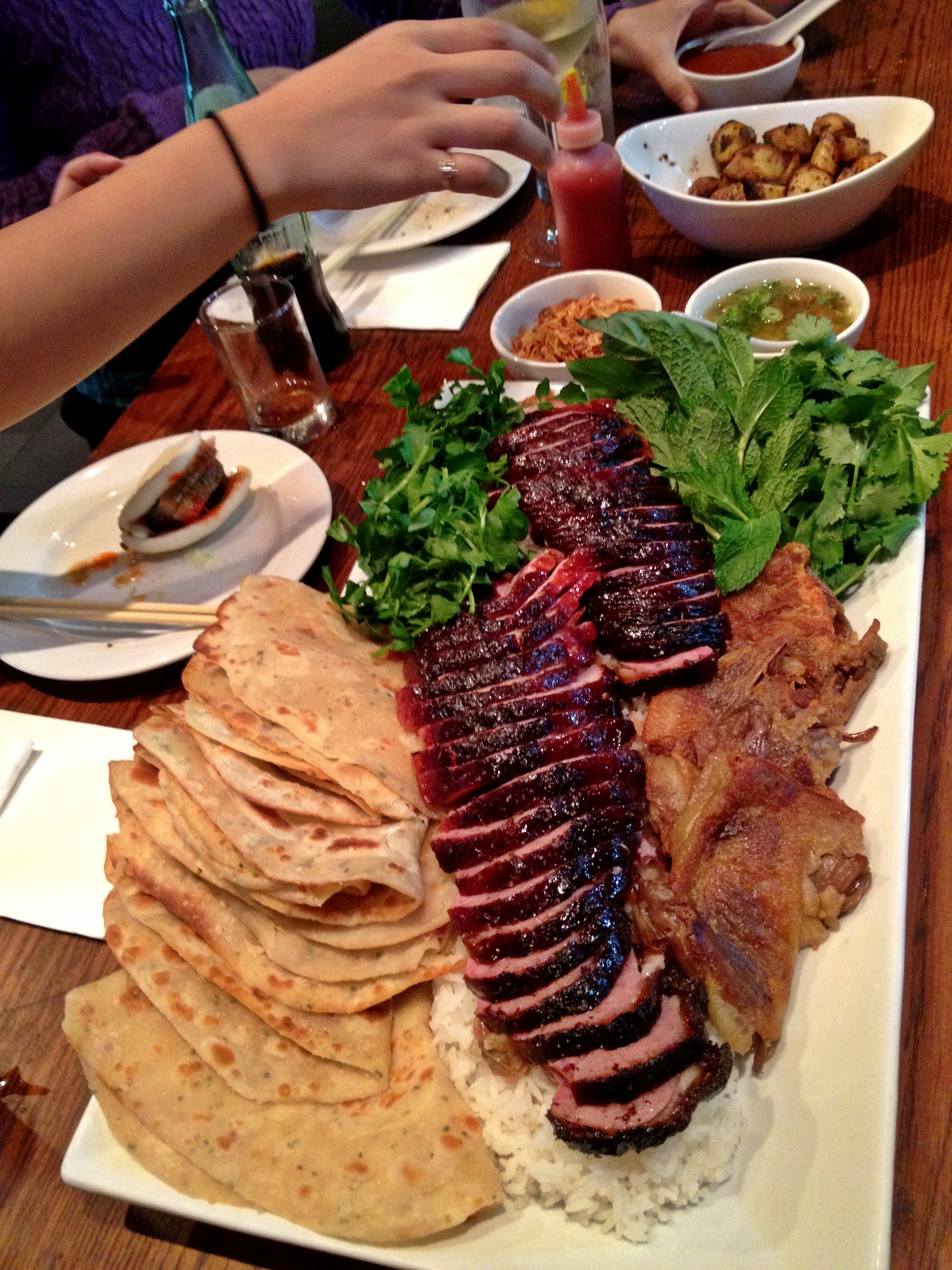
I took my staff out to lunch today to bid adieu to one of our members, who is a serious foodie and a serious meat-eater.  We shared the rotisserie duck at Momofuku Ssam Bar, which was a truly remarkable dining experience, but left me feeling a bit gouty.  (Actual quote from the departing employee: “can you pass the duck fat?”)

I spent the rest of the afternoon chugging water and plowing through some grad school reading.  It was a good seven hours until I could even think about eating again.  Something restorative was essential.  Fortunately, I had some Lacinato kale and pears left over from my CSA share.

Kale and Pear Salad

  1. In a medium-sized jar, combine half of a large, thinly-sliced red onion; 2 tablespoons of honey vinegar (or any other light-colored vinegar); 1 tablespoon of creamy Dijon mustard; 1-2 tablespoons of good quality extra virgin olive oil; and salt and black pepper.  Screw the lid on the jar and shake vigorously.  Let sit for an hour or so.
  2. Pour the dressing over six cups of chiffonade of Lacinato kale and toss thoroughly. Let this sit for another hour or so, mixing periodically.
  3. Toss a sliced pear in and grab a fork.

Pesto and the Art of Procrastination

It’s Sunday evening and my computer screen mirrors my blank stare. That grant proposal that I’ve been meaning to get to has not magically written itself. The coming week is going to be beastly.

It would really be best to just finish the proposal tonight.

Seriously.

All three email accounts are checked. The dishes are done. The litterbox is clean. Hell, I’m procrastinating so hard that the plants are even watered.

Write, damn it.

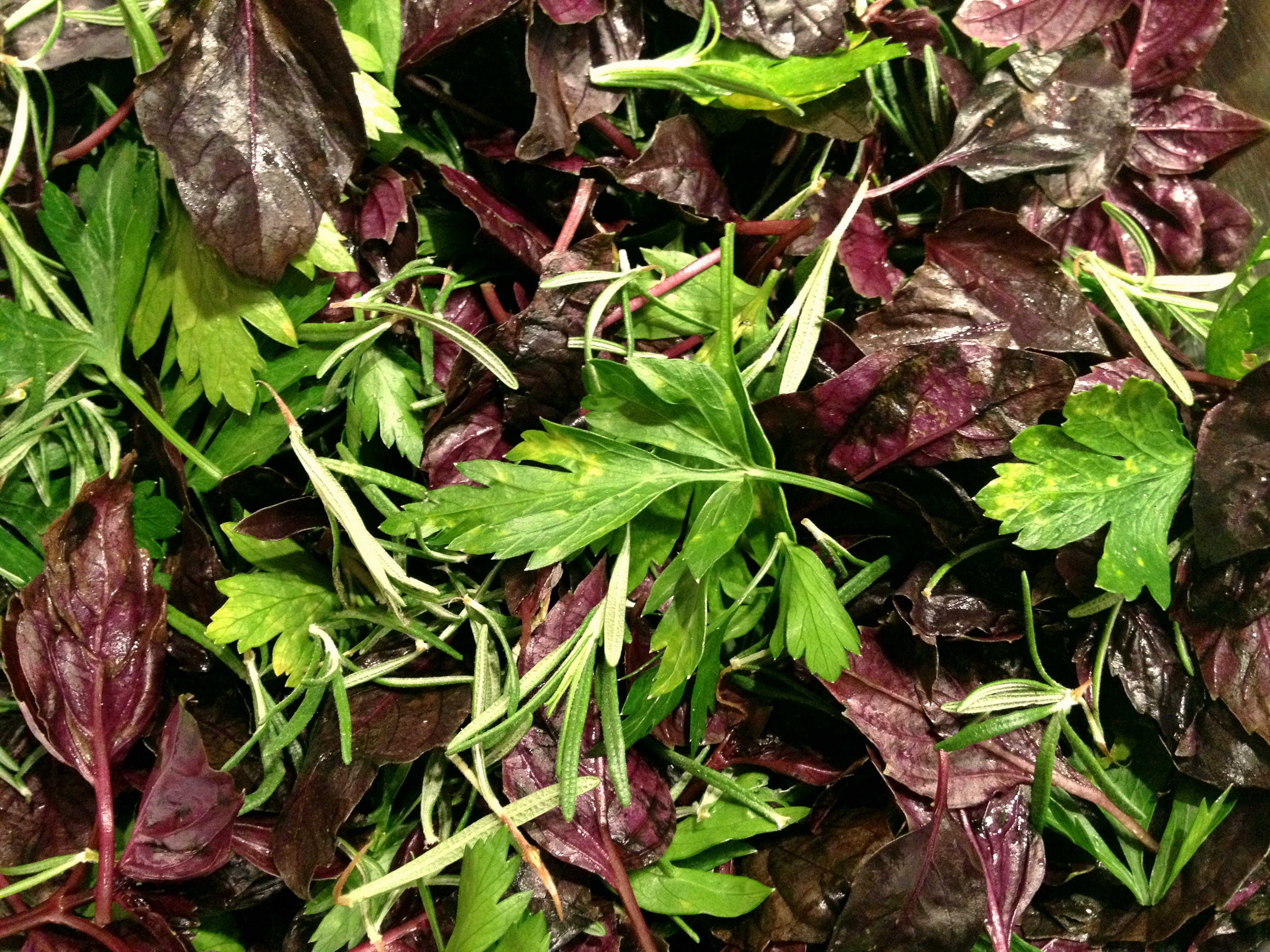
Wait! Isn’t there a bouquet of purple basil that was brought by a brunch guest and is still languishing in the fridge? I don’t imagine that rosemary plucked from my dad’s front yard will be good for much longer. And what of the parsley that arrived in last week’s CSA share?

Screw the grant proposal; there’s pesto to be made!

  1. Toast a handful of pine nuts, walnuts or whatever else you have on hand in a cast iron skillet over medium low heat. Be sure to watch the nuts closely and stir frequently once they start to brown, as there’s a fine line between toasted and burnt.
  2. Rinse and stem your herbs. While basil is traditional, you can make a pesto with just about any herb. I have a particularly fond memory of a cilantro jalapeño and lime pesto that I used to top some grilled pork chops. In this case, I used the aforementioned purple basil, rosemary and parsley. I suspect that it will pair nicely with roast lamb or merguez.
  3. Toss your toasted nuts, a clove of garlic or a garlic scape, and the fresh herbs into a food processor and grind until you’ve got a coarse paste. This will likely necessitate scraping down the work bowl a few times. I find that it helps to start by pulsing. If it really won’t get going, just move on to Step 4. It’s all good.
  4. While cheese isn’t necessary, it is delicious. Mix in a cup or so of finely grated Parmesan, Romano or other sharp hard cheese. (This is an excellent use for that dried out hunk in the back of your cheese drawer.) If you do not already have one, I highly recommend acquiring a rasp, which is often referred to as a microplane in kitchen supply stores. It will make short work of hard cheese, citrus rind, whole nutmeg and your knuckles. Be careful!
  5. With the food processor running, gradually add a stream of extra virgin olive oil until your pesto reaches the desired consistency. I tend to go with less oil, which yields a thicker pesto, assuming that I can always loosen it up later if need be. In this case I used about half a cup of oil. Since you will not be cooking the pesto, this is the time to bust out the good stuff.
  6. At this point, you can call it pesto, but I find that a little tweaking helps. The pungency of the herbs, the saltiness of the cheese, and the grassiness of the olive oil will all impact the flavor. So taste it and adjust as you see fit. In this case, I added the zest and juice of one lemon to brighten the woodiness that the rosemary imparted. I added a little more salt and a healthy dose of freshly ground black pepper because I’m into that. Sometimes a pinch of sugar does the trick. Trust your tongue.

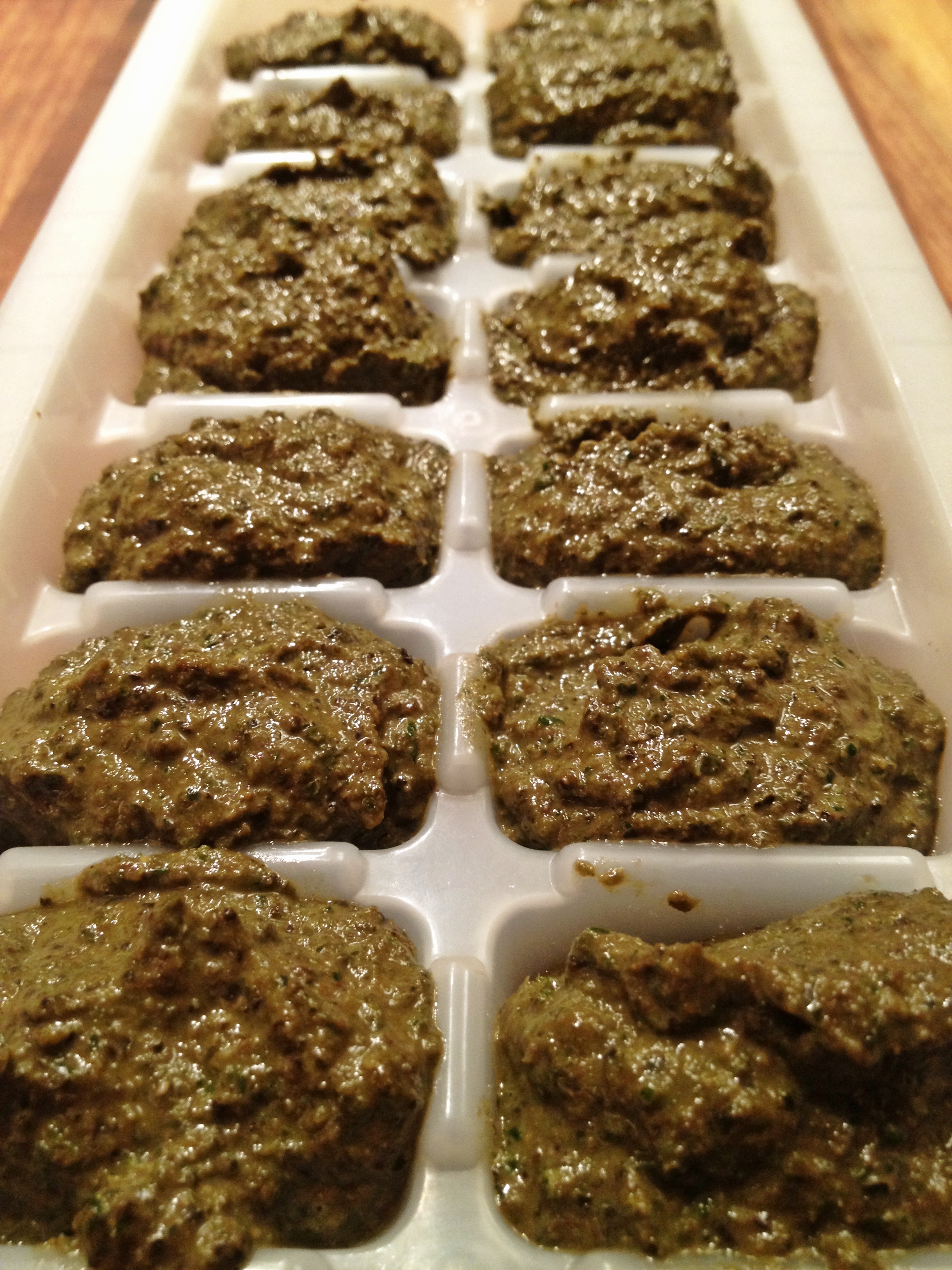
Pesto freezes brilliantly. I like to spoon it into ice-cube trays, freeze it overnight and then toss these cubes into a plastic baggie so that I can defrost just what I want on a given night.

The nights are getting colder and the air has that crisp feeling that signals the end of summer. Soon acorn squash and beets will replace the sweet corn and tomatoes and the notion of an overabundance of fresh herbs will seem laughable. Pesto cubes will be a welcome reminder of summer come January.

Rice and Peas de Provence

I’ve been laying low since getting home from the beach, resting up in preparation for my return to work and–after a 16-year hiatus–my return to school. I’m starting the Master’s Program in Food Studies at New York University tomorrow. My weekend goals included finishing the baby blanket for my nephew (just need to weave in the loose ends), the juicy novel I started at the beach (33 pages to go), and season 3 of Mad Men (done).

Ordinarily, my little corner of Brooklyn is a pretty quiet place. But each Labor Day millions (yes, millions) of people descend on my neighborhood for the West Indian Day Parade. The bump bump of giant speakers loaded onto flatbed trucks and the aroma of jerk chicken cooking on steel drum grills waft through the air on what I’ve come to view as the last day of summer.

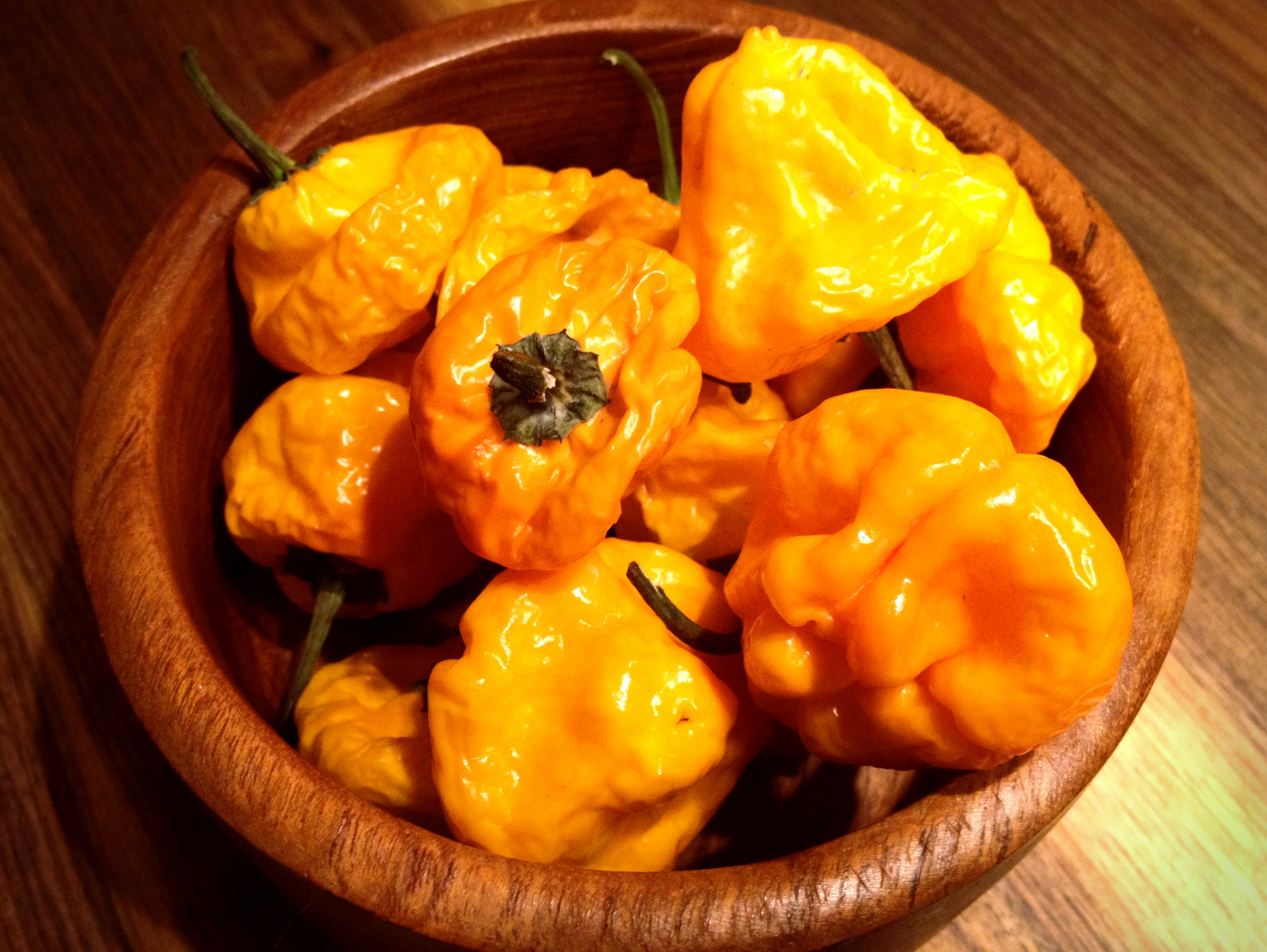
But a week and a half of vacation eating have left me craving vegetarian fare and the cupboard is pretty bare. Rooting through the fridge, I found some celery, garlic and red onions left over from my CSA share. On the counter were dried French lentils that I’d bought on a whim just before leaving town, some unnamed Caribbean hot peppers my stepmom had picked up at Spence’s Bazaar (a must if you find yourself in or around Dover, Delaware) and dried porcini mushrooms that I’d bought at Byler’s (a country variety store in Dover that’s also worth a visit).

Clearly, a West Indian-Provencal mashup was in order…

Rice and Peas de Provence

  • 1/2 cup dried porcini mushrooms
  • vegetable stock (I’ve taken to keeping a jar of Better Than Bouillon on hand)
  • 1 bay leaf
  • 1 tbsp herbes de provence (or an equivalent amount of thyme, rosemary, savory, fennel and/or basil)
  • 2 whole allspice berries, crushed into a fine powder
  • 1 cup red wine
  • 5 cloves garlic, peeled and sliced
  • 1 Scotch bonnet or other hot pepper, cut in half and seeded
  • 3 stalks celery, diced
  • 1 cup French lentils (the small ones)
  • 1 1/2 cups long-grained rice
  • 1 1/2 tablespoons butter (you could use canola or vegetable oil to make this a vegan dish)
  • 1 large red onion, thinly sliced
  • 1/2 lemon
  • salt and pepper
  • Scotch bonnet or other Caribbean hot sauce
  1. Bring 4 cups of vegetable stock or 4 cups of water with bouillon to a boil in a medium-sized heavy pot and add dried mushrooms, breaking up any large pieces. After five minutes, add the bay leaf, spices, wine, garlic, pepper and celery and let boil for an additional five minutes.
  2. Add lentils, lowering heat to a simmer. After five minutes, add rice. Let simmer for 25-35 minutes, stirring gently and adding small amounts of water as needed, until lentils and rice are just tender. Turn heat off and top with a tight-fitting lid.
  3. Melt butter over medium-low heat in a small pot and then add onion. Cook until onions are very soft, stirring frequently. 
  4. Remove bay leaf. Add cooked onions, lemon juice salt and pepper to taste. If the dish is spicy enough for you, remove and discard the pepper. Alternately, you can mince it up and add it back to the pot, which is what I did.

I’m meeting a neighbor at 7:00 for a little rooftop dining. I plan to serve this with some Scotch bonnet pepper sauce that I picked up in the Bahamas and a Vinho Verde that I have on hand, although I suspect that some ice-cold beer would also do the trick.

Pasta Alla Eliana

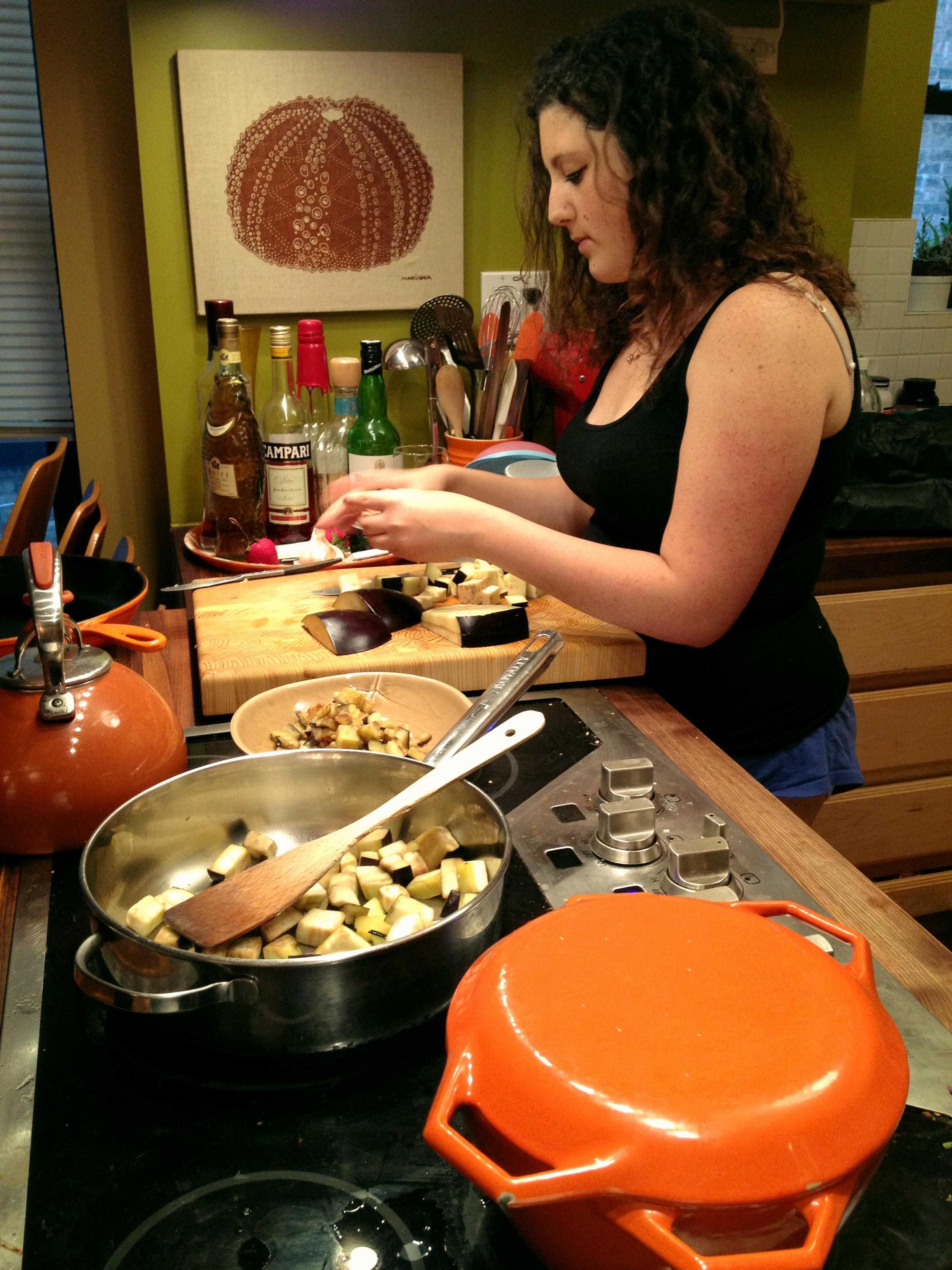
My sister Eliana continues to camp out on an air bed where my dining table usually resides.  The regular reader (anyone?) will recall that she is 16 and vegan.  One of my goals for Eliana’s visit is to teach her some cooking fundamentals so that she can feed herself healthy meals at college and beyond without relying on exorbitantly priced prepared items from Whole Foods.

Today’s CSA share included a giant eggplant, some purple basil and an abundance of glorious tomatoes.  I was thinking Pasta Alla Norma, which is a traditional Sicilian pasta dish with fried eggplant, tomatoes, basil and ricotta salata.  Ricotta salata is an Italian cheese that’s a lot like feta in its crumbly texture but with a less sharp flavor.

But I am feeding a vegan…

Pasta Alla Eliana

  • 1 large or 2 medium eggplant, cut into cubes
  • 4 tbsp (or so) olive oil
  • 5 cloves garlic, minced or pressed
  • 1/2 tbsp crushed red pepper or to taste
  • 4 ounces tempeh, cut like lardon (roughly half the size of a matchstick)
  • 1/2 tbsp soy sauce
  • 3 large tomatoes, roughly chopped
  • 1-3 tbsp red wine vinegar (depending on acidity of tomatoes)
  • 10 ounces whole wheat ziti or other large tubular pasta
  • 20 fresh basil leaves
  • 3/4 cup vegan mozzarella shreds
  • 3 tsp nutritional yeast
  • salt and pepper
  1. Heat 1 tablespoon olive oil in a large heavy-bottomed pan over medium heat.  (Nonstick would be easier, but I don’t own one and it was fine so long as we made sure to scrape the bottom regularly.)  Add the eggplant in batches so as not to crowd the pan, pouring another tablespoon of olive oil into the pan before each batch.  Cook eggplant, stirring occasionally until browned and softened.  Add all of the eggplant back to the pan along with the garlic, red pepper flakes and salt and pepper.  Cook, stirring constantly and scraping the bottom of the pan, for a few minutes until you smell the garlic toasting.  Remove from pan.
  2. Put a pot of salted water on to boil.  Heat another tablespoon of olive oil and add your tempeh as well as the soy sauce.  (I know that the soy sauce seems odd here, but it will help give the tempeh a flavor that mimics the guanciale or other cured pork product I would ordinarily be tempted to include.)  Cook stirring constantly until the tempeh is nicely browned and then add your tomatoes.  Cook for a few minutes, throw the eggplant back into the pan, stir in a tablespoon of red wine vinegar and let simmer, adding a little water if it starts to dry out.  
  3. When the water boils, add your pasta and cook until just before al dente (about two minutes less than the package instructs).  Scoop the pasta directly into your sauce, allowing some of the pasta water to transfer, and simmer for a couple of minutes, stirring occasionally, until sauce begins to stick to pasta.  Taste and adjust seasoning with salt, pepper and vinegar as you see fit.
  4. Dish pasta into individual bowls, topping each with 1/4 cup of the vegan mozzarella, torn up basil leaves and a teaspoon of nutritional yeast.  (While this last ingredient is definitely not necessary, it will lend a cheesy flavor.  And, since it was a staple of my childhood, I’m going to assume that it has some nutritional value.)

This provided a solid dinner for two people with enough leftovers for Eliana’s lunch tomorrow.  Here’s what it looked like once we mixed it up.

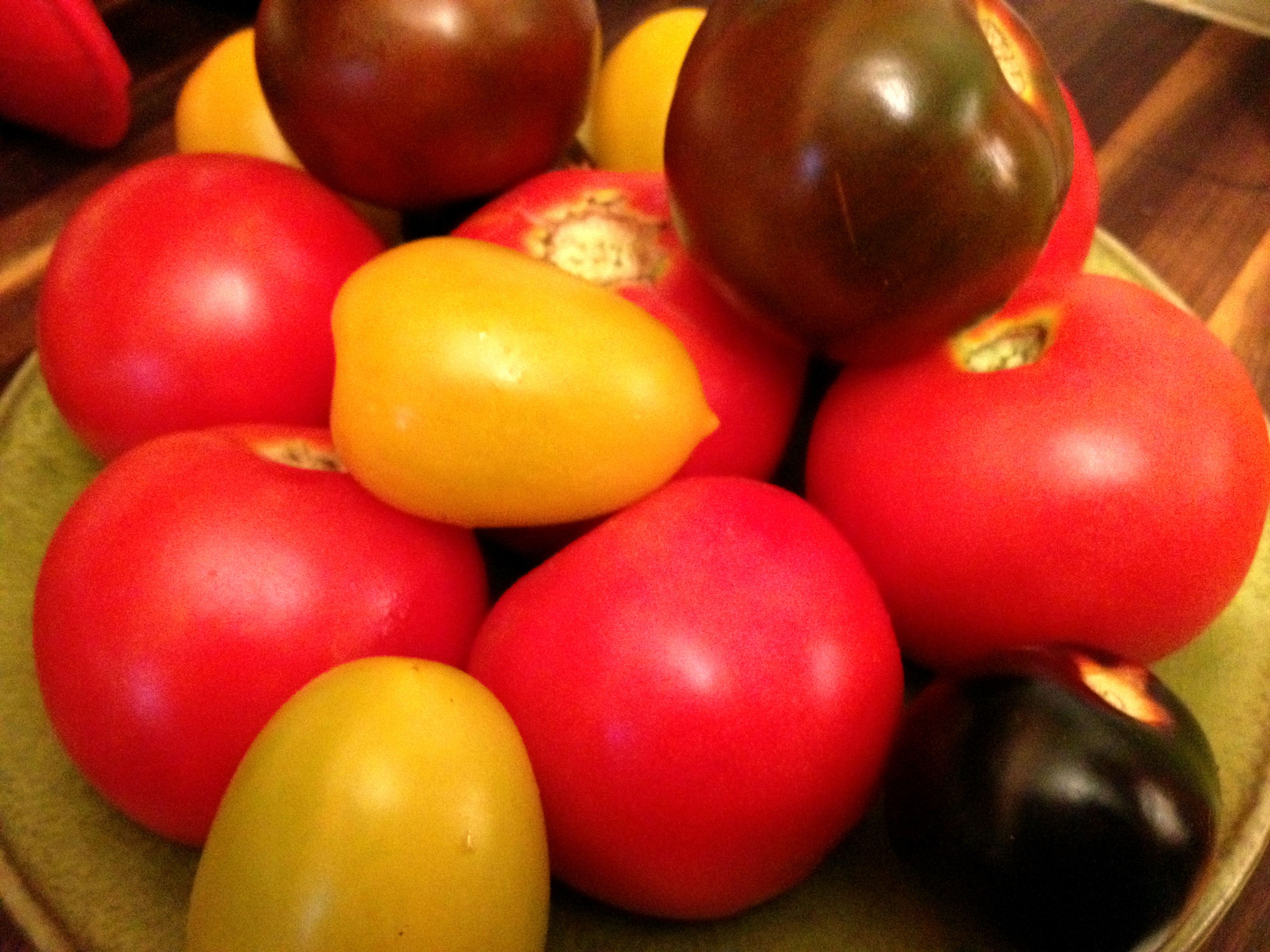
And here’s a little tomato porn, just because.

A Salad for Sailing

I spent the day on a 75-year-old wooden sailboat owned by dear friends that’s docked in Oyster Bay. My sister Eliana, who’s staying with me for a couple of weeks, is vegan, so I got up early to pull together a protein-packed salad that doesn’t require refrigeration.

A couple of months ago I stumbled across a new technique for preparing tofu. When you freeze tofu, it takes on a radically different texture. Ideally, you would press it to release as much liquid as possible and then wrap it in cheesecloth before freezing it, but I’ve gotten decent results by just tossing a drained block into the freezer in a plastic container. When you take it out, the tofu will have yellowed and developed air pockets where the water has been sucked out. If you then simmer it in liquid, the tofu holds together much better and also takes on the flavor of the liquid.

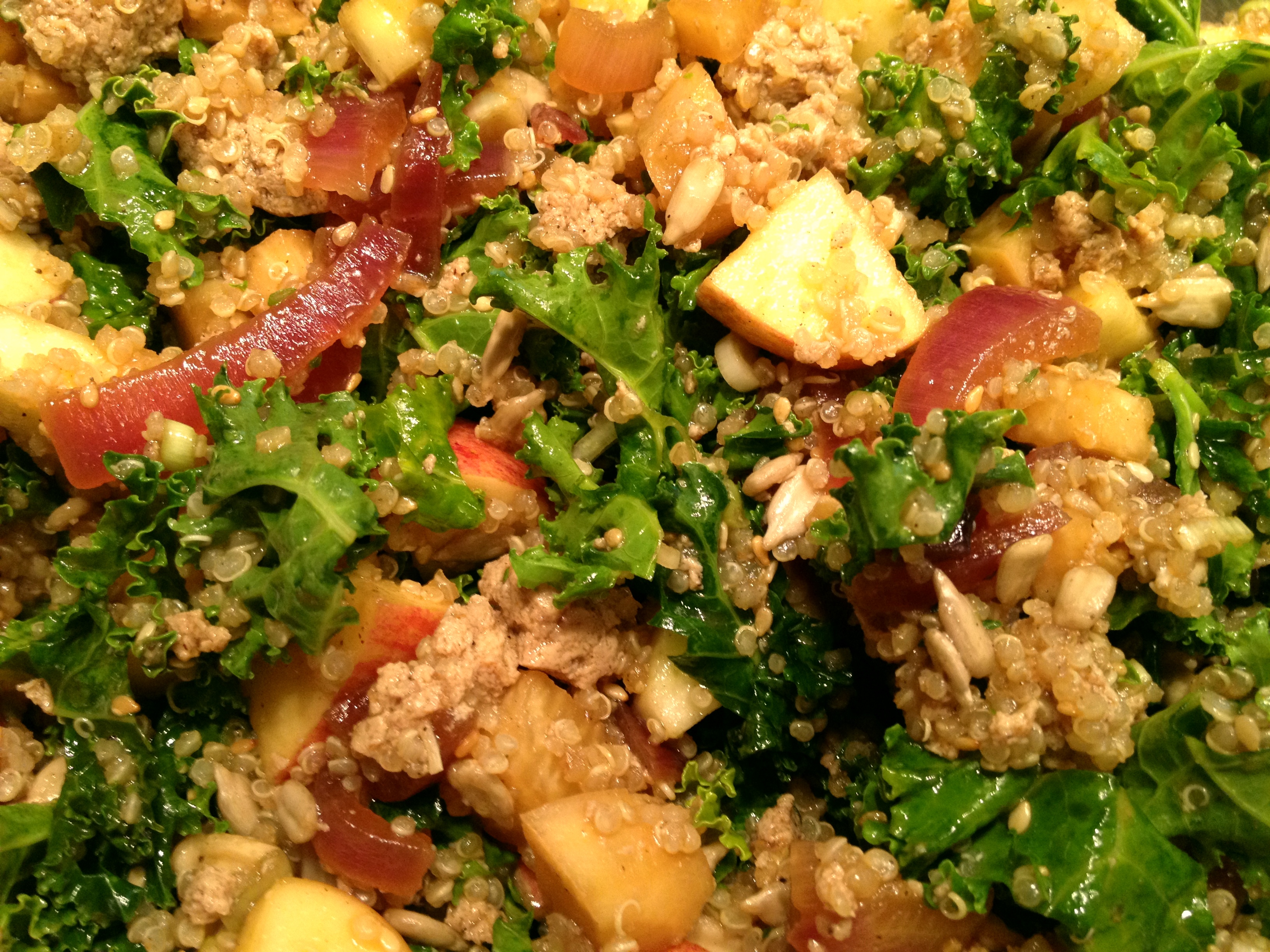
Kale and Quinoa Salad with Candied Five-Spice Tofu

  • 1/2 container firm tofu – frozen, defrosted and cubed
  • 1 red onion
  • 1 kohlrabi bulb, peeled and cubed
  • 1/4 cup soy sauce
  • 2 tbsp sesame oil
  • 1 tbsp fish sauce (can be omitted for vegans)
  • 1/2 tbsp Chinese five-spice powder (or some combination of cinnamon, star anise, anise seed, ginger, cloves and/or fennel)
  • 1 pinch cayenne pepper
  • 2 tbsp Mirin
  • 1 tbsp sugar (honey or agave would work here too, though honey’s not technically vegan)
  • black pepper

Bring above ingredients minus the kohlrabi to a boil, lower heat and let simmer for 20 minutes or so, stirring occasionally. Add the kohlrabi about halfway through. If you need more liquid, add some water. When onions have wilted and tofu is a nice brown color, remove the solids and boil the liquid until it takes on a syrupy consistency.

  • 1/2 cup quinoa, prepared according to package
  • 1 head kale, thinly sliced
  • 2 apples, cubed
  • 1 bunch scallions, thinly sliced (white and light green portions only)
  • 2 tbsp rice wine vinegar
  • 2 tbsp sesame seeds
  • 1/4 cup shelled sunflower seeds

Combine above ingredients with all of your cooked items, stirring gently to combine. Give it a taste and adjust the seasoning with soy sauce, black pepper, sesame oil and/or rice wine vinegar.

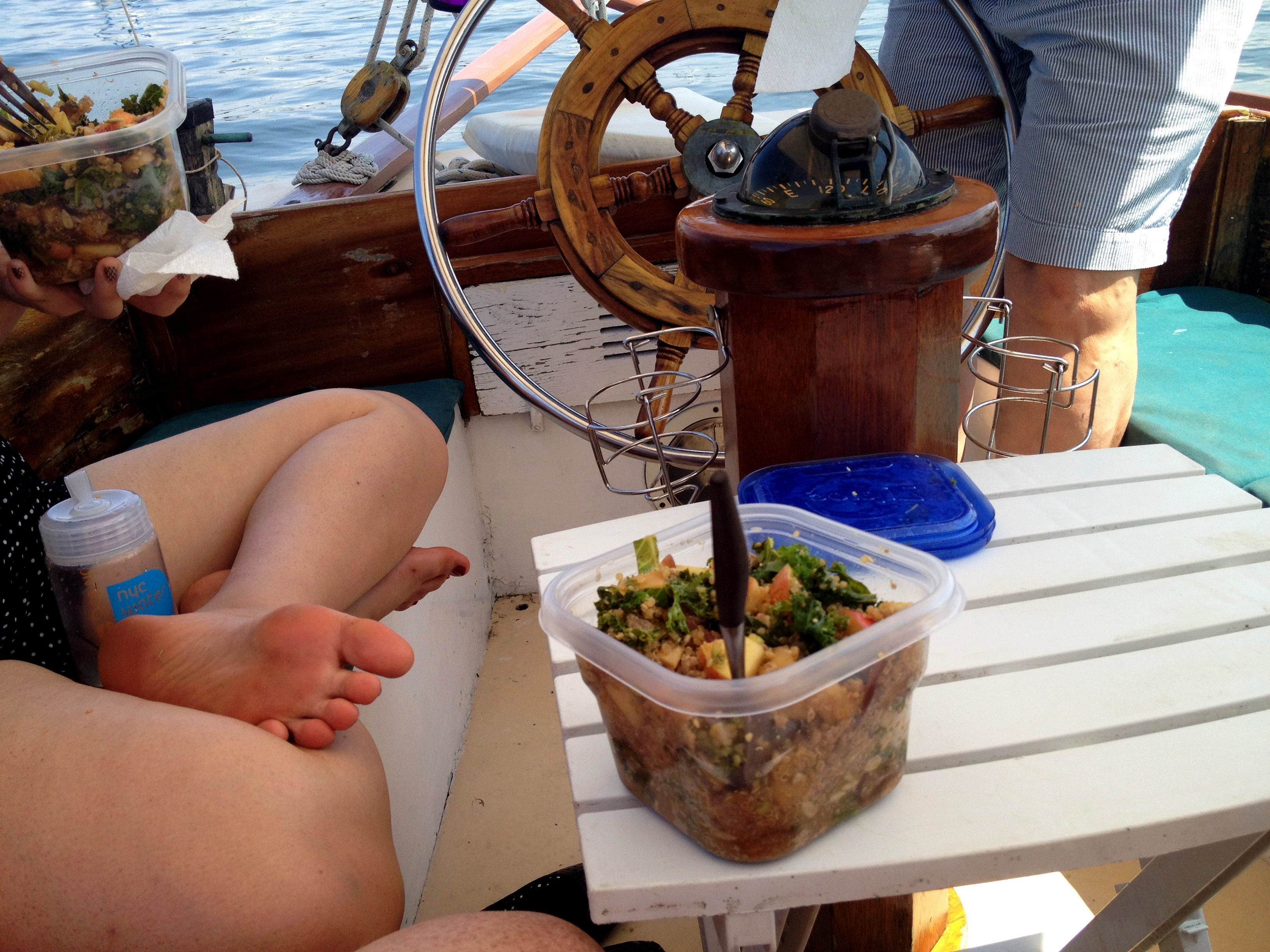
It was a glorious day on Oyster Bay–sunny and 85 degrees. Some ospreys had had their way with the boat, so we started our voyage by scrubbing fish guts and other icky stuff stuff off of the deck. Somehow, this did not diminish our appetites. We ate lunch on the mooring.

The wind picked up in the afternoon and we spent a few glorious hours touring Oyster Bay, catching up on our lives and reminiscing about the books we read in high school. (Eliana’s summer reading is The Great Gatsby, which just happens to be set near where we were sailing.) Shooting the breeze, indeed.