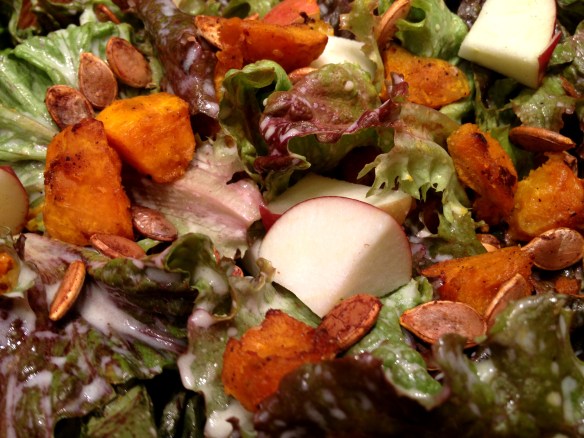
Autumnal Salad

The aforementioned Progressive Party left me feeling a little worse for the wear. It was Sunday and I had a mountain of reading for the next night’s class. I needed something quick and healthy that did not require venturing outdoors.

Autumnal Salad

  • 1 Kabocha (or other sweet winter) squash
  • 1 tablespoon regular olive oil
  • 1 pinch cayenne pepper
  • 1/2 teaspoon cinnamon

Preheat oven to 400. Peel and seed the squash (reserving seeds) and chop into 1/2-inch cubes. Toss squash cubes with 1 tablespoon olive oil, salt and pepper in a large bowl. Pour into roasting pan and pop into oven. Toss rinsed seeds in same bowl along with cayenne and cinnamon. Pour into a small pan, cover loosely with foil, and pop in oven. Roast stirring occasionally until squash is cooked through and browning at the edges. Squash seeds should be toasted and/or have started to pop (hence the aluminum foil).

  • 2 tablespoons plain greek yogurt
  • 2 tablespoons honey vinegar (or white wine vinegar)
  • 2 tablespoons good quality olive oil
  • salt and pepper
  • 1 head red leaf lettuce
  • 2 small apples, chopped

Whisk the first four ingredients together, adding a little more vinegar or some honey as you see fit. Toss the lettuce with the squash, squash seeds, apples and dressing. If you want to be fancy about it, you can reserve some of the seeds to throw on top. 

Autumnal Salad

I made a similar version of this with baby winter greens and butternut squash for a dinner party a couple of weeks later. This time, I included half of a thinly-sliced red onion, which I left to marinate in the dressing until just before serving. It was a big hit.

French Lentil and Fried Egg Perfection

I spent Thanksgiving with my family in South Florida. My 92-year-old grandparents finally relocated this past spring to be near my mom. It was a treat to spend the holiday with them after more than 25 years. While there were only six of us for Thanksgiving dinner, I ended up making a total of 11 dishes in order to satisfy various constituencies–including the aforementioned nonagenarians and a 16-year old vegan. And that doesn’t include dessert!

Image

Here’s my 92-year-old grandma keeping guard over her wing while the bird rests. I was particularly gratified that she liked the butternut squash and creamed kale gratin, which was a divergence from her usual fare.

Image

I got home to Brooklyn late last night. While I wasn’t thrilled to return to winter, I welcomed the opportunity to cater to my own tastes in my own kitchen. Best of all, I was able to cobble together the ingredients for this comforting dish without having to put on pants.

French Lentils

  1. Render 2 ounces of bacon in a medium-sized, heavy-bottomed pot over medium heat. (I highly recommend keeping some slab bacon in the freezer for such purposes.)
  2. Add some chopped onion. (I went with half of a large red onion that had been lingering in the fridge since before I left town.) Cook until onion is wilted and just starting to brown. (If your bacon is lean like mine and the bottom of the pan starts to get dark, add a half tablespoon of olive oil.)
  3. Add three small chopped carrots and saute until just beginning to soften. Then add four cups of water, a few cubes of frozen chicken stock (or some bouillon), and that last bit of red wine left over from your dinner party last weekend. Bring to a simmer and then add half a pound of French green lentils, a pinch of red pepper flakes and half a tablespoon of Herbes de Provence.
  4. Simmer until the lentils are soft and the broth has thickened a bit–roughly 45 minutes. Adjust seasoning with salt and pepper. Add three small carrots chopped into very small cubes and cook for a few more minutes. Stir in a tablespoon or so of red wine vinegar to provide a little balance.

This makes a great bed for just about any protein. I cooked the first half of these lentils for a dinner party a few months ago and served them with pan-roasted Scottish salmon to great effect. Tonight I went with a fried egg. The rich, oozy yolk was a perfect marriage with the earthy lentils.Image

Potluck Progressive

I am lucky to live in a beautiful coop populated by some truly fantastic people. Last night my neighbors got together for a progressive potluck dinner.

My apartment was off-limits owing to an unfortunate leak, so Matt and Ryan graciously hosted the first course. The last month of weekly CSA shares had included more radishes than I could reasonably consume. Last weekend, in a desperate bid to keep them from going bad, I pickled the radishes. I’ve been eating them in breakfast tacos, as a garnish for Anasazi bean soup, and straight from the jar. For our potluck, I served the pickled radishes–along with French bread, baby Brussels sprouts, Macoun apple slices, and steamed new potatoes–with an Appenzeler and Fontina fondue.

The pickled radishes made a second appearance in a round–or, um, three rounds–of Gibsons. A Gibson is a vodka martini with a cocktail onion in place of an olive or a twist. I went with one part dry vermouth to four parts vodka, stirred with ice, strained into coupe glasses, and garnished with a pickled radish. The key is to use a good quality vermouth, which is a whole different animal from the $4 a bottle stuff. In this case, Dolin did the trick.

Next up was Matt and Ryan’s butternut squash and broccoli rabe lasagna. The arugula and radish salad with a lemon dressing provided the perfect counterpoint to the lasagna’s luscious nutmeg-infused bechamel.

At this point, we transitioned to red wine.

From here the party really got moving as we filed downstairs for a delightful spread of Indian street food and, of course, more wine. Praveen has promised to give me some lessons, so hopefully I can report back on what we ate in more detail at a later date. Suffice it to say that the dishes were fresh, delicately seasoned, and made all of our go-to Indian takeout spots seem sad by comparison.

The final stop was Chris and Rich’s newly renovated apartment on the top floor of the building next door. Chris had gamely agreed to take on dessert. But first there was champagne and a demonstration of the snazzy new induction cooktop, which brought a pot of water to a boil in about two minutes.

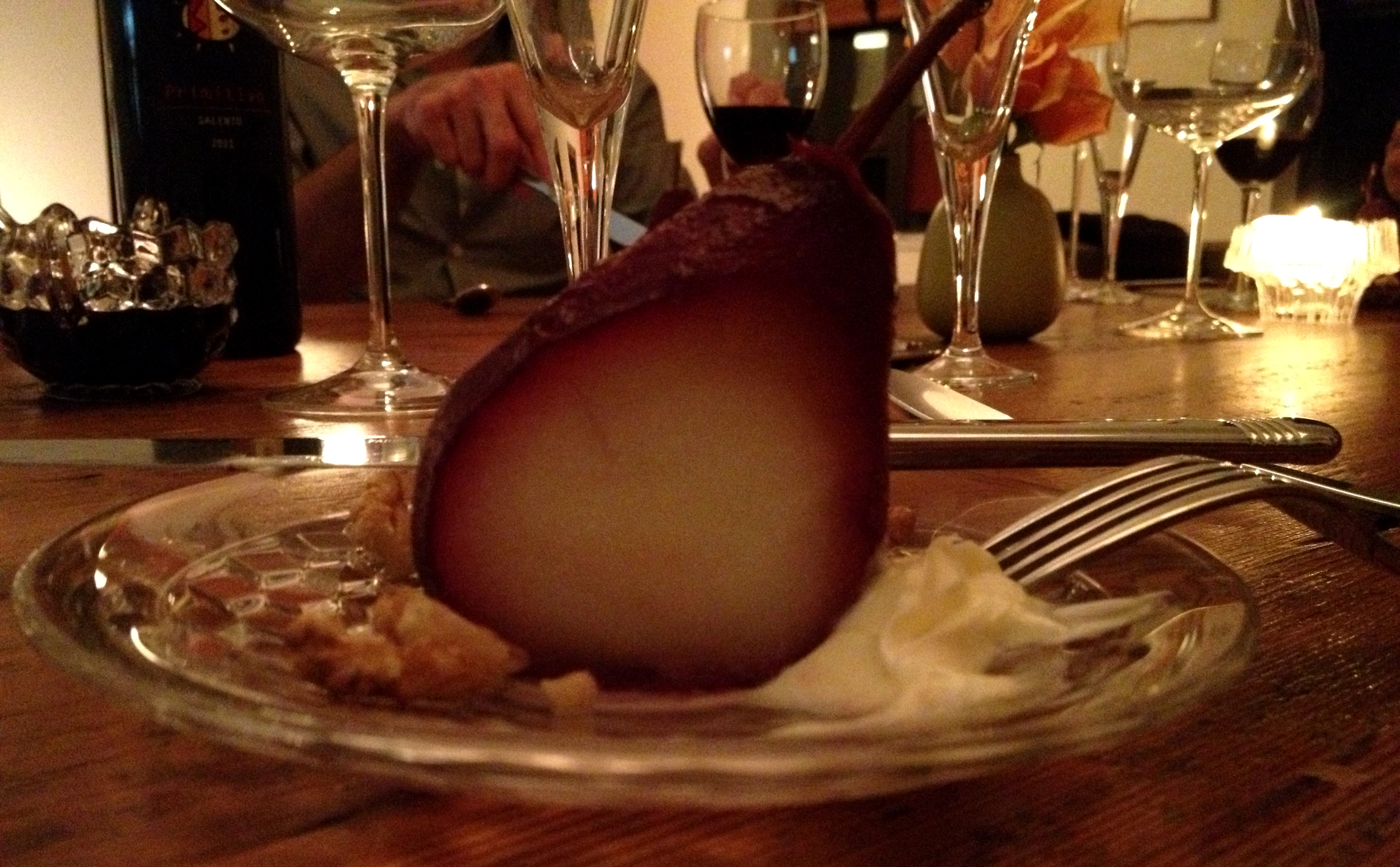
Dessert consisted of poached pears with crème fraîche and walnuts, some truly decadent English cheeses, and port. I have hazy memories of some more red wine and perhaps a high-end chocolate bar.

It goes without saying that this morning was a little rough, but it was well worth it.

Moroccan Meze, Part 2

From what I can tell, communities surrounding the Mediterranean each have their own variation on an eggplant dip. I have yet to meet one I didn’t like. This version is seasoned in a Moroccan style and pairs quite nicely with my date and lamb kaftah, but you could easily use the same technique to very different effect by altering the spices.

Roasted Eggplant Dip

  • 3 large eggplant
  • 1 large red onion
  • 2 tomatoes
  • 1 tablespoon harissa (sriracha or other chile paste would do in a pinch)
  • 1/2 tablespoon toasted cumin seeds, ground
  • 1/2 tablespoon dried sumac (or some lemon zest)
  • 1 teaspoon smoked paprika
  • 1 teaspoon smoked salt
  • 4 tablespoons olive oil
  • red wine vinegar
  • salt and pepper
  1. Preheat oven to 350 degrees. Prick eggplant all over with a fork and place in jelly rolls pans or roasting pans in oven. Roast until the eggplant start to collapse (approximately 45 minutes to one hour), flipping occasionally. When cool enough to handle, scoop the flesh out and set in a fine mesh strainer for at least one hour.
  2. In a small baking dish, combine sliced onion and tomatoes with 2 tablespoons olive oil. Roast in oven, stirring occasionally, until onions are soft with crispy edges. Chop this mixture so that it is almost a paste.
  3. Add the drained eggplant, onion and tomato mixture, olive oil and spices to a bowl and mash well with a potato masher. Adjust seasoning with salt, pepper and red wine vinegar to taste.

The kaftah and eggplant were both unctuous and a little spicy, so I decided to make a quick yogurt dip to balance out the flavors. I combined a cup of labaneh (full-fat strained Greek yogurt would work) with the zest of two lemons and the juice of one. It worked like a charm.

Sadly, I failed to take a proper photo of either of these dishes, but that’s them, along with the kaftah, in the upper right quadrant of my refrigerator.

Portable Moroccan Meze

Last Monday’s class included a discussion of Reflections on Fieldwork in Morocco, which chronicles Paul Rabinow’s experience conducting anthropological research in Morocco in the late 1960s. This particular course is from 6:45pm to 8:25pm–prime eating hours. At the beginning of the semester, we agreed to take turns bringing snacks to help us power through. I was up last week.

Some of my fellow students in the NYU Food Studies program are professional chefs. I’d be lying if I said that I didn’t feel a certain amount of pressure. Clearly, it needed to be Moroccan or, at least, Moroccan-ish. I’ve had success with a few variations on a tajine, but this seemed highly impractical given that I had to put in a full day at the office and would not be able to reheat anything. I also did not want to endanger my classmates’ notebooks and iPads.

I studied in Jerusalem for six months when I was an undergrad and have fond memories of meze–elaborate spreads of small dishes that are common throughout the Mediterranean and Middle East. Think hummus, olives, stuffed grape leaves, falafel and yogurt-based dips. Meze can be the precursor to a meal or, as is my preference, a meal unto itself.

Lamb and Date Kaftah

  • 1 pound ground lamb
  • 1/2 medium red onion, finely diced
  • 1/2 cup bulgur
  • 20 pitted, minced dates (currants or raisins would work too)
  • 1/2 cups toasted pine nuts
  • 1 bunch curly parsley, roughly chopped
  • 2 tablespoons minced fresh mint or 1 tablespoon dried
  • 1/2 tablespoon toasted coriander seeds, ground
  • 1/2 tablespoon toasted cumin seeds, ground
  • 1 tablespoon dried sumac (lemon zest could be substituted) 
  • 1 tablespoon Aleppo pepper and 1 teaspoon cayenne (or to taste)
  • 1/2 tablespoon turmeric
  • 2 whole allspice, ground
  • 1/2 teaspoon cinnamon
  • 1/2 teaspoon ground clove
  • 1 pinch nutmeg
  • salt and pepper to taste
  • canola oil
  1. Pour 2/3 cups boiling water over the bulgur in a small bowl and let sit while you prep your pine nuts, dates, onions, herbs and spices.
  2. Add everything except the canola oil to a medium work bowl and mix gently with you hands. Let this chill in the refrigerator for at least half an hour.
  3. Fill a large cast iron skillet with canola oil to approximately 1/4 inch and bring to medium-low heat. Working in batches, form the lamb mixture into small patties and add to the skillet. Cook until nicely browned on one side, flip and repeat. Drain on paper towels.These would make great sliders. Formed into balls and served with toothpicks, they would be a delightful hors d’oeuvres for a cocktail party. A couple of months ago, I made a similar version and served them hot over a Moroccan-seasoned ratatouille.In this case, I packed the kaftah in additional layers of paper towels and stashed them in the refrigerator along with a roasted eggplant dip and a labeneh-lemon dip. Another classmate brought a spicy carrot salad, mint tea, dates and almond cookies. We served it all with white and whole wheat pitas. It was a delightful feast.

Sardines and Greens

Kindly neighbors collected my CSA share on Tuesday. A bag full of fresh produce on your doorstep is a welcome sight after a 13-hour workday, but it was all I could do to shove the vegetables into the refrigerator alongside the remnants of last week’s haul. Tonight’s meeting was canceled, leaving me with a single, glorious unscheduled evening. I got home from class around 8:00, eager for some home cooking. The broccoli rabe and kale from last week were looking a little worse for the wear but still edible–as were the greens that topped this week’s turnips. Now for some protein. I unearthed a can of Portuguese sardines in olive oil from the cupboard. I could work with this.

Sardines and Greens

  1. Bring a large cast iron skillet up to medium heat. Open a can of sardines and drain the olive oil into your skillet. It will start to sizzle as the water cooks out of the oil.
  2. Once this has subsided, add a few cloves of thinly sliced garlic and a big pinch of red pepper flakes. Cook until the garlic slices turn a nutty brown. Add the sardines, mashing with a wooden spoon until you have a coarse paste.
  3. Rinse and roughly chop a big pile of dark leafy greens. I used the aforementioned kale, broccoli rabe and turnip greens, but pretty much any hefty greens will do. Add these to the pan, stirring between batches to wilt them and make room for more. (If any of the greens have thick stalks, be sure to add these first so that they have a little more time to cook.) Keep stirring.
  4. When the greens looks ready, add salt, pepper, the zest of half a lemon and some chopped parsley if you have it. Pile the greens in a bowl and squeeze fresh lemon juice over the top. 

I bet this would be tasty as a sauce for whole wheat pasta with toasted breadcrumbs sprinkled on top, but I opted for a scattering of ricotta salata, a Brooklyn Lager and an old Law and Order episode. It’s been a long week.

Provencal Roast Chicken

I adopted Jezebel around 1999. She was so small that I quite reasonably assumed she was a kitten. But the vet put her at about three years old. Jezebel remains a delightful companion, despite her recent propensity for late night yowling. (The internet suggests that dementia is likely.) As you can see, whatever’s happening in her brain, she’s managed to hold onto her good looks.

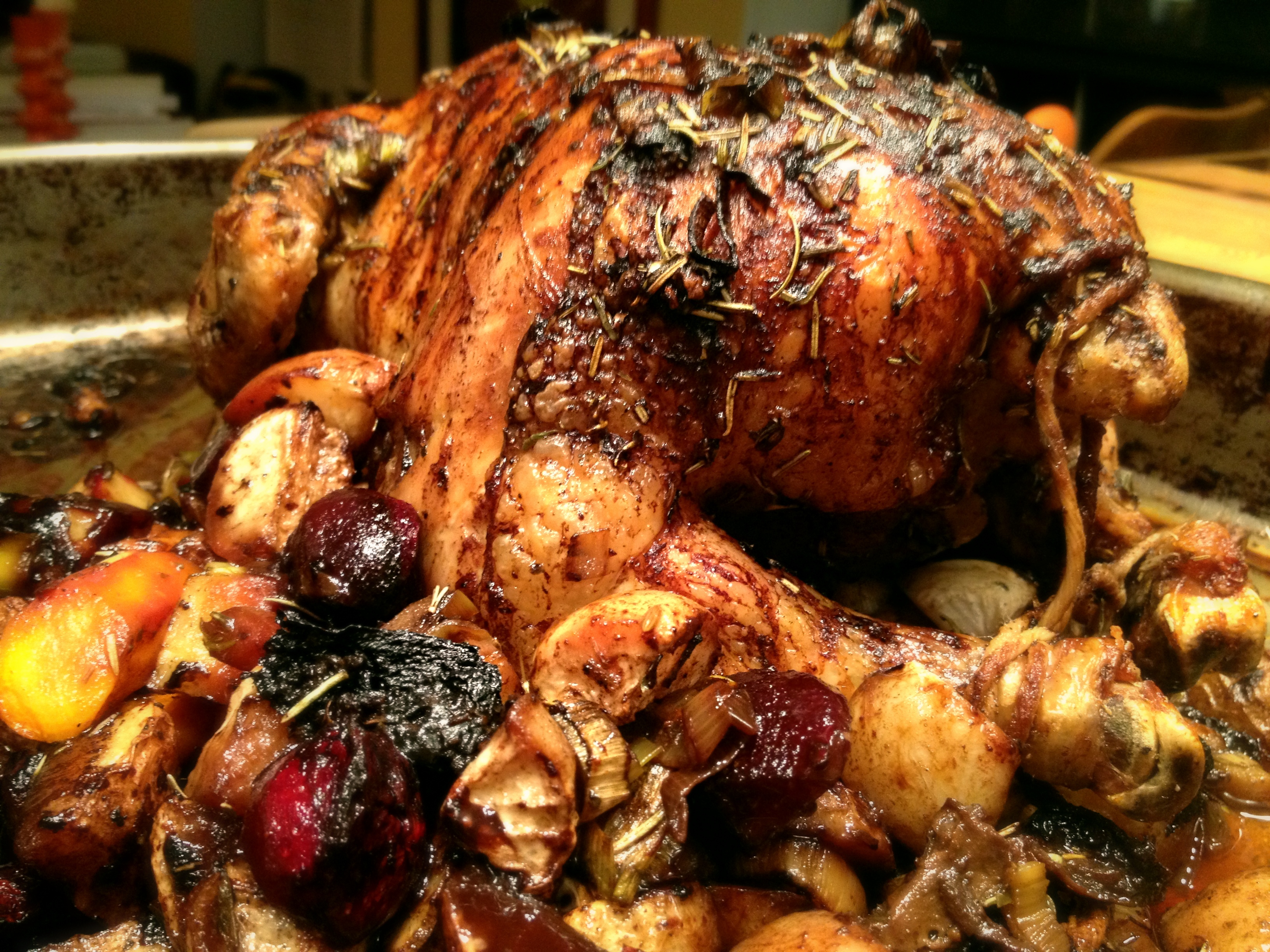
As tiny as she was when she found me, Jezebel is now down under five pounds, so I tend to feed her whatever she wants. She and I only made our way through a small bit of this truly scrumptious Provencal-style roast chicken tonight, but I am confident that it will be just as good throughout the week.

While I once confined myself to white meat off the bone (a holdover from my vegetarian upbringing and subsequent squeamishness), I love roasting a whole chicken. The smell permeates the house. It’s economical. It leaves you with bones to make stock. And a whole chicken can be communal–even when it’s just you and your cat.

Roast Chicken with Porcini, Leeks and Root Vegetables

  • One whole chicken (5-7 pounds), rinsed and patted dry
  • 1.5 ounces dried porcini mushrooms
  • 1 lemon
  • kosher salt
  • black pepper
  • 1 1/2 tablespoons Herbes de Provence (lavender, savory, fennel, thyme and rosemary or some combination thereof)
  • 1-2 tablespoons olive oil
  • 2 large leeks, white and light green portions sliced and rinsed thoroughly
  • 4 cups of chopped root vegetables (turnips, carrots, parsnips, beets, potatoes, etc.)
  1. Preheat the oven to 375 degrees. Bring a cup of water to a boil and pour over the dried porcini.
  2. Slice the ends off of the lemon, score the sides and stuff it inside the bird. Combine a tablespoon of kosher salt, a good amount of freshly-ground pepper and a tablespoon of the Herbes de Provence in a small dish. Rub this all over the bird, being sure to get under the skin to massage it into the breast meat. If you’ve got some kitchen twine and you can find a way to access it while your hands are covered in raw chicken, truss the legs. If not, whatever.
  3. Set the bird in a roasting pan breast-side down, drizzle some olive oil over the top and pop it in the oven. After 30 minutes or so, flip the bird over and baste with the pan juices. If the bird hasn’t released much fat, you can use a little more olive oil. You might also sprinkle the top with additional salt, pepper and herbs if you like.
  4. After another 30 minutes, slide the bird to the side and add your leeks and root vegetables. (I went with turnips, carrots, beets and potatoes because that’s what I had on hand.) Stir these with the pan juices and then add 1/2 tablespoon of the Herbes de Provence, salt, pepper and the porcini along with their liquid. Mound the vegetables in the center, flip your chicken so that it is once again breast-side down and place it on top of the vegetables.
  5. Continue cooking, basting the bird with the juices approximately every fifteen minutes and stirring the vegetables if needed. It should take roughly 20 minutes total cooking time per pound, but start checking your chicken whenever you get anxious or when the aroma starts to make you dizzy. I recommend ignoring whatever guidelines your thermometer may suggest and, instead, aim for getting the deepest part of the thigh up around 165 degrees. Be sure to let it rest for about five minutes out of the oven. If you’re worried about the bird getting cold, tent it very loosely–lest you steam that beautiful, crisp skin–with foil.

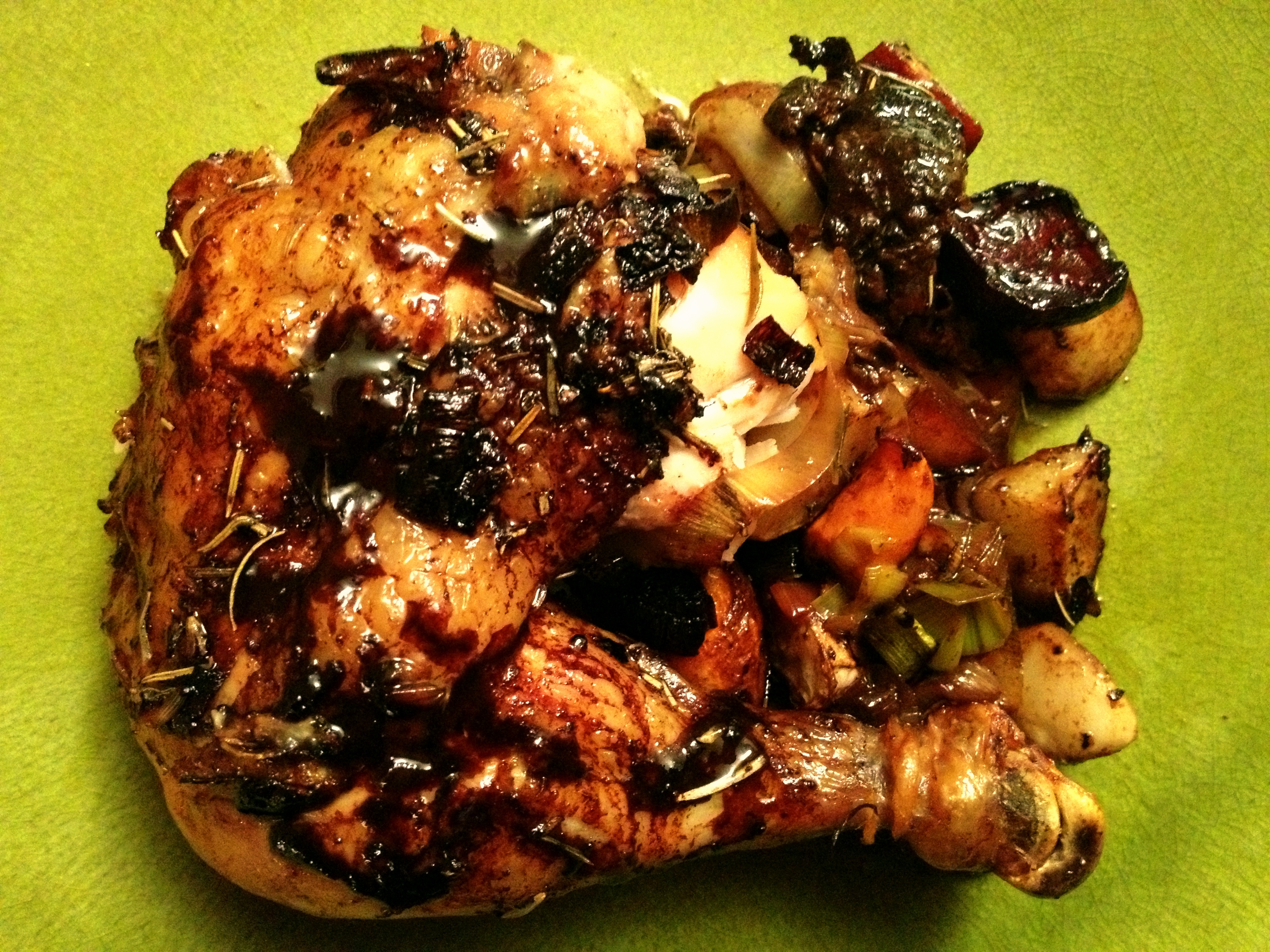
Were I serving this to a crowd, I would have placed the chicken on a platter, mounded the vegetables around it, and carved at the table. Instead, I hacked off of a leg and got to work.

Turnip, Shiitake, Leek and Tofu Stir-Fry

Turns out working full time while going to graduate school is challenging. One of the articles we discussed in class tonight was about New York Jews and Chinese Food. I got home around 8:00 with Chinese food on the brain and a determination to cook some of the vegetables that were rapidly deteriorating in my crisper.

Turnip, Shiitake, Leek and Tofu Stir-Fry

  • 6-8 dried shiitake mushrooms
  • 2 tablespoons high-heat cooking oil (peanut, canola, etc.)
  • 2 large leeks, white and light green portions sliced and rinsed thoroughly
  • 6-8 small turnips cut into 1/4″ half-moons
  • 1 block drained and frozen* extra firm tofu, cut into fat sticks
  • 1/4 cup rice wine vinegar
  • 2-3 tablespoons tamari or soy sauce
  • 1-2 tablespoons Sriracha or other chili sauce
  • 1 teaspoon sesame oil
  • Sichuan peppercorns (black would work too, but you’ll miss that fun tingling)
  • 1 teaspoon concentrated chicken stock or 1 small cube chicken bouillon (Use vegetable stock/bouillon to make this dish vegan.)
  • 1 small bunch flat-leaf parsley or cilantro
  1. Start your rice to cooking. (My new favorite is brown Jasmine rice.) Pour a cup of boiling water over the shiitakes and let sit, weighing down with a jar to keep them submerged. (Be sure not to discard this liquid!)
  2. Add a couple of tablespoons of oil to a wok or sauté pan over medium heat. (I opted for a tablespoon of canola oil and a tablespoon of chile oil.) Add the leeks, stirring frequently until they start to brown. Toss the turnips in and continue stirring until they have softened. Slice your rehydrated shiitakes, add them in and keep cooking.
  3. Add the tofu, vinegar, soy sauce, Sriracha, sesame oil, ground peppercorns, chicken stock/bouillon and the liquid left from your mushrooms, stirring to combine. Let simmer stirring occasionally until your rice is done. Toss the chopped parsley or cilantro in at the last moment.

I had planned to eat this accompanied by a Brooklyn Pilsner that had mysteriously appeared in my refrigerator. But, by the time I sat down to eat, the beer had just as mysteriously disappeared.

* See A Salad for Sailing for a brief discussion of this most excellent technique.

Kale and Pear Salad

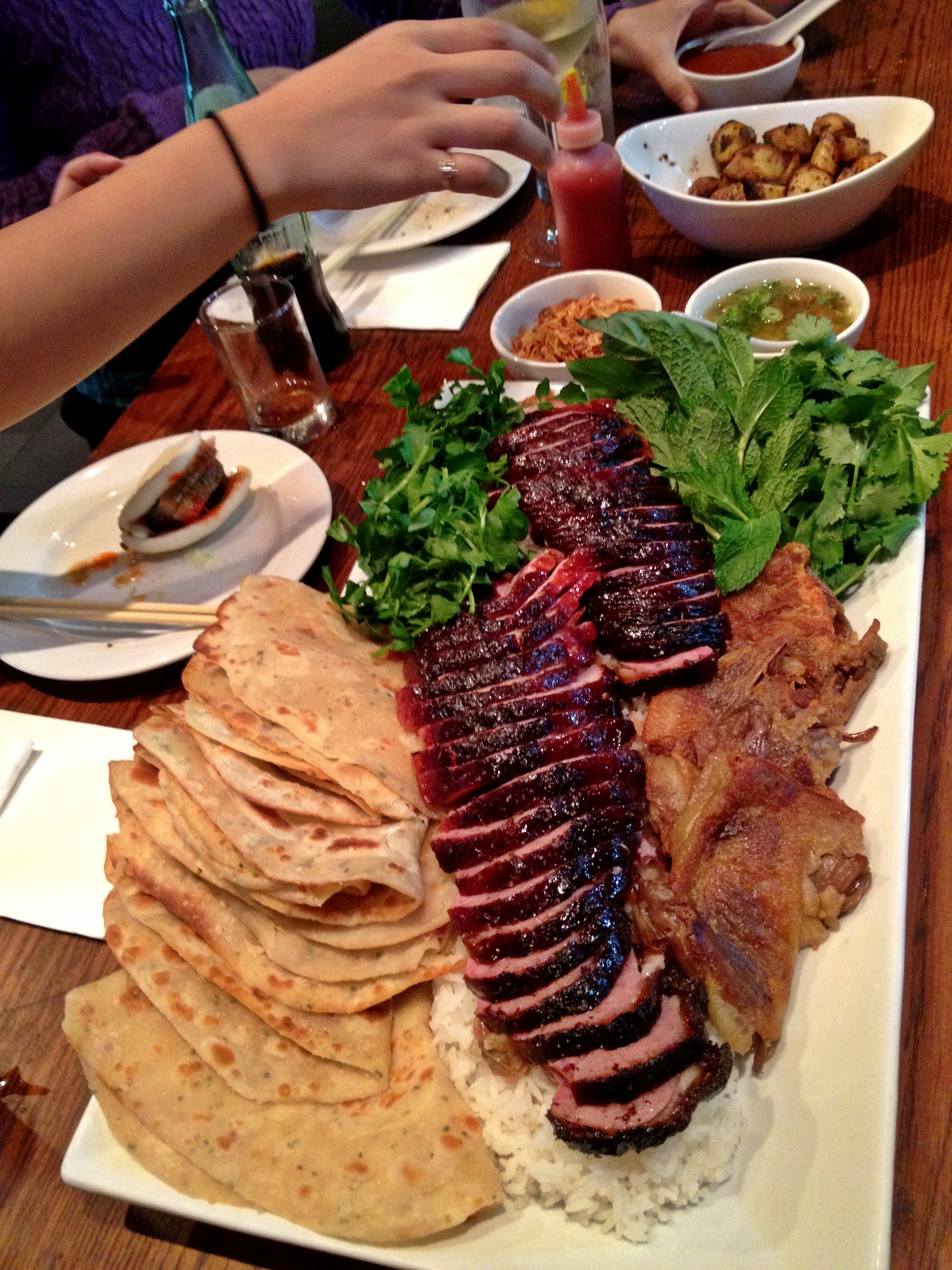
I took my staff out to lunch today to bid adieu to one of our members, who is a serious foodie and a serious meat-eater.  We shared the rotisserie duck at Momofuku Ssam Bar, which was a truly remarkable dining experience, but left me feeling a bit gouty.  (Actual quote from the departing employee: “can you pass the duck fat?”)

I spent the rest of the afternoon chugging water and plowing through some grad school reading.  It was a good seven hours until I could even think about eating again.  Something restorative was essential.  Fortunately, I had some Lacinato kale and pears left over from my CSA share.

Kale and Pear Salad

  1. In a medium-sized jar, combine half of a large, thinly-sliced red onion; 2 tablespoons of honey vinegar (or any other light-colored vinegar); 1 tablespoon of creamy Dijon mustard; 1-2 tablespoons of good quality extra virgin olive oil; and salt and black pepper.  Screw the lid on the jar and shake vigorously.  Let sit for an hour or so.
  2. Pour the dressing over six cups of chiffonade of Lacinato kale and toss thoroughly. Let this sit for another hour or so, mixing periodically.
  3. Toss a sliced pear in and grab a fork.

Happy New Year from the Heartland

I spent Rosh Hashanah visiting good friends, Juliet and Phil, who lured me with the promise of an 18-pound kosher turkey and a smoker in which to cook it.

I arrived Friday evening and immediately began assessing the vegetables that had collected in the crisper. There were pattypan squash, corn and bell peppers in abundance. There were fresh herbs in the garden. I wanted a menu that spoke to traditional Rosh Hashanah foods (apples and honey) but also reflected the place (Madison, Wisconsin) and the season (that glorious moment in between summer and fall).

That night Phil stayed home with their son Doobie, who is almost two. Juliet and I strolled over to Lombardino’s for some Brandy Old Fashioneds (when in Rome) and classic Italian American food prepared well using local ingredients.

Saturday morning we headed to the Dane County Farmers’ Market, which is one of the best I’ve had the chance to visit. The stalls are arranged in a square around the state capitol. The Madisonians rotate counterclockwise in an orderly fashion—and are polite enough to not say anything when a New Yorker who’s forgotten something fails to do so. The quality and variety of the produce is pretty astonishing. And oh, the cheese curds!

We bought onions, edamame and poblano peppers to round out a succotash. We snacked on oatmeal rhubarb bars and beef jerky. We bought onions, shallots, leeks and apple cider. I had a vision of a bitter green salad with roasted squash and hazelnuts that would speak to the changing season. There were no delicata squash among the array on display at the squash stand, but the overall-clad man behind the table dug through buckets to procure three lovely specimens. The woman with the exotic greens had sold through her dandelion, but had some chicory that tasted right.

Afterwards, we hit an African drumming class at the Madison Children’s Museum. Doobie got down on the bongos while I tried out the reading nests. Juliet and Doobie headed home with our farmers’ market haul in the undercarriage of the stroller and I headed to the University of Wisconsin campus to collect a friend, Elliot, who was arriving on a bus from Chicago. We indulged in a Madison tradition, beer and bratwurst on the Memorial Union Terrace, which looks out over Lake Mendota before making our way back along the Lakeshore Path, admiring the sailboats bobbing in the water. One of the many charming things about Juliet and Phil’s home is that you know you’re almost there when you spot the octopus.

Later that afternoon, the five of us swung by the grocery store for a few last-minute ingredients. Doobie helped himself to some organic raspberries as we wandered aisles that were a bit overwhelming to an urbanite like myself. Case in point: there was an entire aisle devoted to frozen pizza.

That night a babysitter allowed the four of us to go out for decidedly not frozen pizza at Greenbush Bar. Located in the basement of an old Italian social hall, it is just as charming as it sounds.

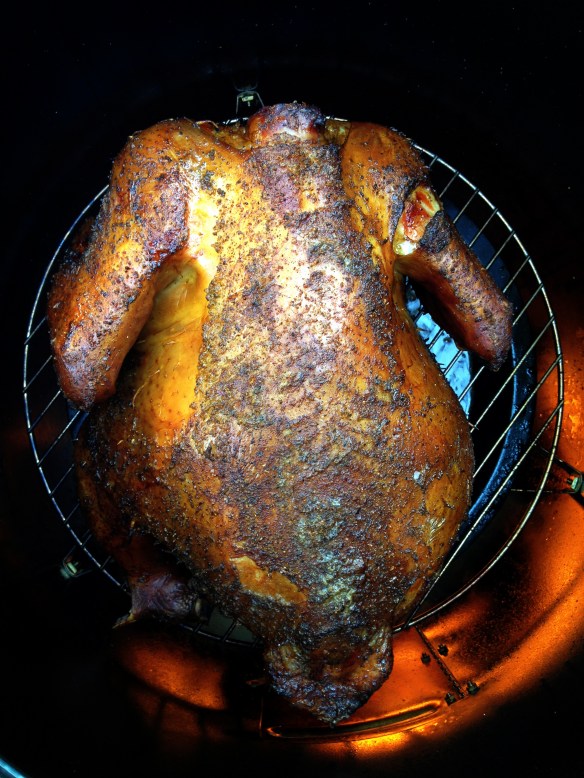
Sunday morning was devoted to toasting hazelnuts, roasting squash (with olive oil, salt and pepper) and getting the turkey started in the smoker. We didn’t have one of those handy fire-starting chimneys, so Juliet and I conjured our inner girl scout and eventually achieved a nice smolder. We layered chunks of soaked apple wood on top of the lump charcoal, filled the drip pan with apple cider and set the bird (which I had rubbed inside and out with salt, pepper, allspice, sage and bay leaves the night before) to smoking. I was guessing that this would take anywhere from six to ten hours. I left Juliet, who had challah to make and a child to put down for a nap, with instructions for stoking the coals and refilling the drip pan.

Madison has a bunch of old rail lines that were converted into bike paths, allowing for minimal interaction with cars. Elliot and I followed one of these commuter paths down to the capitol where we had a lovely brunch at Graze, a locally focused gastropub in a light, airy space that’s definitely worth a visit. Four hours later, the smell of smoked turkey wafted down the block as we approached the house. It looked and smelled amazing. I added whatever wood chunks were left and drizzled a little grapeseed oil on top to ensure crisp, brown skin.
The rest of the menu came together pretty quickly.

While the turkey rested, I ladled most of the fat from the pan drippings off and poured the smoky, meaty apple cider that was left into a saucepan. I added some diced onions and salt and left it to simmer while I worked on the other dishes. Before serving, I hit this with an immersion blender, allowing the onions to provide the gravy with some body rather than risk gumming it up with a roux (and because I was already using every burner on the stove).

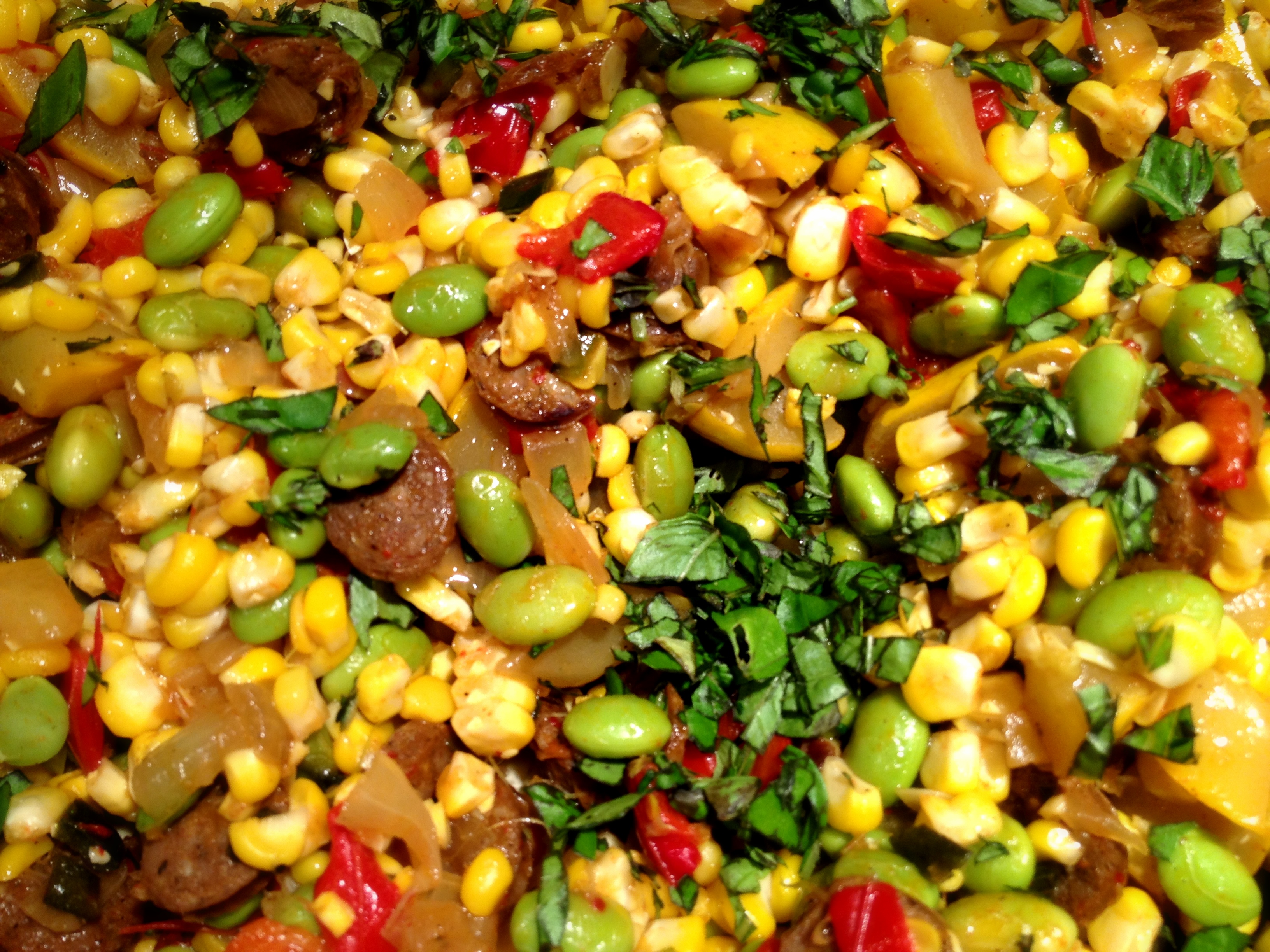
For the succotash, I browned some kosher Andouille sausage (yes, that exists—and it’s surprisingly good) in a little olive oil in cast iron skillet. I added onions, poblano pepper and red bell pepper. In time, I added the pattypan squash, some shelled edamame and fresh corn cut from the cob. Salt, pepper and basil went in just before serving.
Juliet carved the turkey, which we spread onto cookie sheets with some of the pan drippings and kept warm in a low oven until guests arrived.

I made a wild rice pilaf by sautéing leeks in olive oil, adding crushed red pepper and thyme. I toasted the wild rice in this mixture for a few minutes until each grain was coated and then added turkey stock. After 45 minutes or so of simmering, I pulled the rice off of the heat and added dried cranberries and crushed toasted hazelnuts.

I made a honey lemon dressing for the chicory, toasted hazelnut and roasted delicata squash salad by combining lemon juice, honey, shallots, olive oil, pepper and a little mayonnaise using an immersion blender. (Had this not been a kosher meal, I might have gone with buttermilk instead of mayonnaise.)

Guests began arriving at 6:15. By 6:30, we were an even dozen. Once the sun had set, Phil led us in blessings over the wine, over Juliet’s beautiful raisin-dotted challah, and over the apples and honey. Then we began eating. Things get a little blurry after that. There’s a mysterious alchemy to wine, a bounteous meal and interesting people. At these moments, I feel as though time has stopped and the only thing that exists is our table. It is a moment of pure joy.

Here’s to a sweet 5773!