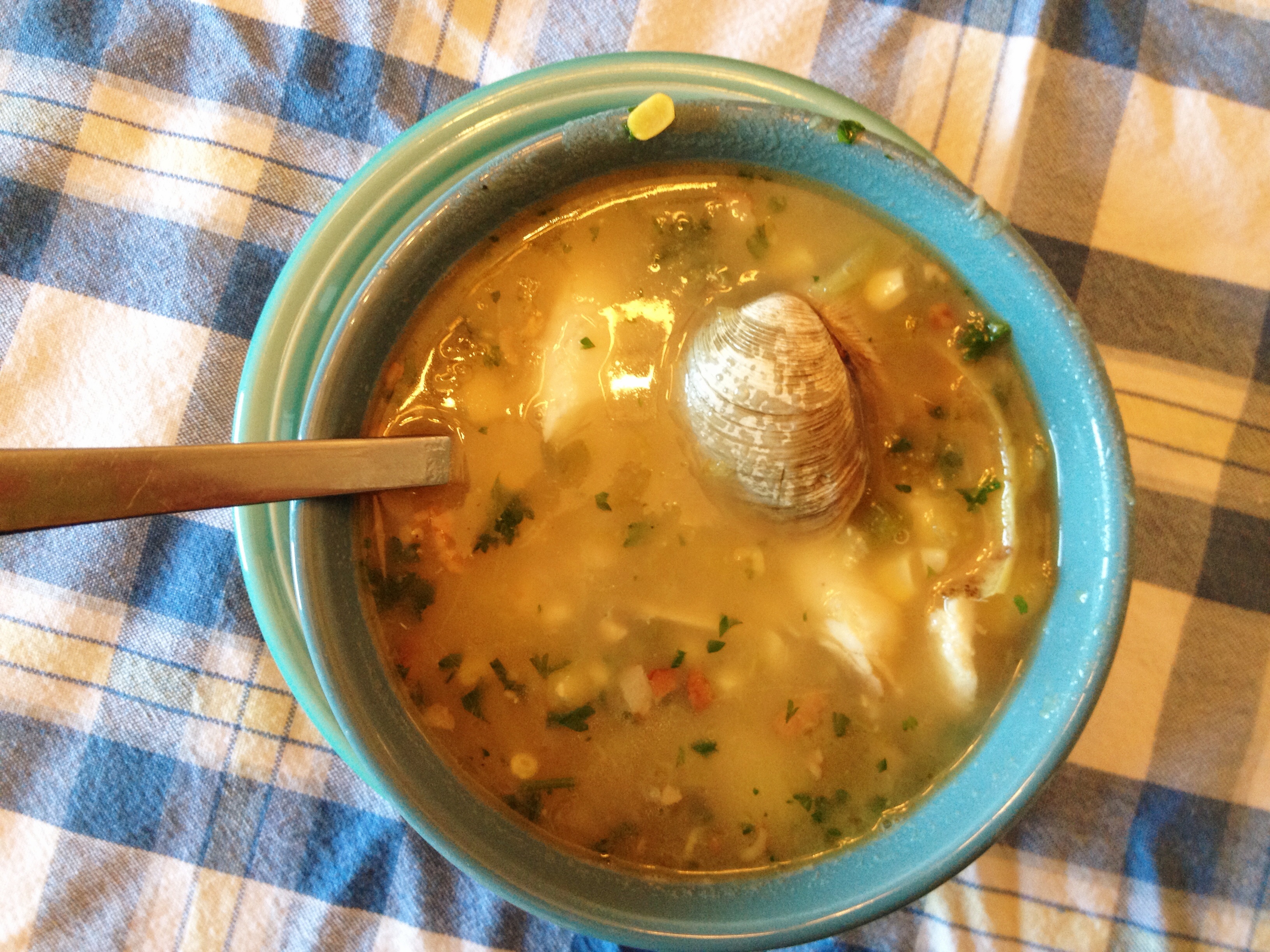
Corn & Seafood Chowder

Barbara and I met through our mutual support of the New York Abortion Access Fund (NYAAF). This past spring she invited me to be a guest on the Park Slope Food Coop cooking show that she hosts. We had a great time making shrimp and grits and discussing the critical role that abortion funds play. A couple of weeks ago we decided to reprise our cooking date–only this time (mercifully) the cameras were off.

Barbara emailed me a few days before our date asking what we should make. I mentally reviewed the various foodstuffs cluttering my fridge: corn, potatoes, and a wide variety of peppers. This could have gone any number of ways. Then I remembered that I had several corn cobs stripped of their kernels jammed into my freezer because I had read something about corn broth. Bingo!

Corn & Seafood Chowder

  • 8-12 cobs of corn
  • 3 ounces slab bacon, diced
  • 1 large onion, diced
  • 3 stalks celery, finely diced
  • 1 green pepper, diced
  • 1 cubanelle pepper, diced
  • 1 jalapeño pepper, minced
  • 3 cloves garlic, minced
  • 8 medium russet potatoes, cut into half-inch cubes
  • 1 pint lobster stock or 1 jar clam juice
  • 18-24 cherrystone or littleneck clams
  • 2 large filets of flounder (about 1 pound total)
  • 2 tablespoons butter
  • 1 bunch curly parsley, chopped
  • salt and pepper
  1.  Husk the corn and then strip off the kernels using a sharp knife. (I find that doing this over a shallow bowl keeps the kernels from rolling away and also allows me to capture any of the milky liquid that they exude.) Reserve about four cobs’ worth of kernels for your chowder and freeze the rest for succotash, cornbread or the like. Throw the denuded cobs into a large pot with enough water to cover, bring to a boil, reduce heat, and simmer for half an hour–or as long as it takes you to get through the next couple of steps.Corn Broth
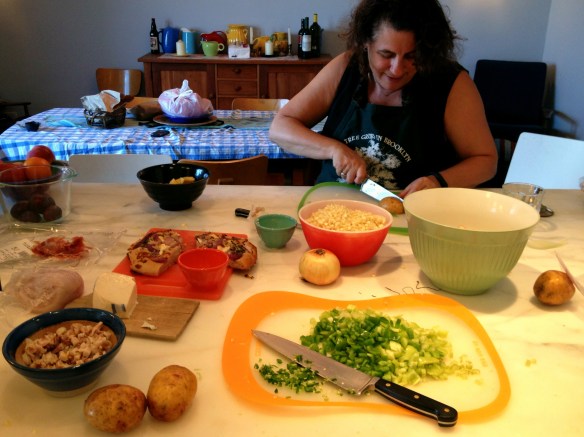
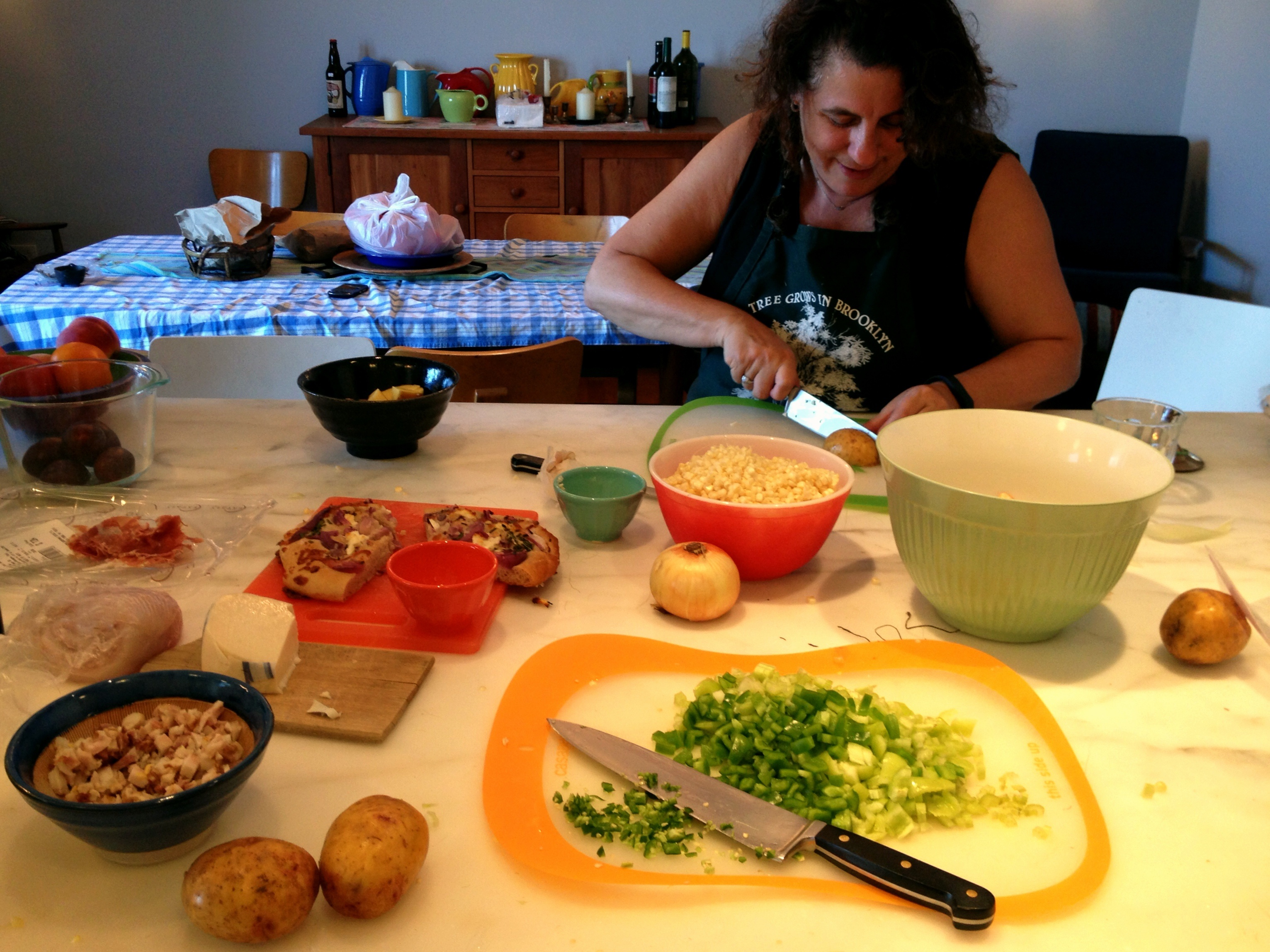
  2. Dice your bacon, onions, celery, and green peppers. Mince the garlic and jalapeño. Chop the potatoes. Chat about anything and everything. Have a nosh if you like.Barbara Chopping
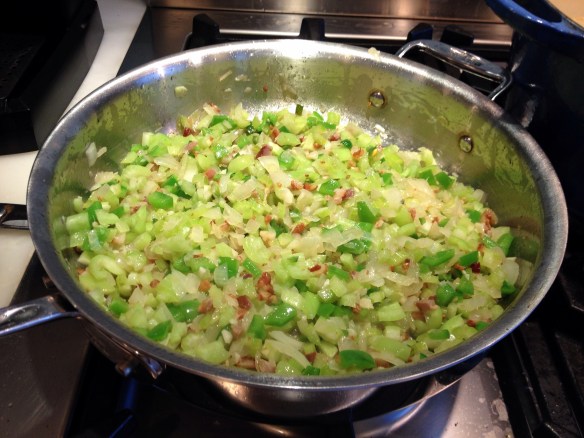
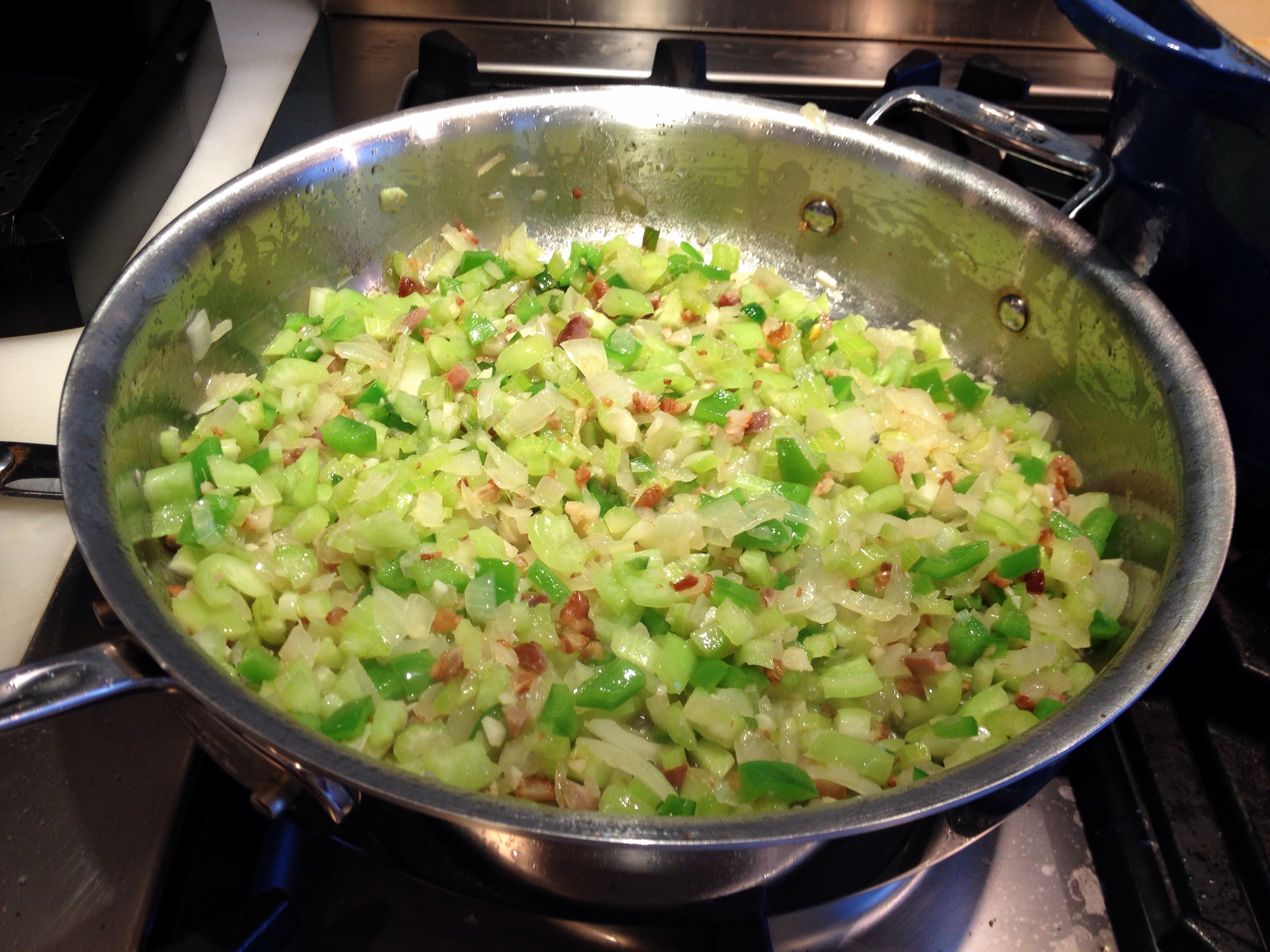
  3. Add the bacon to a large pan and bring up to medium-low heat. Once the fat has mostly rendered and the bacon pieces are just starting to firm up, add the onions. Saute until they are starting to soften and then add your celery and various peppers. Once these have started to soften, add the garlic and cook for a few minutes. The key is to soften everything up without allowing it to brown. Season with salt and pepper.Chowder Base
  4. Pull the corn cobs out of your soup pot using tongs and then dump your vegetable mixture into the pot along with the diced potatoes. Add the lobster stock or clam juice, bring to a boil, and then lower to a simmer. Put the clams in a bowl, cover with cold water, and add some black pepper or cornmeal. (This step, while not strictly necessary, will encourage the clams to spit out their sand, avoiding a certain amount of grit in the finished product.) Leave the pot to simmer for a half hour or more while you retire to the living room for some more chatting.
  5. Now is a good time to wake Barbara’s husband Chris up from his nap so that he can ready himself for chowder.
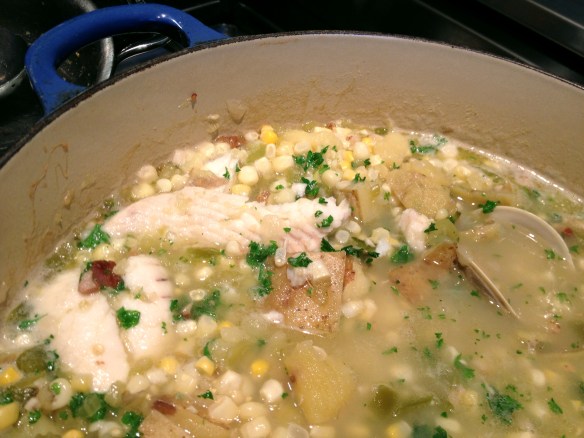
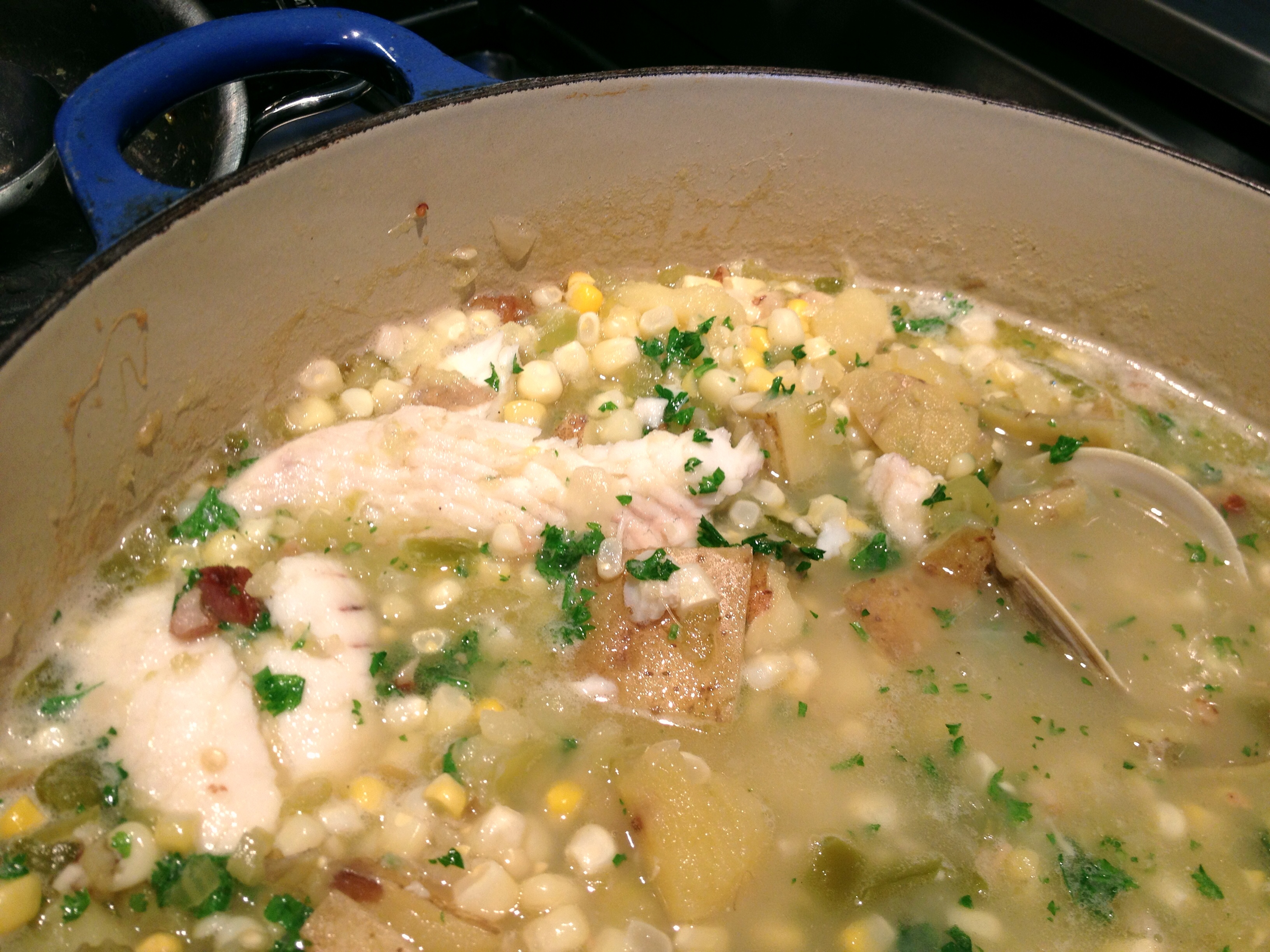
  6. Add the butter. Taste the broth and adjust the seasoning with salt and pepper. Add your clams and then lay the flounder in gently. Cook until the clams pop open (roughly 15 minutes), by which time your flounder should be white and opaque. Finish with the corn kernels and some fresh parsley.Corn and Seafood Chowder

We ate our chowder in Barbara’s rather perfect Fiestaware bowls, using hunks of bread to soak up the delicious broth. It made for a truly excellent early autumn lunch.
Corn and Seafood Chowder 2

Greek Casserole

Between a broken ankle and the beginning of a new school year, I’m a bit behind on consuming my CSA vegetables. This weekend found me with a cooking date with my dear friend Leila and an abundance of green beans, tomatoes and potatoes. My first thought was some sort of Indian curry. But I seem to be out of rice.

Autumn has arrived in New York City. The sunlight is a distinct shade of gold and the air is crisp. My apartment, which is excessively hot in both summer and winter, has finally dropped below 76 degrees. (I know this because the coconut oil in my pantry has begun to crystallize.) After months of chopped salads and quick cooking on the stovetop, I found myself longing for a hot dish and the heady aroma that accompanies an oven bake.

Thus was born this potato, lamb, green bean, tomato and feta casserole.

Greek-Style Casserole

  • 8 new potatoes
  • 1 large yellow onion, diced
  • 1 tablespoons ground cumin or to taste
  • 1/2 teaspoon cinnamon or to taste
  • 1/2 teaspoon nutmeg or to taste
  • 1 teaspoon red pepper flakes (plus some cayenne and/or Aleppo pepper if you’ve got it)
  • 2 garlic cloves, minced
  • 1 pound ground lamb
  • 1 pound green beans, trimmed
  • 3 large tomatoes
  • 2 teaspoons dried oregano
  • 1 tablespoon minced basil
  • 4 ounces feta cheese
  • 3 tablespoons olive oil
  • salt and pepper
  1. Preheat oven to 425.
  2. Bring a pot of water to a boil and add the potatoes. Cook approximately five minutes until the skin gives easily under your fingernail. Remove the potatoes and add the green beans. Cook for one to two minutes just until bright green. 
  3. Add 1 tablespoon olive oil to a large skillet over medium heat. Add the onion and sauté until soft. Then add the cumin, cinnamon, nutmeg and hot pepper, stirring constantly to toast the spices without allowing them to burn. Do the same with the minced garlic. Add the ground lamb and cook until the meat is thoroughly browned and any excess water has evaporated. Season with salt and pepper and add more cumin, cinnamon, nutmeg or hot pepper as needed. (You want a very flavorful mixture.)
  4. Slice the potatoes into 1/4″ discs and arrange in a single layer at the bottom of a shallow casserole pan. Sprinkle with salt and pepper. Spread the lamb mixture on top of this and then layer the blanched green beans. Add a layer of thickly sliced tomatoes. Sprinkle oregano, basil, salt and pepper over the tomatoes and then drizzle with 1 tablespoon of olive oil. Lay a slice of feta on each tomato and drizzle with the remaining 1 tablespoon of olive oil. 
  5. Bake until the intoxicating aroma rouses you from the couch and the feta is well browned (approximately 30 minutes). 

Greek Casserole

Provencal Roast Chicken

I adopted Jezebel around 1999. She was so small that I quite reasonably assumed she was a kitten. But the vet put her at about three years old. Jezebel remains a delightful companion, despite her recent propensity for late night yowling. (The internet suggests that dementia is likely.) As you can see, whatever’s happening in her brain, she’s managed to hold onto her good looks.

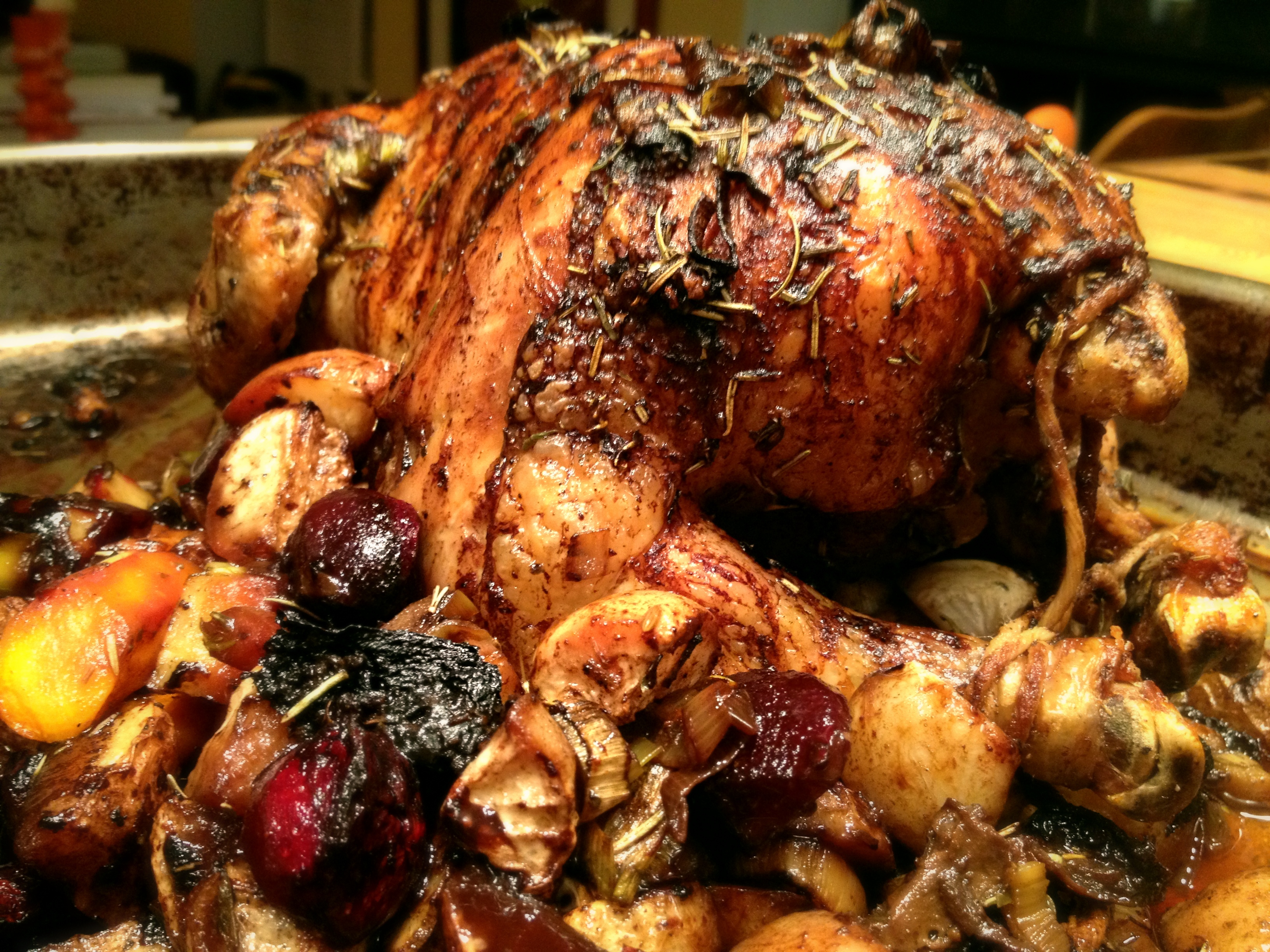
As tiny as she was when she found me, Jezebel is now down under five pounds, so I tend to feed her whatever she wants. She and I only made our way through a small bit of this truly scrumptious Provencal-style roast chicken tonight, but I am confident that it will be just as good throughout the week.

While I once confined myself to white meat off the bone (a holdover from my vegetarian upbringing and subsequent squeamishness), I love roasting a whole chicken. The smell permeates the house. It’s economical. It leaves you with bones to make stock. And a whole chicken can be communal–even when it’s just you and your cat.

Roast Chicken with Porcini, Leeks and Root Vegetables

  • One whole chicken (5-7 pounds), rinsed and patted dry
  • 1.5 ounces dried porcini mushrooms
  • 1 lemon
  • kosher salt
  • black pepper
  • 1 1/2 tablespoons Herbes de Provence (lavender, savory, fennel, thyme and rosemary or some combination thereof)
  • 1-2 tablespoons olive oil
  • 2 large leeks, white and light green portions sliced and rinsed thoroughly
  • 4 cups of chopped root vegetables (turnips, carrots, parsnips, beets, potatoes, etc.)
  1. Preheat the oven to 375 degrees. Bring a cup of water to a boil and pour over the dried porcini.
  2. Slice the ends off of the lemon, score the sides and stuff it inside the bird. Combine a tablespoon of kosher salt, a good amount of freshly-ground pepper and a tablespoon of the Herbes de Provence in a small dish. Rub this all over the bird, being sure to get under the skin to massage it into the breast meat. If you’ve got some kitchen twine and you can find a way to access it while your hands are covered in raw chicken, truss the legs. If not, whatever.
  3. Set the bird in a roasting pan breast-side down, drizzle some olive oil over the top and pop it in the oven. After 30 minutes or so, flip the bird over and baste with the pan juices. If the bird hasn’t released much fat, you can use a little more olive oil. You might also sprinkle the top with additional salt, pepper and herbs if you like.
  4. After another 30 minutes, slide the bird to the side and add your leeks and root vegetables. (I went with turnips, carrots, beets and potatoes because that’s what I had on hand.) Stir these with the pan juices and then add 1/2 tablespoon of the Herbes de Provence, salt, pepper and the porcini along with their liquid. Mound the vegetables in the center, flip your chicken so that it is once again breast-side down and place it on top of the vegetables.
  5. Continue cooking, basting the bird with the juices approximately every fifteen minutes and stirring the vegetables if needed. It should take roughly 20 minutes total cooking time per pound, but start checking your chicken whenever you get anxious or when the aroma starts to make you dizzy. I recommend ignoring whatever guidelines your thermometer may suggest and, instead, aim for getting the deepest part of the thigh up around 165 degrees. Be sure to let it rest for about five minutes out of the oven. If you’re worried about the bird getting cold, tent it very loosely–lest you steam that beautiful, crisp skin–with foil.

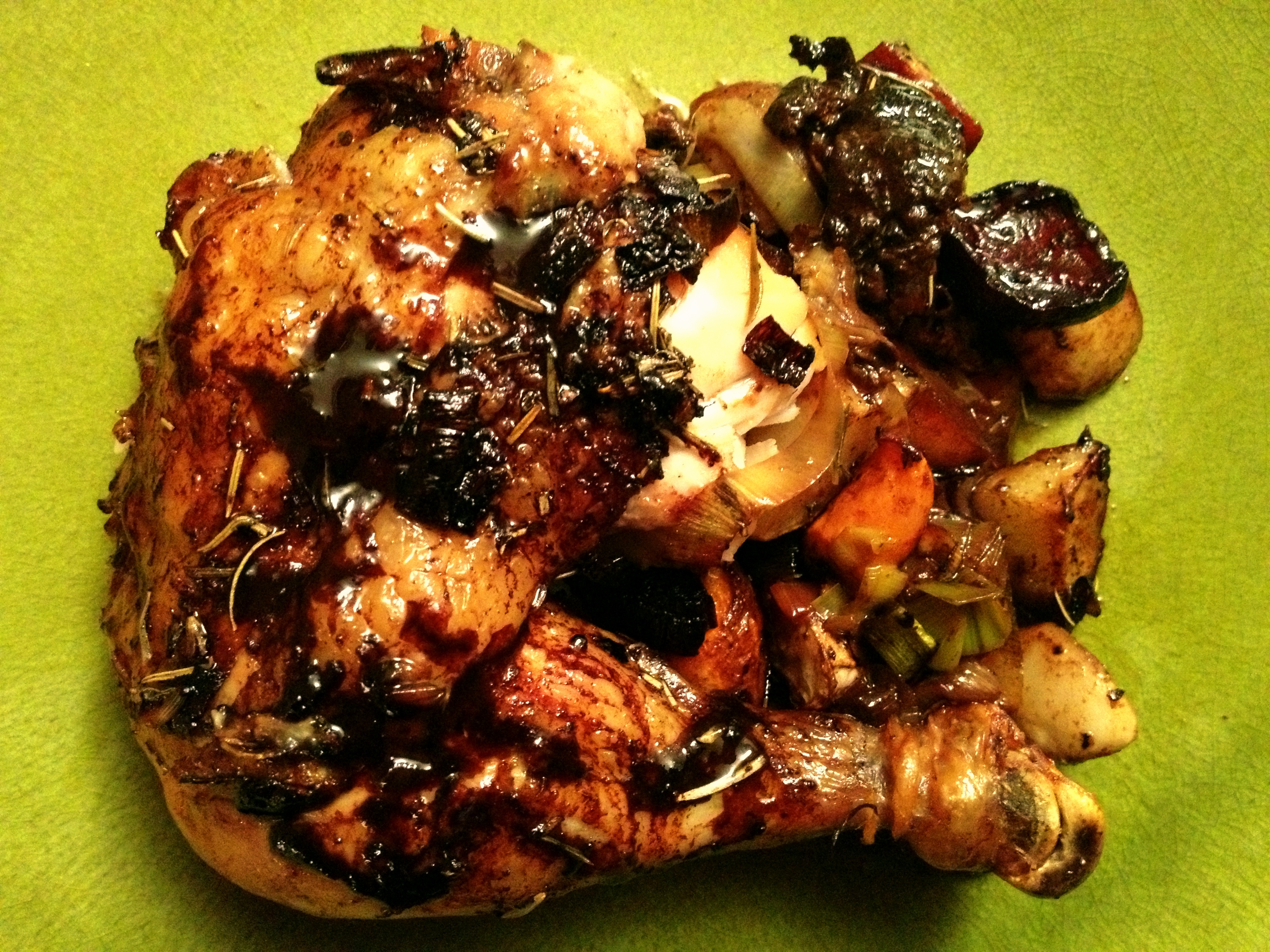
Were I serving this to a crowd, I would have placed the chicken on a platter, mounded the vegetables around it, and carved at the table. Instead, I hacked off of a leg and got to work.

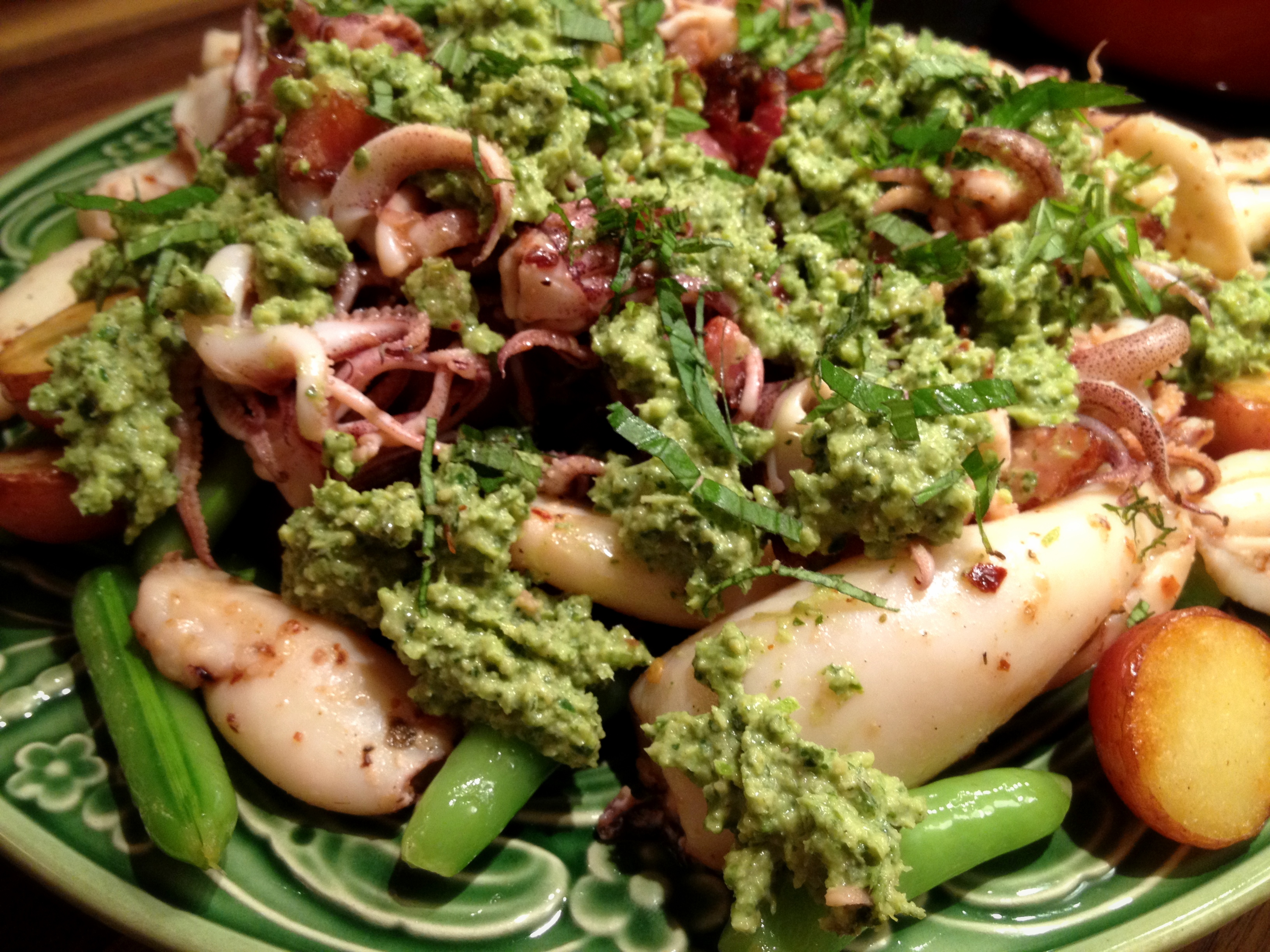
Scapes and Squid

I’ve been traveling a lot, but this weekend was all about Brooklyn. Prospect Heights, Crown Heights, Park Slope, Clinton Hill, Williamsburg, Bushwick, Boerum Hill, Sunset Park and a 24-hour diner in Bay Ridge were all on the agenda. My friend Dana and her girlfriend Kathleen were coming for dinner on Sunday, so I swung by the Grand Army Plaza Greenmarket. It was, indeed, quite green. I came home with three kinds of kale, mint, chives, baby red jacket potatoes, radishes, sugar snap peas, and garlic scapes. (I also bought squid, hot turkey sausage and slab bacon, but had a tough time working them into this composition.)

Image

I was first lured into buying scapes a few years ago; something about their sinuous curves proved irresistible. A scape is a stem that shoots up from the garlic bulb and produces a small flower. Farmers trim them so that their garlic bulbs will continue to grow. They’re similar to garlic in flavor, but not as sharp. Scapes are tasty cooked, but I think they really shine when eaten raw. Here’s just one in an endless number of riffs on scape pesto. (Note that it freezes beautifully.)

Scape Pesto

  • 6 garlic scapes, ends and tips removed
  • 1/3 cup marcona almonds (you could use regular almonds, walnuts, pine nuts, etc., though I would recommend lightly toasting them first)
  • zest and juice of one lemon
  • 3 tablespoons olive oil (good quality, because this isn’t going to be cooked)
  • 30-40 fresh mint leaves (this could be basil, parsley, cilantro, etc.)
  • salt and fresh-ground black pepper (to taste)
  • pinch of sugar (if needed)

Blend the first five ingredients in a food processor, adding water a little at a time  to loosen the mixture enough that it becomes a rough paste. (You could also just add more olive oil, but we’ve got bacon and butter coming further down the page.) Add salt, pepper and, if needed, a pinch of sugar to taste.

I’d texted Dana from the greenmarket to confirm that she eats squid. Her reply came just as I walked in the door: “I eat squid, but am not the hugest fan ever.” The pressure was on. I didn’t really have a plan, but had gotten it in my head that I wanted to make a single dish that married the scapes, squid, potatoes and sugar snap peas into a sort of warm composed salad.

Image

A lot of people find the prospect of cooking squid intimidating, but it’s easy. The key is to cook it very quickly (grilled, fried, boiled or sautéed) or to cook it very slowly (in a traditional Italian red sauce or a fisherman’s stew perhaps). Anything in between yields the rubbery texture of late-night diner calamari.

Scapes and Squid

  • 3 cloves pressed garlic
  • 2 tablespoons olive oil
  • 1 tablespoon red wine vinegar
  • pinch each of dried oregano, Aleppo pepper and red pepper flakes
  • smoked sea salt and fresh-ground black pepper
  • 1.5 pounds cleaned squid

Combine all ingredients and let sit for at least one hour and up to six hours.

  • 1 batch scape pesto (see above)
  • 15-20 small red potatoes, cut in half
  • 3 cups sugar snap peas, strings removed
  • 3 ounces slab bacon (or other smoked fatty pork product)
  • 1 preserved lemon (a regular lemon would also work), flesh removed and rind sliced into slivers
  • 1 tablespoon butter
  • 8-12 fresh mint leaves

While the squid marinates, slice the potatoes and parboil them in salted water until they are just fork tender. Removed the strings from the sugar snap peas and blanch them in the salted water for just a couple of minutes, taking care to cool them down quickly so that they stay crisp and bright green.

At this point, you can knock off and enjoy a glass or two of a nice crisp white wine or a rose until just before you’re ready to eat.

Cut the bacon into small pieces (you may recognize these as lardon) and render them in a cast iron skillet over medium heat.

Meanwhile, in a second pan, melt the butter with the preserved lemon rind over medium heat. When it has stopped foaming, add the potatoes, cut side down.

When the bacon is starting to crisp but is still meaty, push the pieces to the edge of the pan and add as many of the squid bodies as will fit in a single layer. Cook until the squid turns an opaque white on the bottom and then flip. When the other side turns white, pile them at the edge of the pan and add another layer, repeating the process until all of the squid is cooked.

When the potatoes have browned, add the sugar snap peas and stir until they are just heated through.

Spoon the potatoes and peas onto a platter and then add the bacon and squid as well as any juices left in the pan. Drizzle the whole thing with scape pesto and top with some thinly sliced mint leaves.

Dana, the squid skeptic, went back for thirds.

Image