Pasta Alla Eliana

My sister Eliana continues to camp out on an air bed where my dining table usually resides.  The regular reader (anyone?) will recall that she is 16 and vegan.  One of my goals for Eliana’s visit is to teach her some cooking fundamentals so that she can feed herself healthy meals at college and beyond without relying on exorbitantly priced prepared items from Whole Foods.
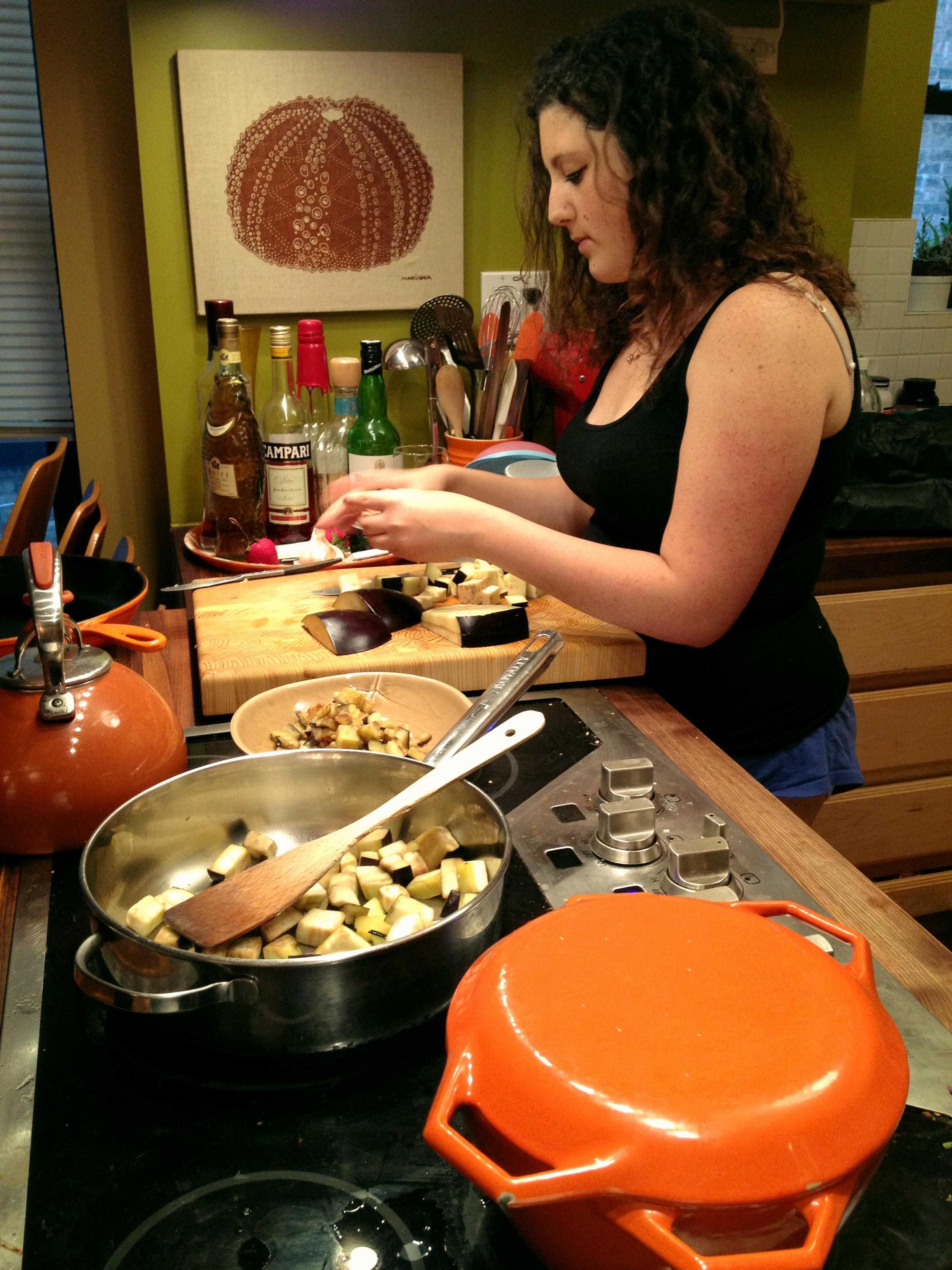
Today’s CSA share included a giant eggplant, some purple basil and an abundance of glorious tomatoes.  I was thinking Pasta Alla Norma, which is a traditional Sicilian pasta dish with fried eggplant, tomatoes, basil and ricotta salata.  Ricotta salata is an Italian cheese that’s a lot like feta in its crumbly texture but with a less sharp flavor.

But I am feeding a vegan…

Pasta Alla Eliana

  • 1 large or 2 medium eggplant, cut into cubes
  • 4 tbsp (or so) olive oil
  • 5 cloves garlic, minced or pressed
  • 1/2 tbsp crushed red pepper or to taste
  • 4 ounces tempeh, cut like lardon (roughly half the size of a matchstick)
  • 1/2 tbsp soy sauce
  • 3 large tomatoes, roughly chopped
  • 1-3 tbsp red wine vinegar (depending on acidity of tomatoes)
  • 10 ounces whole wheat ziti or other large tubular pasta
  • 20 fresh basil leaves
  • 3/4 cup vegan mozzarella shreds
  • 3 tsp nutritional yeast
  • salt and pepper
  1. Heat 1 tablespoon olive oil in a large heavy-bottomed pan over medium heat.  (Nonstick would be easier, but I don’t own one and it was fine so long as we made sure to scrape the bottom regularly.)  Add the eggplant in batches so as not to crowd the pan, pouring another tablespoon of olive oil into the pan before each batch.  Cook eggplant, stirring occasionally until browned and softened.  Add all of the eggplant back to the pan along with the garlic, red pepper flakes and salt and pepper.  Cook, stirring constantly and scraping the bottom of the pan, for a few minutes until you smell the garlic toasting.  Remove from pan.
  2. Put a pot of salted water on to boil.  Heat another tablespoon of olive oil and add your tempeh as well as the soy sauce.  (I know that the soy sauce seems odd here, but it will help give the tempeh a flavor that mimics the guanciale or other cured pork product I would ordinarily be tempted to include.)  Cook stirring constantly until the tempeh is nicely browned and then add your tomatoes.  Cook for a few minutes, throw the eggplant back into the pan, stir in a tablespoon of red wine vinegar and let simmer, adding a little water if it starts to dry out.  
  3. When the water boils, add your pasta and cook until just before al dente (about two minutes less than the package instructs).  Scoop the pasta directly into your sauce, allowing some of the pasta water to transfer, and simmer for a couple of minutes, stirring occasionally, until sauce begins to stick to pasta.  Taste and adjust seasoning with salt, pepper and vinegar as you see fit.
  4. Dish pasta into individual bowls, topping each with 1/4 cup of the vegan mozzarella, torn up basil leaves and a teaspoon of nutritional yeast.  (While this last ingredient is definitely not necessary, it will lend a cheesy flavor.  And, since it was a staple of my childhood, I’m going to assume that it has some nutritional value.)

This provided a solid dinner for two people with enough leftovers for Eliana’s lunch tomorrow.  Here’s what it looked like once we mixed it up.

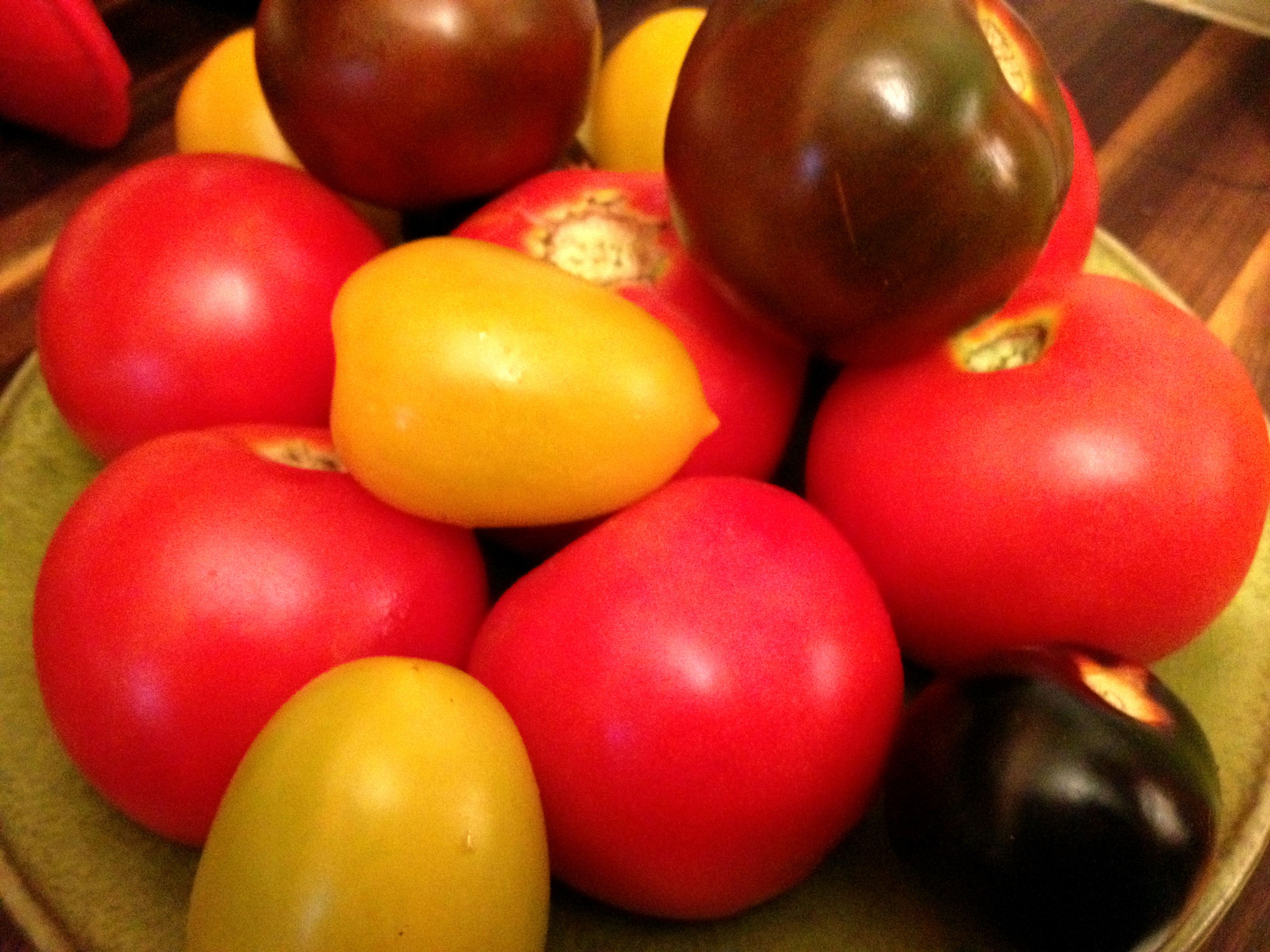
And here’s a little tomato porn, just because.
A Salad for Sailing

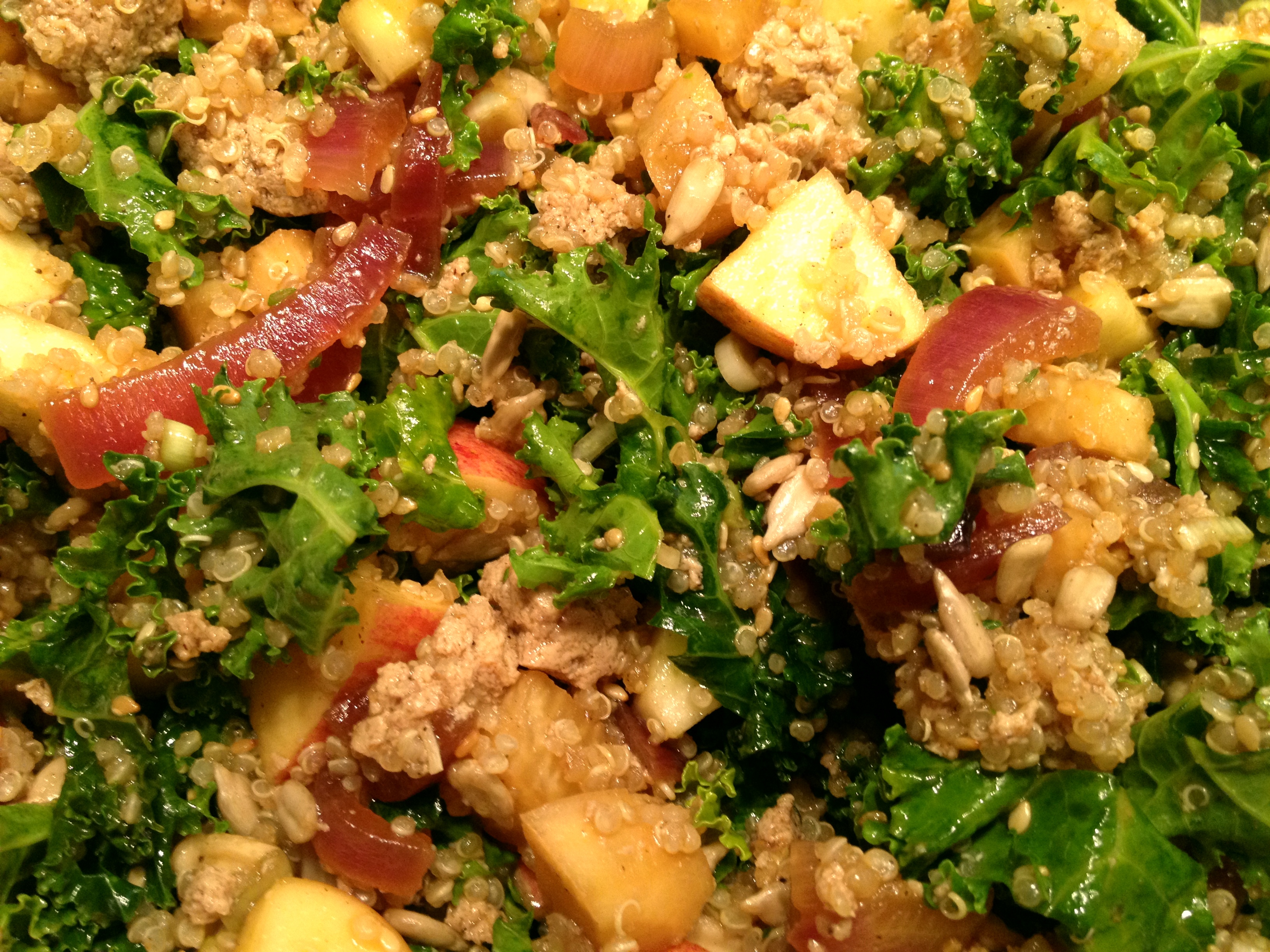
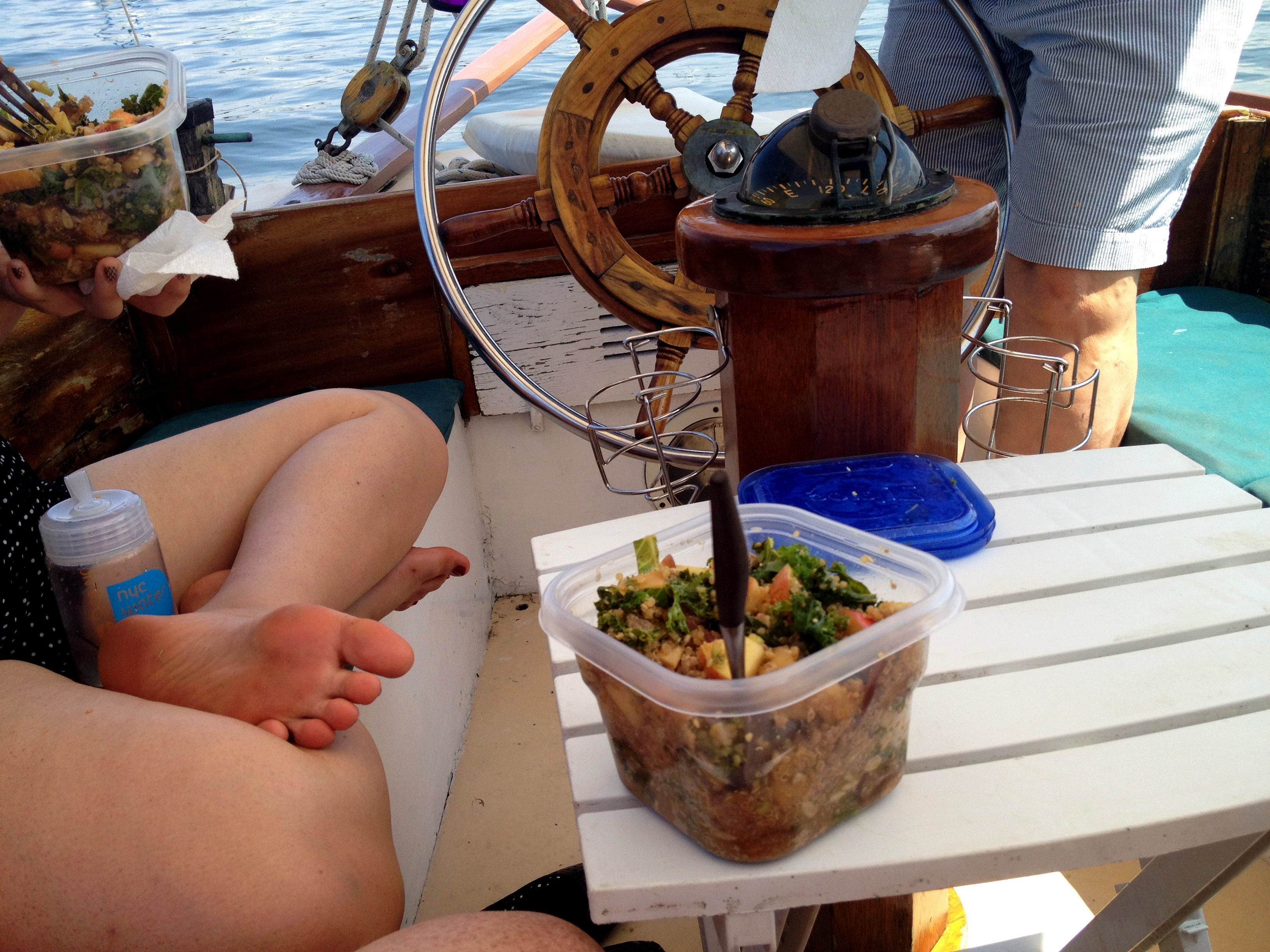
I spent the day on a 75-year-old wooden sailboat owned by dear friends that’s docked in Oyster Bay. My sister Eliana, who’s staying with me for a couple of weeks, is vegan, so I got up early to pull together a protein-packed salad that doesn’t require refrigeration.

A couple of months ago I stumbled across a new technique for preparing tofu. When you freeze tofu, it takes on a radically different texture. Ideally, you would press it to release as much liquid as possible and then wrap it in cheesecloth before freezing it, but I’ve gotten decent results by just tossing a drained block into the freezer in a plastic container. When you take it out, the tofu will have yellowed and developed air pockets where the water has been sucked out. If you then simmer it in liquid, the tofu holds together much better and also takes on the flavor of the liquid.

Kale and Quinoa Salad with Candied Five-Spice Tofu

  • 1/2 container firm tofu – frozen, defrosted and cubed
  • 1 red onion
  • 1 kohlrabi bulb, peeled and cubed
  • 1/4 cup soy sauce
  • 2 tbsp sesame oil
  • 1 tbsp fish sauce (can be omitted for vegans)
  • 1/2 tbsp Chinese five-spice powder (or some combination of cinnamon, star anise, anise seed, ginger, cloves and/or fennel)
  • 1 pinch cayenne pepper
  • 2 tbsp Mirin
  • 1 tbsp sugar (honey or agave would work here too, though honey’s not technically vegan)
  • black pepper

Bring above ingredients minus the kohlrabi to a boil, lower heat and let simmer for 20 minutes or so, stirring occasionally. Add the kohlrabi about halfway through. If you need more liquid, add some water. When onions have wilted and tofu is a nice brown color, remove the solids and boil the liquid until it takes on a syrupy consistency.

  • 1/2 cup quinoa, prepared according to package
  • 1 head kale, thinly sliced
  • 2 apples, cubed
  • 1 bunch scallions, thinly sliced (white and light green portions only)
  • 2 tbsp rice wine vinegar
  • 2 tbsp sesame seeds
  • 1/4 cup shelled sunflower seeds

Combine above ingredients with all of your cooked items, stirring gently to combine. Give it a taste and adjust the seasoning with soy sauce, black pepper, sesame oil and/or rice wine vinegar.

It was a glorious day on Oyster Bay–sunny and 85 degrees. Some ospreys had had their way with the boat, so we started our voyage by scrubbing fish guts and other icky stuff stuff off of the deck. Somehow, this did not diminish our appetites. We ate lunch on the mooring.

The wind picked up in the afternoon and we spent a few glorious hours touring Oyster Bay, catching up on our lives and reminiscing about the books we read in high school. (Eliana’s summer reading is The Great Gatsby, which just happens to be set near where we were sailing.) Shooting the breeze, indeed.

Tomato Time: Pizza!

Yesterday I worked the second of my two volunteer shifts as a member of the Prospect Park CSA.  I get the sense that not everyone is a fan of this membership requirement, but I find it to be great fun.  While the good folk at Windflower Farm do all the work, I get all the glory.  This week was particularly glorious, as tomato season is upon us.

My 16-year-old sister is staying with me for a couple of weeks while she attends a Shakespeare camp.  She’s coming up on her first anniversary as a vegan so I’m cooking a bit differently than usual.  Tonight we managed to polish off six plum tomatoes, one medium-sized tomato and four ping pongs (cutest tomato name ever).

Vegan (or not) Fresh Tomato, Sweet Onion and Corn Pizza

  • 1 small batch whole wheat pizza dough (half a ball of dough from the Whole Foods freezer case worked perfectly for a midweek meal, but you can easily make your own)
  • 1.5 pounds fresh tomatoes
  • 1 large sweet onion (Walla Walla, Vidalia, etc.)
  • 1 cup shredded vegan mozzarella (fresh mozzarella, feta or even goat cheese would also be great)
  • 3-4 tbsp olive oil
  • 2 ears sweet corn
  • 10 leaves fresh basil
  • salt and pepper
  1. Turn broiler to high and place a large cast iron skillet with one tablespoon olive oil in oven.  Line a roasting pan or a baking sheet that has sides with foil and drizzle one tablespoon oil across it.  Slice tomatoes and onion approximately 1/4″ thick and spread on baking sheet in a single layer.  Drizzle another tablespoon of olive oil over the top, add salt and fresh-ground black pepper and place on the top shelf directly under the broiler. 
  2. While this is cooking, cut the kernels off of the corn.  (If your corn is as sweet and fresh as mine, go ahead and munch on some while you wait.)  Check on your roasting veggies and, if your oven is a little uneven, rotate the pan.
  3. When the tomatoes begin to dry out and the onions turn brown at the edges, pull them out.  Turn off the broiler and set your oven as high as it will go.  Remove the cast iron skillet and tilt to spread the oil.  Stretch dough into a disc roughly the size of the skillet by rotating your hands along the edges and allowing gravity to pull it down.  If the dough sizzles when you place it in the pan, great.
  4. Sprinkle all but a couple of tablespoons of the cheese over the dough then top this with a layer of roasted tomatoes followed by the roasted onions.  Add the corn and then sprinkle with the remaining cheese.  (Were we not going vegan, some Romano would have been the way to go here.)
  5. Place your pizza on the bottom rack of the oven and bake until the crust just starts to brown.  Sprinkle with chopped basil and, if you are so inclined, a bit of good quality olive oil.

We ate this with a simple salad of red leaf lettuce and tomatoes dressed with red wine vinegar, good olive oil, Dijon mustard and black pepper.

This is what a happy vegan looks like.

Living Room Picnic

Last night I was supposed to meet friends in Prospect Park for a screening of The Muppet Movie. Mother Nature had other plans. I’d been prepping for a picnic, but a blanket over the coffee table would have to suffice. On the menu: a Pressed Picnic Sandwich, Quick-Pickled Kale and Beets, Potato Chips (lifted from Thursday’s Prospect Park Alliance fundraiser) and a boatload of rosé.

Pressed Picnic Sandwich

This isn’t so much a recipe as a concept. The idea here is to layer a bunch of tasty ingredients in a logical order and then to press the sandwich with a weight.

I started with a round, day-old olive loaf from BKLYN Larder, but imagine you could use any rustic loaf with a nice crust. I sliced the loaf in half horizontally and scooped out most of the soft stuff with my hand, leaving about 1/2 inch all the way around. I then slathered the inside, top and bottom with a homemade tapenade (oil-cured black olives, anchovies, basil, garlic scapes, almonds, balsamic vinegar, Dijon mustard, capers, and whatever else was lurking in my fridge.). You could use prepared tapenade or pesto or even some herbed mayonnaise. The key is that you need a layer with some fat in it to prevent the bread from getting soggy.

I then added a layer of browned onions followed by strips of grilled summer squash. (I like to do this in a hot cast iron pan and then sprinkle the vegetables with smoked sea salt to give them the depth that comes from outdoor grilling). Next up was an Italian cow’s milk cheese. I’m blanking on the name, but it was creamy and a little tart, which provided a nice counterpoint to the sweetness of the veggies. Then layers of hot sopresatta, prosciutto and peppadew peppers.

I wrapped the sandwich in a couple of layers of aluminum foil and placed a cast iron grill pan over the top. Periodically, I would flip the sandwich and apply pressure to the pan until the sandwich looked like a UFO. I would guess that you want this to sit for at least an hour. (Had we been successful in dining outdoors, I would have stuck the sandwich in the bottom of the picnic basket, allowing the weight of the other items to do the pressing.)

As you can see, it sliced beautifully.

Quick-Pickled Kale and Beets

  • ½ cup apple cider vinegar
  • 3 Tbsp sugar
  • 3 garlic cloves
  • 2-3 Tbsp combined of whole pickling spices (such as coriander, fennel, allspice, cloves, cumin, fennel, peppercorns, cinnamon stick, bay leaf, mustard seed, etc.)
  • 1 pinch red pepper flakes
  • 1 thinly sliced red onion
  • 4 large beets
  • Small bunch kale including stems, roughly chopped

Combine all but the last two ingredients along with ½ cup of water in a small saucepan, bring to a boil, reduce heat to low and let simmer for 20-30 minutes to give the spices a change to release their flavor into the brine. In a separate pot, add the beets, cover with water, bring to a boil and cook until they give when pierced with a fork (approximately 30 minutes). Pull the beets out and add the kale, starting with the stem pieces. Let this boil for a few minutes and then drain. When beets have cooled, peel and slice them. Combine beets, kale and brine in a jar or plastic container and let sit for at least one hour, making sure to stir if the brine doesn’t fully cover the vegetables.

The living room picnic continued with a trip to the wine shop for reinforcements, a Barbie styling session and fresh nectarines and rum over salted caramel ice cream. Regrettably, it did not conclude with any efforts to clean up.

Pretty in Pink Borscht

Last week’s CSA share included a handful of beets. I knew they would keep until this week, when I had a hunch I’d be getting some more. Sure enough, Tuesday brought another bunch–along with some of the crispest cucumbers I’ve ever tasted.

That very day, NPR reported that this is the hottest summer on record in the U.S. Roasting the beets was out of the question.

But cold borscht was not. I boiled my beets and eggs while preparing my morning coffee and a garlic, beet greens and egg scramble that I ate with a sliced fresh tomato–the first of the season! With the hot work completed early in the day, dinner preparation would really just be a matter of assembly.

Cold Borscht (serves about four)

  • 2 bunches beets (greens reserved for a nice sauté)
  • 2 Tbsp red wine vinegar
  • 4 garlic cloves
  • 1 large onion
  • 3 cloves
  • 2 whole allspice
  • 1 bay leaf
  • 1 tsp coriander seed
  • ½ tsp fennel seeds
  • 1 tsp pink peppercorns
  • 1 tsp green peppercorns
  • 1 tsp crushed red pepper flakes (or more if you like a little heat)
  • 1 Tbsp sugar
  • 2 tsp salt (and more to taste)
  • 2 Tbsp prepared horseradish (or to taste)

Clean the beets by soaking them in water and scraping off any lingering dirt. (I recommend using the edge of a teaspoon; three days and a few showers later, I am still trying to dig dirt our from underneath my thumbnail .) Trim the tops, bottoms and any rogue hairy stuff. Add these along with everything above except the horseradish to a large pot, cover with water and bring to a boil. Reduce to a simmer and cook until your beets give easily when pierced with a fork (somewhere between one and two hours). Remove beets and strain liquid into a bowl using a chinoise or other fine mesh sieve. Once beets have cooled, slip peels off with your hands. Add all but one of the beets, reserved liquid and horseradish to the work bowl of your food processor and purée until smooth. You may need to add more water to get the desired consistency. Pour mixture back into the bowl and refrigerate for at least a few hours. (A full day would be fine.)

  • ¼ cup crème fraiche, sour cream or plain yogurt
  • Black pepper
  • 1 cooked beet, diced
  • 4 hard-boiled eggs
  • 2 Tbsp minced dill plus more for garnish
  • 1 large cucumber, peeled, seeded and diced

Whisk minced dill and crème fraiche, sour cream or plain yogurt into soup and season to taste with fresh-ground black pepper, salt and/or vinegar. Ladle soup into bowls, garnishing with halved eggs, beet and cucumber cubes and sprigs of dill.

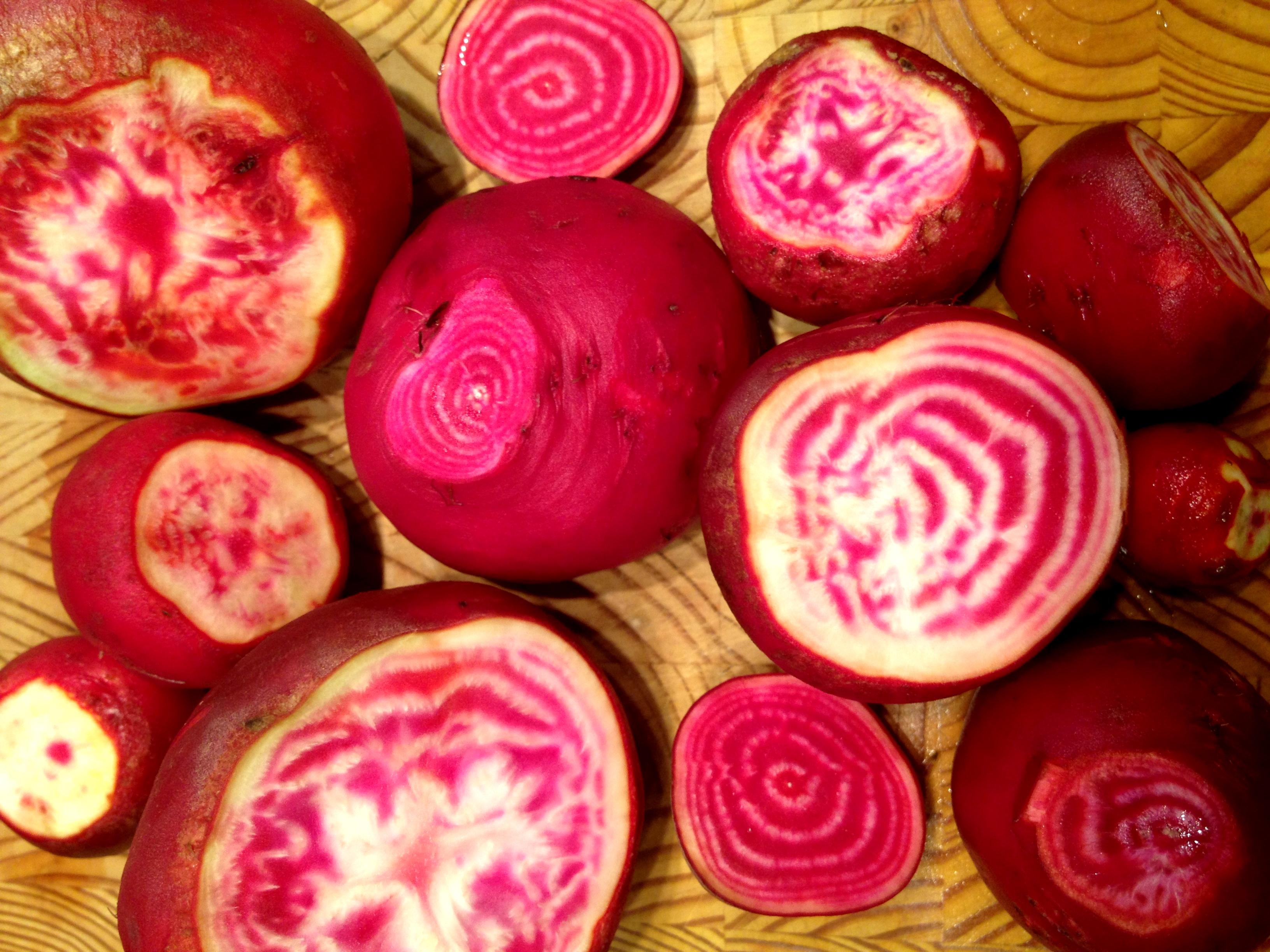
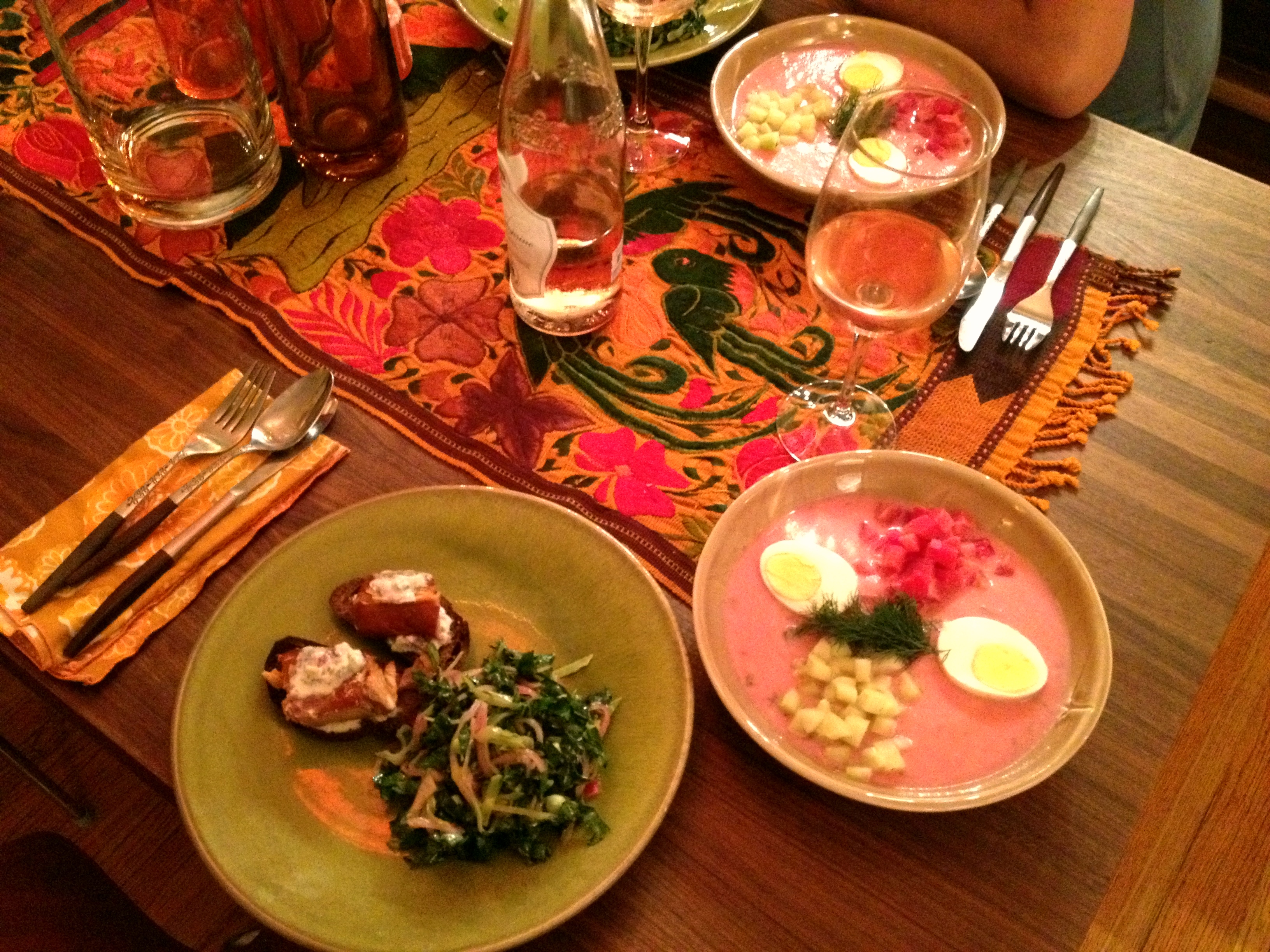
It turned out that these were Chioggia beets, which were breathtakingly beautiful, though the dramatic stripes faded a bit during cooking and, ultimately, made for a borscht the color of Molly Ringwald’s prom dress at the end of Pretty in Pink. (Am I alone in having found that dress rather disappointing after all of the buildup?)

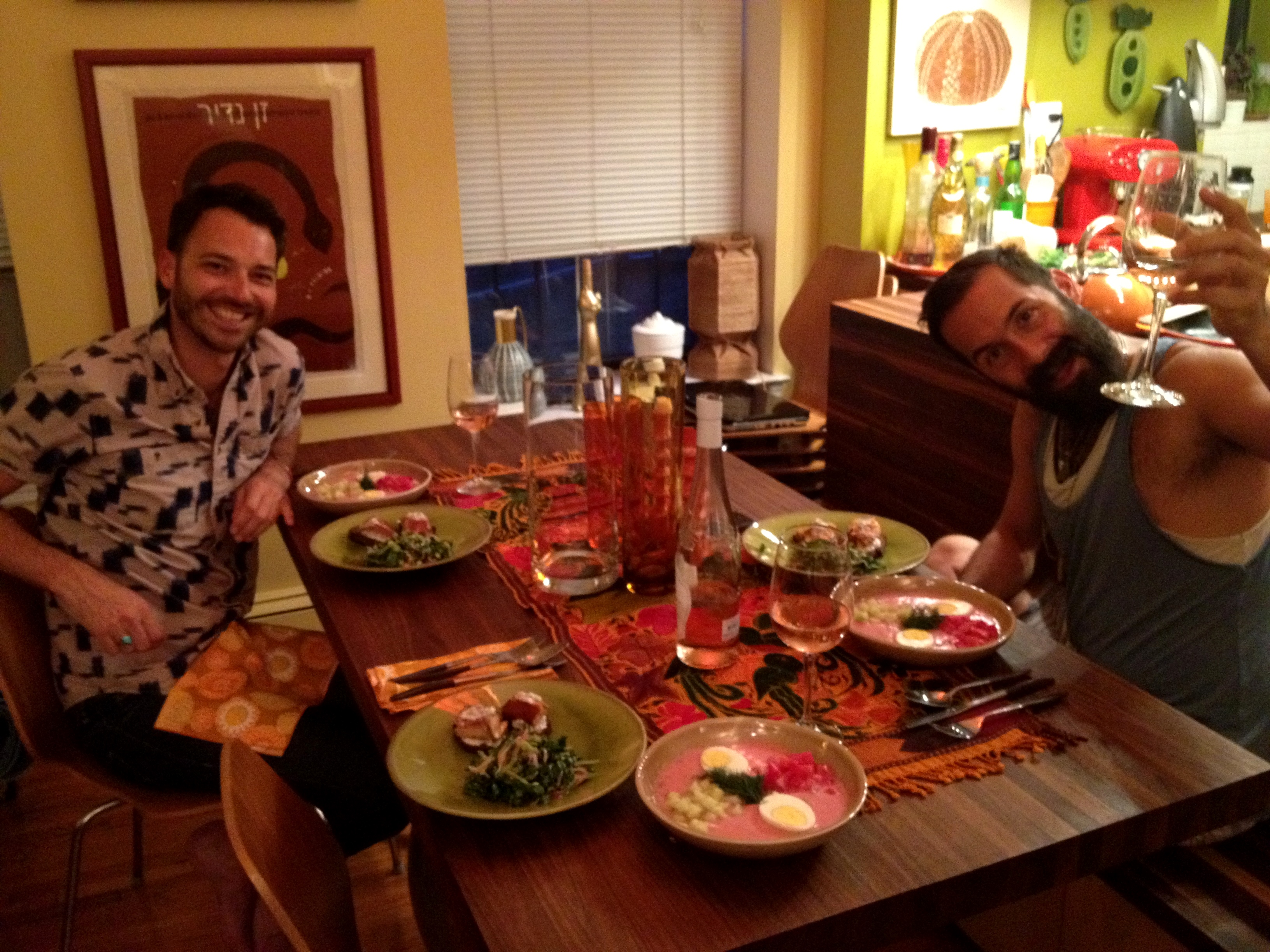
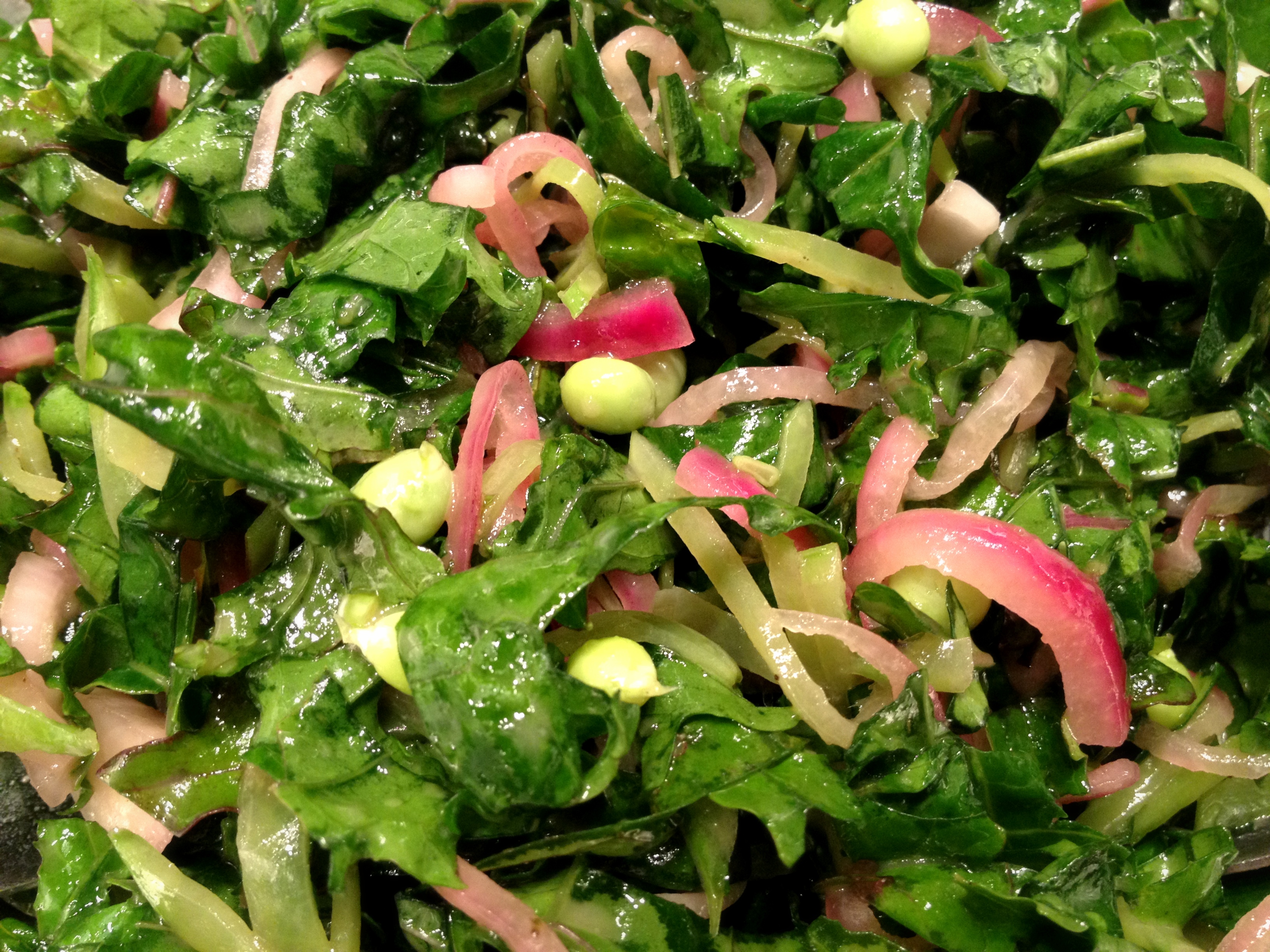
Still, it was damn tasty. I served it with a kale, sugar snap pea and pickled red onion salad and toasted pumpernickel bread topped with a crème fraiche spread and some killer smoked salmon that I’d picked up from Josephson’s Smokehouse in Astoria, Oregon. (Astoria is the town where Goonies was filmed, which makes for two ’80s movie references in a single blog post.)

An earthy rosé rounded out our feast, though I suppose that vodka would have been more traditional.


Kale, Sugar Snap Pea and Pickled Red Onion Salad

Kale, Sugar Snap Pea and Pickled Red Onion Salad

  • 1/2 red onion, thinly sliced
  • 2 Tbsp olive oil
  • 2 Tbsp red wine vinegar
  • 1-2 Tbsp honey
  • 1 Tbsp creamy Dijon mustard
  • Salt and fresh-ground pepper (to taste)
  • 1 bunch kale (I happened to have Red Russian, which worked nicely with the theme)
  • 2 cups sugar snap peas

Combine first six ingredient in a lidded jar and let stand for an hour or more, shaking periodically. Combine dressing with shelled peas and thinly sliced kale and pea pods and let sit for at least ten minutes until kale begins to wilt.

Mid-July CSA Salad

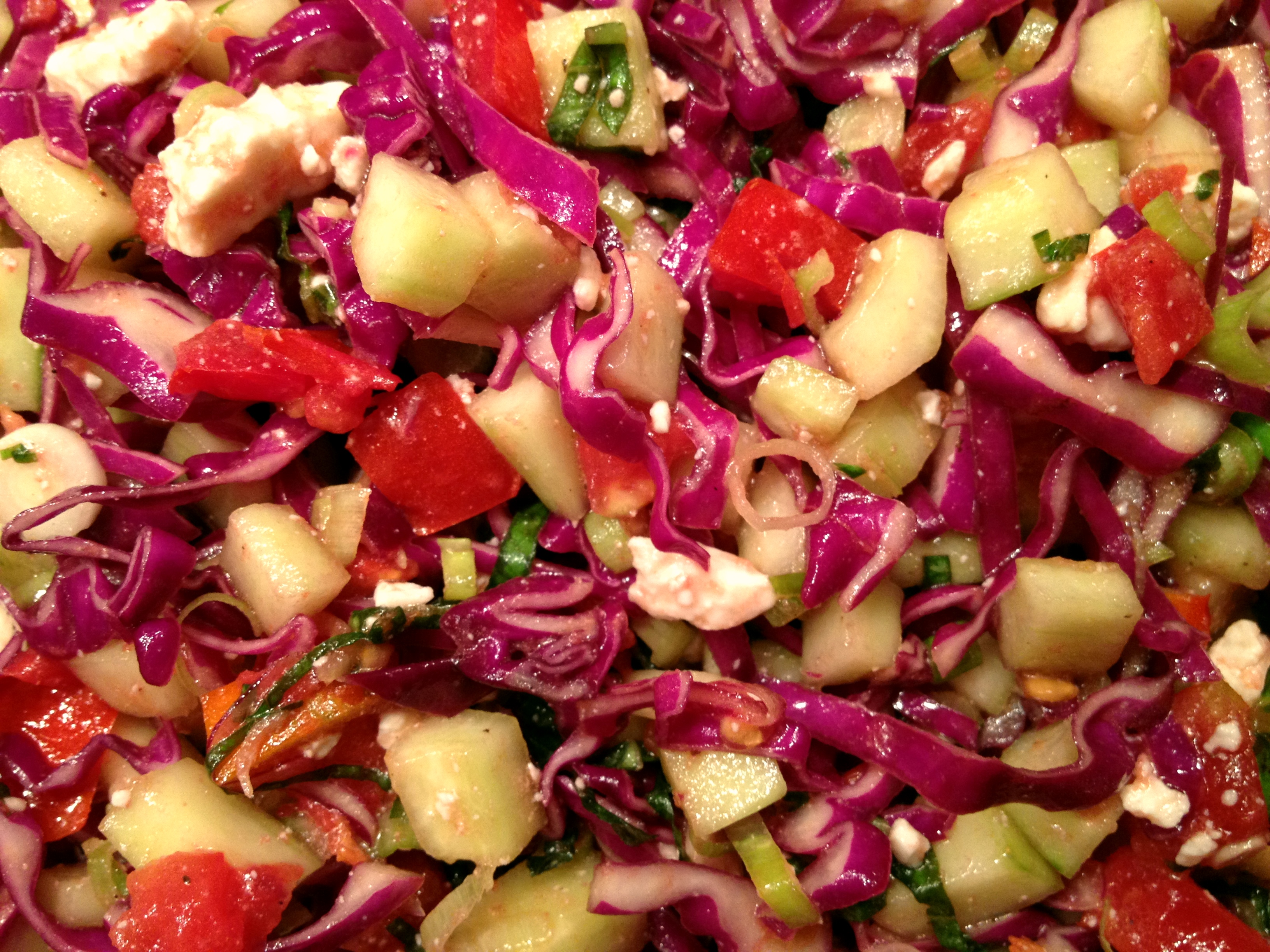
The tomatoes are here!  Tonight’s CSA share included basil, cucumbers, scallions and some truly glorious tomatoes.  I had a wedge of red cabbage left over from the five-spice kale and cabbage slaw I made for a Fourth of July Party.  And I has some feta–yet another great emergency protein source.

Mid-July CSA Salad

  1. Finely slice a quarter of a head of red cabbage and toss with a teaspoon of salt in a wooden bowl.  The salt will start to break down the cabbage, allowing it to wilt and more fully merge with the rest of your salad.  (Fun fact: sauerkraut is just cabbage, salt and, possibly, seasonings that have been left to ferment.)
  2. Peel a few cucumbers, slice them up in half and scrape out the guts, which will make your salad too watery.  Then dice them and add them to the bow. 
  3. Add a couple of diced tomatoes.  Some folks would have you de-seed these as well, but there was no way I was wasting any of that glorious tomato goodness.
  4. Add a few thinly sliced scallions and some basil chiffonade.  Chiffonade is fancy chef speak for thinly sliced.   I find the best technique is to stack the leaves (about 10 in this case), roll them into a spiral and then slice the whole stack.
  5. Crumble two or three ounces of feta and toss that in too.
  6. Drizzle with a tablespoon of good quality olive oil, a couple of tablespoons of red wine vinegar and some fresh-ground black pepper and toss it all together.

You could toss some toasted whole wheat pita bits or some quinoa in if you’re looking for something a little more filling.  If you are a patient person, you could let it sit for a bit so that the flavors meld.  Alternately, you just could pour a glass of Vinho Verde and get to work.

Eat Your Veggies

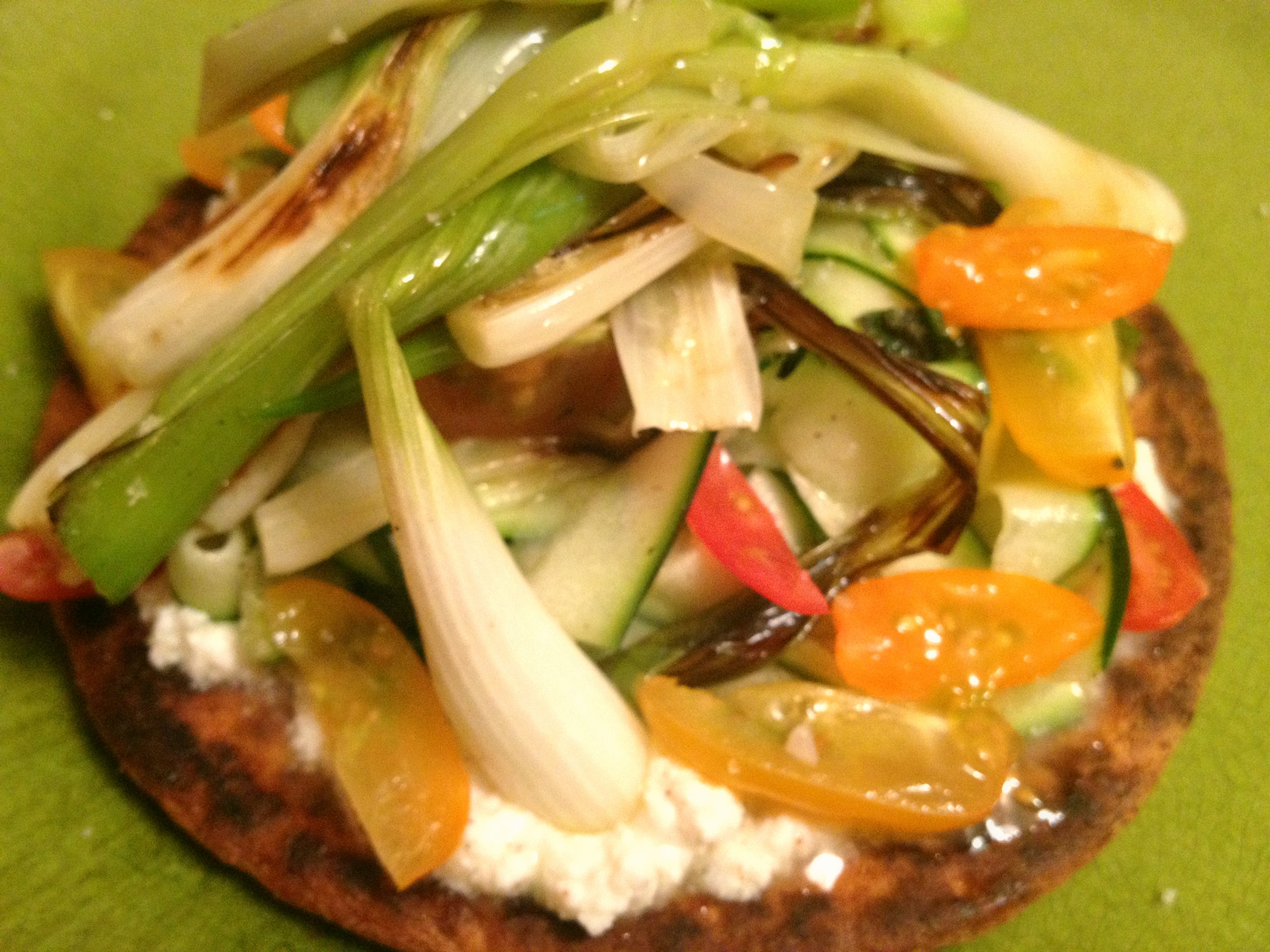
I’ve taken on a full CSA share this year. This is an ambitious quantity of vegetables, even for a serious vegetable lover. My goal is to keep some staples on hand that will allow me to convert pretty much anything into a quick weeknight meal. Whole wheat flatbread and ricotta cheese are on the list.

Image

Tonight I seasoned the ricotta with nutmeg. I used a vegetable peeler to shave thin slices of zucchini and marinated them in lemon juice, fresh basil and a fruity olive oil. I topped it off with a few sliced cherry tomatoes and some scallions that I halved and grilled in the same cast iron pan that I used to toast the flatbread. When making something this simple, it’s important to season each element.  I added salt and pepper as I went and then sprinkled a little fleur de sel over the top.

I ate this with some green leaf lettuce dressed with Greek yogurt, white wine vinegar, a minced garlic scape, pepper and a bit of honey. For dessert I polished off some strawberries that were definitely not going to keep through my long weekend in Sonoma. Then I turned a bag of leafy greens over to my appreciative neighbor and dragged out the suitcase.

A Note on Chile Peppers

This week continues to be challenging. I didn’t make it home until around 9:00 last night, by which time I was ravenous. I keep corn tortillas on hand for just such a situation. A few tortillas, half a tablespoon of olive oil, a red onion, a sweet red pepper, a jalapeño, some feta and the less brown half of an abandoned avocado became my dinner in about 15 minutes.

Image

The tacos were tasty but, in my haste, I forgot a few key tips for working with chile peppers.

  1. Cut off the tip and taste to assess hotness. Each pepper is unique. I’ve had jalapeños as mild as a green bell pepper. I’ve had jalapeños that were scorching. Let’s just say that my lower lip is looking a little bee stung today.
  2. If the pepper is hot, minimize skin contact. When you cut a pepper, you release capsaicin, the chemical that creates that delicious hot feeling. The more you cut it, the more you release. Some folks recommend wearing plastic gloves. I used to think this was ridiculous–until I met some seriously hot habaneros while making black bean dip. My hands stung for about 24 hours and were tingly for a few days after that. I tried milk. I tried oil. I tried vinegar. I tried harsh detergents. Nothing but time worked. I have yet to buy gloves, but I do make an effort to only touch the outside of the pepper and let my knife do most of the work.
  3. If your hands do absorb the heat, BE VERY CAREFUL what you touch. You can generally gauge whether one of your fingers is tainted it by sucking on it a bit. You could also gauge this by removing your contacts or by touching some mucus membranes (think soft, fleshy pink parts), but I DO NOT recommend this technique.
  4. If you want to minimize the heat, remove the ribs (the white part on the inside) and the seeds. If you are in a hurry and do not bother with this, you may end up with some very zesty tacos. Obviously, if you really want to amp your dish up, go for the whole thing.
  5. Using multiple sources of heat will yield a more complex flavor. In the case of these quick weeknight tacos, I stuck to the jalapeño and some fresh-ground black pepper. But, when I’m making chili or some other slow-cooked dish with layers of flavor, I generally go with a combination of fresh and dried chiles, chile powder, and/or hot sauce.
  6. Use caution when cooking chile seeds. If you’ve got a soup or a stew or some kind of braise going on, no worries. If you’ve got a hot cast iron pan with minimal oil, you may end up burning the seeds. If you live in a small one-bedroom apartment with no cross ventilation, this could be rather unpleasant. Boys and girls, can you say “pepper spray”?