Curried Black Lentils and Sweet Potato

I’m coming off of back-to-back 60-hour workweeks. In the middle of it all, I threw my back out necessitating a trip to urgent care and a cocktail of controlled substances that I’ve had to meter our carefully so as to remain functional for Tuesday’s fundraising gala and its aftermath.

By Saturday I was off duty and officially on Spring Break. I celebrated by purchasing a bottle of Bulleit Bourbon for my train ride down to Baltimore. That plus some Percocet and a little Zeppelin momentarily had me pain-free for the first time in over a week.

The plan was (and, I think, still is) a road trip down to Nahunta, Georgia to pick up a grill (well, technically a smoker cooker) that the good folk at Lang BBQ Smokers are building to spec for my friend Don. Between my back problems, a death in Don’s family, and a freak mid-March snowstorm over the mid-Atlantic, we’re getting a slow start.

Don flew home from Wisconsin last night via Atlanta (which, incidentally, put him within a four-hour drive of his new grill). His father-in-law had passed away in the wee hours of the morning and he’d had an arduous daylong journey, so I had resolved to cook him a nice meal. My instructions were to make something low in cholesterol and high in fiber, as Don had to swing by the lab for some blood work before we left town.

Rooting through the pantry, I found some black lentils and long-grain pecan rice. The hanging basket under the stairs held an onion and a large sweet potato. In the back of the fridge were parsley and a knob of fresh ginger. This plus an ample spice cabinet would make for a warm, flavorful meal and provide us both with enough fiber to kick off five days of barbeque for breakfast, lunch and dinner.

Curried Black Lentils and Sweet Potato

  • 1 cup black lentils
  • 4 cups water and/or chicken stock
  • 2 tablespoons grapeseed or other neutral cooking oil
  • 1 large onion, diced
  • 1 thumb-sized knob of ginger, peeled and minced
  • 1 tablespoon turmeric
  • 1/2 teaspoon cinnamon
  • 1 teaspoon whole cumin seed
  • 2 teaspoon smoked paprika
  • 2 African bird chilis (or cayenne paper to taste)
  • 1 whole black cardamom pod (optional)
  • 1 teaspoon asafetida (optional, but recommended if you are making the vegan version, as it will lend the dish a richness)
  • 1 large sweet potato, peeled and cut into small cubes
  • 2 tablespoon red wine vinegar
  • 4 tablespoons finely chopped parsley and/or cilantro
  • salt and pepper
  1. Bring the lentils and water/stock to boil in a medium pot, reduce heat, and let simmer for 25 minutes or until tender but still toothsome, seasoning with salt as needed. If you’re making rice to accompany the dish, now is a good time to start that process.
  2. Strain the lentils, reserving the cooking liquid. Add oil to your pot and bring up to medium heat. Add the onions and stir frequently until softened and starting to brown. Add ginger and stir constantly for one minute. Add all of the spices, stirring constantly for another minute. Add the reserved cooking liquid and the sweet potato. Simmer until potato has softened, adding water if the mixture gets too thick.
  3. Pour the lentils back into the pan along with the vinegar and a good dose of freshly ground pepper. Let simmer for a few more minutes, taste and adjust seasoning as needed. Add fresh herbs off the heat.
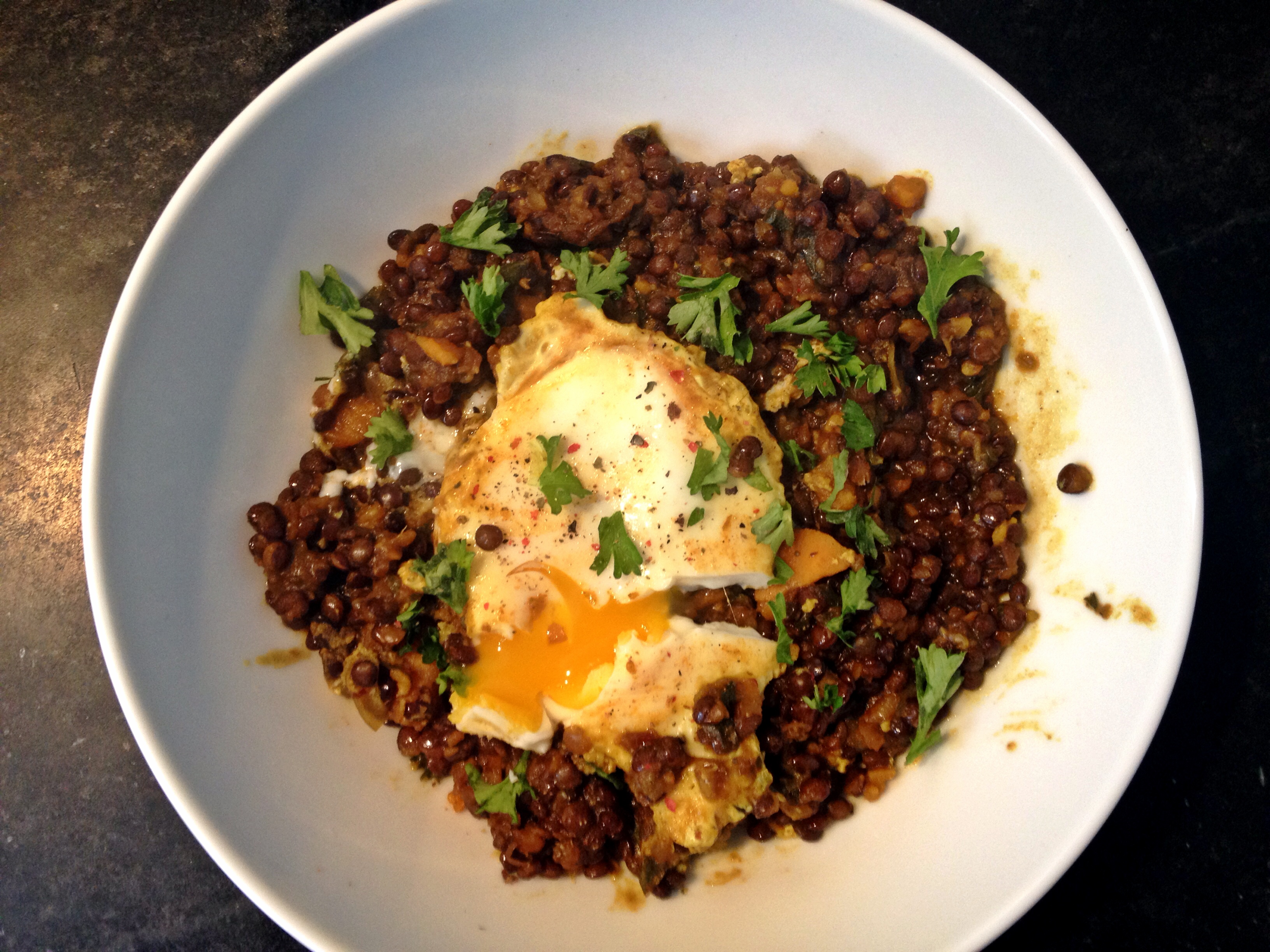
Curried Black Lentils and Sweet Potato

This recipe makes about four servings. I reheated the leftovers for breakfast. Don had his with rice. I simmered an egg in mine. Imagine this should get us through the first few hours of our snowy spring break road trip.

Black Bean & Sweet Potato Chili

This post contains two recipes which, when combined, yield a very nice pot of chili for four. I recommend doubling the bean recipe and setting half aside so that you can throw together quick dinners of tacos, huevos ranchers and the like throughout the week.

Spicy Black Beans

  • 1/2 pound black beans
  • 1 tablespoon lard, bacon drippings or other pork fat
  • 1 small onion, finely diced
  • 4 garlic cloves, peeled and halved
  • 1 bay leaf
  • 1/2 tablespoon dried oregano (or epazote if you’ve got it)
  • 2 dried chili de arbol (or substitute cayenne pepper to taste)
  • salt and pepper
  1. Add the beans to a large pot along with enough water to cover them by a few inches. Bring to a boil, turn off the heat and let them sit for an hour or more.
  2. Add the pork fat, onions, garlic, bay leaf and oregano. Bring back to a boil, reduce heat and let simmer for one hour.
  3. Add the whole peppers and salt and pepper to taste. Let simmer for another 30-60 minutes until the beans are quite soft and the cooking liquid has thickened. Remove bay leaf and chilis, transfer beans and cooking liquid to another container, give the pot a quick rinse, and move on to the next recipe.

Black Bean & Sweet Potato Chili with Hot Beef Sausage

  • 1 tablespoon olive oil
  • 4 links hot beef sausage, sliced into discs (If you can get your hands on Lewis Waite Farm‘s version, I recommend doing so because YUM. But any kind of spicy sausage would yield a great dish.)
  • 2 medium onions, diced
  • 2 tablespoons ground cumin
  • 1 tablespoon sweet paprika
  • 1 teaspoon dried chipotle and/or smoked habanero powder
  • 1/2 teaspoon cinnamon (Trust me on this; it’s your secret weapon.)
  • 2 tablespoons tomato paste
  • 2 tablespoons apple cider vinegar
  • 1 batch spicy black beans (see above)
  • 2 large sweet potatoes, peeled and cut into small cubes
  1. Bring the oil up to medium heat in a large pot. Fry your sausage slices in two batches, allowing them to brown and crisp in places.
  2. Remove the sausage, lower the heat a bit and add your onions. (If there wasn’t much fat left from your sausage, you could add a little more olive oil at this point.) Saute until starting to soften, then add in the spices and cook stirring constantly for one minute. Do the same with the tomato paste.
  3. Dump your reserved beans and sausage into the pot along with the cider vinegar and enough water that everything is just submerged. Let simmer for 30 minutes, then add the sweet potatoes. Let simmer for another hour. You can add water as you go if needed, but the goal is more of a thick sauce than a broth. Taste and adjust seasoning with salt and pepper if needed.

Black Bean and Sweet Potato Chili

I served this garnished with thinly sliced scallions, avocado slices and some Greek yogurt to counterbalance all of that heat.

Working (Wo)man’s Cassoulet

Last week was a doozy. I worked late on Friday and arrived home in need of some whiskey and a comforting meal–in that order. Fortunately, the night before I’d thought to defrost some of Lewis Waite Farm‘s most excellent kielbasa and soak some flageolet.

Flageolet

Flageolet are a lovely pale green bean used in rustic French cooking, including cassoulet. I had a classic cassoulet once and it was delicious. Saveur’s recipe calls for duck fat, ham hocks, pork shoulder, pancetta, duck confit legs and pork sausage (that last one being optional) and, by my rough estimate, takes about eight hours. While I am not averse to spending an entire day cooking, eating such a heavy meal at 4:00am seemed ill-advised. The recipe below will yield a rich, comforting meal for a crowd in under two hours.

Working (Wo)man’s Cassoulet

  • 1 pound flageolet, soaked overnight, rinsed and drained
  • 2 tablespoons pork fat (or olive oil)
  • 2 yellow onions, diced
  • 2 cloves garlic, sliced
  • 2 tablespoons tomato paste
  • 1 tablespoon Herbes de Provence
  • 1 healthy pinch red pepper flakes
  • 1 quart concentrated pork stock (See Going Whole Hog for the recipe. Chicken stock would also suffice, though I might throw a little bacon in at the beginning.)
  • 1 pound kielbasa, thinly sliced
  • 1 very large carrot, cut into small cubes
  • 1 very large daikon radish, cut into small cubes
  • 3 tablespoons apple cider vinegar
  • salt and pepper
  1. Preheat the oven to 300.
  2. Melt a tablespoon of pork fat in a large dutch oven over medium heat. Add the onions and sauté until soft. Add the garlic, tomato paste, herbs, and red pepper flakes. Sauté for another minute. Then add your pork stock plus enough water to cover the beans, turn up the heat to bring to a boil, then lower to a simmer.
  3. Melt the other tablespoon of pork fat in a large cast iron skillet over medium heat. Add the kielbasa slices in batches, searing on both sides. Dump these in with your beans. Stir in the carrot and radish along with some black pepper.
  4. Pop a lid on your beans and tuck them into the oven for 30 minutes—or until your empty whiskey glass compels you to go back into the kitchen. Take the pot out of the oven and check on your beans. If they aren’t yet tender, let them go a little longer. If they yield easily to your teeth, stir in the vinegar and salt and pepper to taste. Turn the heat up to 350 and place back in the oven uncovered for 45 minutes—or until you’re in desperate need of something to soak up the whiskey.

Flageolet with Kielbasa

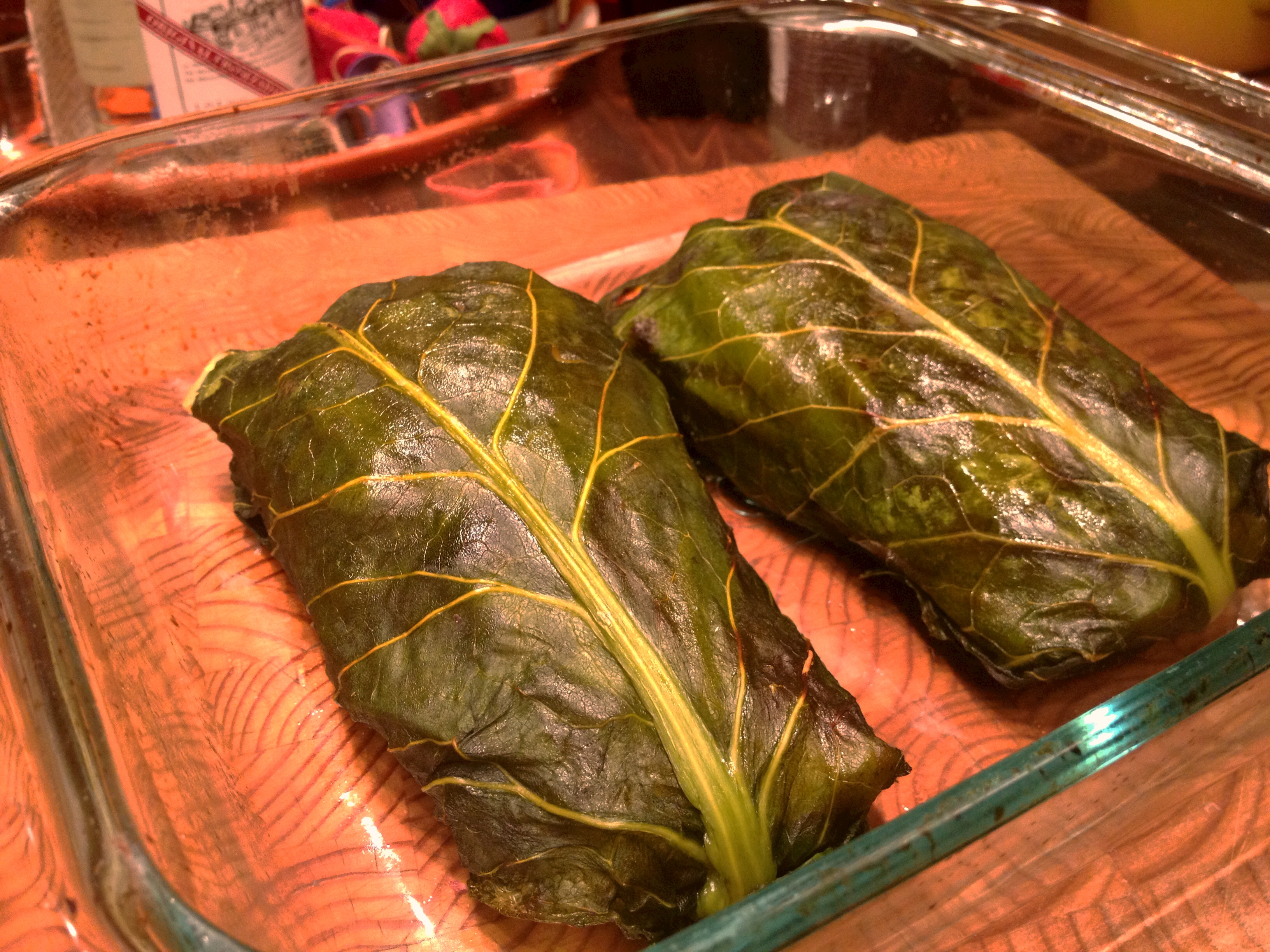
Collard-Wrapped Salmon with Winter Roots

I’ve lost track of how much snow has fallen on New York City this winter. This morning’s commute was a sloppy one–and we’re supposed to be getting two more rounds before the week is through. My office has been a comedy of errors since the new year. Today an air conditioning hose burst while workers sanded the outer wall, creating a dusty haze that found me grabbing for my inhaler and sending everyone home early. And so, three hours after arriving at the office, I was slogging back through the slush.

More Snow

I took a different route than usual so that I could swing by Whole Foods to pick up a large can of olive oil. Dreading the wet subway ride home, I roamed the aisles for a bit. The guy behind the fish counter was fervently pushing the wild Alaskan sockeye, which was on sale. My craving was so instantaneous and intense that I have to believe I’m suffering from some sort of deficiency.

I haven’t been eating much fish as of late, in part because last semester’s foray into the world of collapsing fisheries left me a bit freaked. But a quick check of Seafood Watch confirmed that wild sockeye is one of the better choices. I arrived home an hour later, popped the fish into the fridge, changed into pajamas, and spent the afternoon emailing and editing while the snow continued to fall.

By 6:00 I was ready for dinner. I had lots of root vegetables from my CSA share and some collard greens that were already looking a little sad when I bought them a week and half ago. Some of the larger outer leaves seemed salvageable. Wild salmon is much leaner than farmed, containing about half the fat but roughly the same amount of protein. I’ve found that it dries out quickly as a result, so I hatched the notion of wrapping the fish in collards to hold the moisture in during cooking.

Collard-Wrapped Salmon

Collard-Wrapped Salmon with Winter Roots

  • 2 large collard leaves (or four medium-sized if that’s what you’ve got)
  • 3 tablespoons coconut oil (butter is fine too)
  • 1 medium red onion, sliced pole-to-pole
  • 4 small daikon radishes, cut into large matchsticks
  • 4 small parsnips, cut into large matchsticks
  • 1/2 teaspoon orange zest
  • 2 8-ounce wild sockeye salmon filets
  • salt and pepper (including white pepper if you have it)
  1. Rinse the collards and steam in a lidded pan for 5 minutes or so, adding more water as needed to prevent scorching. You want the leaves to be pliable and dark green. Remove from the pan and spread out to dry.
  2. Rinse out the pan, add 2 tablespoons of coconut oil and bring up to medium-low heat. Add the red onion and sauté until it starts to brown around the edges. Add the parsnips and daikon radishes along with 1/4 cup water and pop the lid back on. When the vegetables have started to soften, remove the lid and cook off the water, allowing things to caramelize. Sprinkle with zest, salt and pepper. (I find that white pepper really complements the sweetness of parsnips, but it’s all good.) Remove to a plate or, if your pan is big enough, just slide them to the side.
  3. Rinse and dry your salmon, sprinkling both sides with salt and pepper (black in this case). If your collard leaves are small, slice each filet in half lengthwise. Add 1 tablespoon of coconut oil to the pan, still over medium-low heat, and cook the salmon for two minutes per side, starting with the skin down if you’ve got it.
  4. Spread the collard greens on your work surface and spoon half of the vegetable mixture into the center. Top with the salmon, skin side up. Fold the sides, top and bottom of the collards over the salmon as you would a burrito. Flip and place gently into a baking dish lightly greased with coconut oil.
  5. Bake in a 350-degree oven for 10 minutes and serve immediately.

Collard-Wrapped Salmon 2

This recipe makes enough for two hungry people, so scale up or down accordingly. You could easily swap in different vegetables–leeks, fennel, potatoes, carrots, etc.–based on what you have on hand.

Lowcountry Vegan

I am neither a South Carolinian nor a vegan.

Monday morning I received an email from an acquaintance who had accidentally purchased an eighth of a cow and was looking for people to split it with given her limited freezer space. The cow in question came from Grimaldi Farms, a grass-fed, free-range, organic farm in the Hudson Valley. How could I say no?

Seven hours later, Marissa and I met up for a drink and a cash-for-cow exchange. My $50 bought me a whole lot of meat. Three pounds of ground beef and a giant hunk of bone went into the freezer for a future use. Last night I tried my hand at beef liver–a dish I’d never actually eaten before. I soaked the liver in milk and pan-fried it with a light dusting of flour mixed with salt and pepper. Oumar and I ate it with a red onion jam, arugula in a lemon dressing and pillowy egg tagliardi with a pan sauce that included butter, garlic, shiitake mushrooms, parsley and lemon zest.

This was good stuff, to be sure. But a rich, restaurant-style dinner (and, possibly, the after-dinner bourbon) took its toll. I have 24 hours to regain my strength. My cow share also included half of a five-pound top round roast. Rather than divvy it up, we decided to have dinner together. Tomorrow night Maureen, Kevin, Sara and I will be tucking into pot roast.

So tonight it’s a lowcountry vegan meal for me.

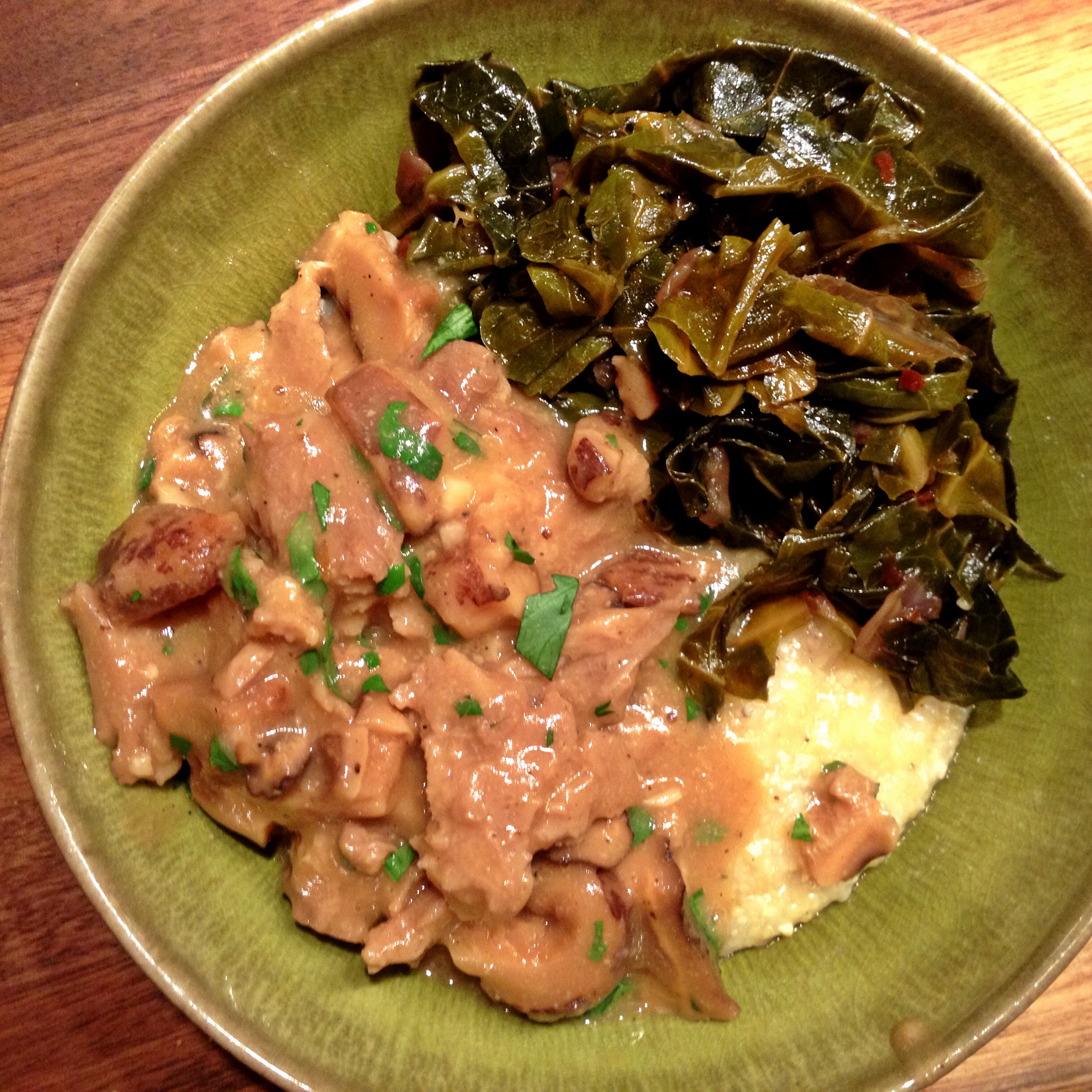
Grits with Shiitake-Seitan Gravy and Braised Collards

  • 1/2 cup grits
  • 1 tablespoon olive oil
  • 1/2 red onion, thinly sliced
  • 3 cloves garlic, 2 thinly sliced and 1 minced
  • 1 pinch red pepper flakes
  • 1 bunch collard greens, stems removed and leaves sliced
  • smoked salt
  • 4 dried shiitake mushrooms
  • 1 tablespoon coconut oil
  • 1 tablespoon flour
  • hot sauce
  • 1 tablespoon nutritional yeast (While not necessary, this will really boost the flavor. And it makes a great popcorn topping.)
  • 1 package (8 ounces) seitan, torn into small pieces
  • 2 tablespoons minced flat leaf parsley
  • salt and pepper
  1. Bring 2 1/2 cups of water to boil in a small pot, lower the temperature to medium, and add the grits. Whisk constantly for a few minutes until the mixtures starts to thicken. Lower the temperature until you achieve a very slow simmer. Whisk occasionally for the next 45 minutes or so. When the grits are done, season with salt and pepper.
  2. Add olive oil to a large pot over medium-low heat. Saute onions until they are soft and beginning to brown. Add red pepper flakes and the sliced garlic and cook stirring constantly for one minute. Stir in the collards, some pepper, a good pinch of smoked salt, and 1/2 cup water. Let simmer with the lid slightly ajar for 30 minutes or so, stirring occasionally and adding water if it starts to dry out.
  3. Bring two cups of water to a boil and pour over the dried mushrooms in a small bowl. When they have softened, remove the mushrooms and chop them, being sure to retain the mushroom broth.
  4. Add the coconut oil to a small saucepan over medium-low heat. Add the minced garlic. After 30 seconds, add the flour and whisk constantly for two or three minutes until the mixture takes on a pale blonde color. (Look, you made a roux!) Add the liquid from the mushrooms and whisk constantly. After a few minutes, your gravy should thicken. (Ah, the wonders of a roux.) Stir in the mushrooms and nutritional yeast. From here, you can add water as needed to keep the gravy from getting too thick. Add salt, pepper and the hot sauce(s) of your choice. I used Frank’s, Tabasco and Matouk’s Calypso Hot Sauce, which has been one of my obsessions since I discovered it while vacationing in the Bahamas a couple of years ago. Cook for a few more minutes and your sauce should start to darken. Stir the seitan (which is fully cooked) in for the last minute or so. Add the parsley off the heat.

Grits with Shiitake Seitan Gravy and Braised Collards

This recipe makes enough for two people. I just polished off half of it to steel myself for tonight’s birthday party. Given that the festivities are at a dive bar walking distance from my house, I imagine the second half will make an excellent breakfast.

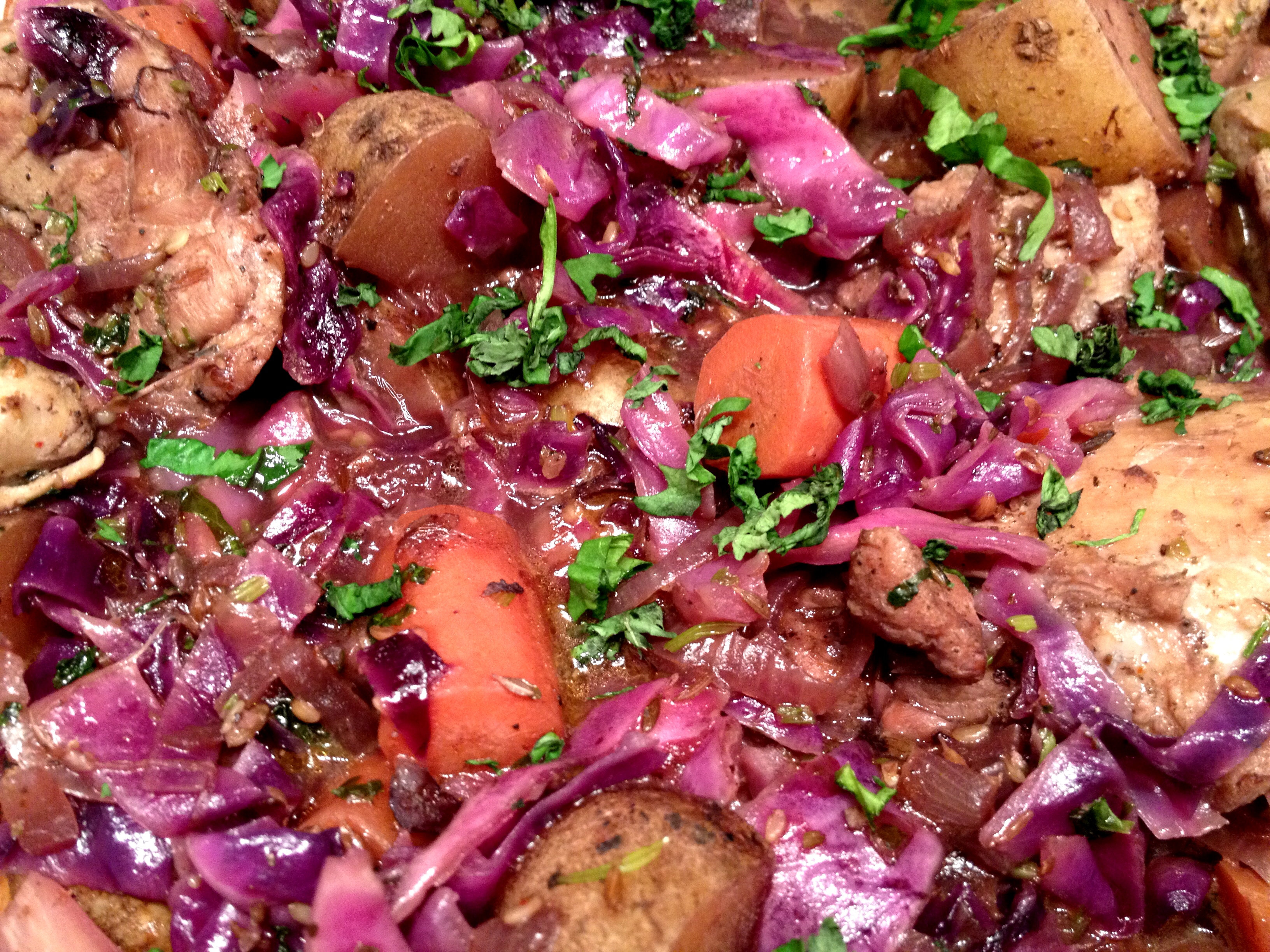
Red Wine-Braised Chicken Thighs with Dukkah

It is beyond cold here in New York City and across most of the nation. As I type this, it’s nine degrees in Brooklyn–and that’s without factoring in the wind chill. I made the morning commute in no less than 18 articles of clothing.

Arctic ChicHad I to do it over, I would have added leg warmers and a second scarf.

It was the (please, oh please, let this be true) coldest day of the year and the heat was out in our office due to a leaking valve. Adding insult to injury, the building is in the final stages of a multi-year facelift; concrete bricks and plaster are currently all that separate us from the elements. The staff toughed it out in knit caps, scarves and sweaters until 3:00 when I sent everyone home. I stuck around for another hour in the hopes of guilting the building staff into figuring something out before heading home myself. The temperature was holding steady in the single digits, but the wind had picked up. For some reason my knees–buried under silk long underwear, jeans and a down coat–suffered the most.

I had a hankering for something warm and comforting. I also had a hankering to take my brand new Global knives for a spin.

The fridge held chicken thighs, potatoes, carrots, red cabbage, and some sorry-looking cilantro. On the counter I had onions and some red wine left by my cat sitter. I also had a baggie labeled Dukkah, which the internet tells me is an Egyptian blend of crushed spices and nuts. This particular mix, which I received as a gift from an old friend, is from My Spice Sage and contains coriander, cumin, fennel, thyme, marjoram, black pepper and sesame seeds.

Red Wine-Braised Chicken Thighs with Dukkah

  • 2 tablespoons olive oil
  • 3 tablespoons Dukkah or a spice blend of your choosing (I’m willing to bet this would be nice with a curry of some sort.)
  • 8 boneless, skinless chicken thighs (You could use bone-in. Just be sure to cook them a bit longer.)
  • 2 medium onions, thinly sliced
  • 1-2 tablespoons harissa
  • 7 small carrots, peeled and cut into chunks
  • 8 small potatoes, quartered
  •  1 1/2 cups red wine
  • 1 1/2 cups chicken stock
  • 1/2 head red cabbage, shredded
  • 1 small bunch cilantro, minced
  • salt and pepper
  1. Heat oil in a large dutch over medium-low heat. Rinse the chicken thighs, pat them dry and dust with 1 tablespoon of Dukkah plus salt and pepper. Pan fry the chicken in two batches, approximately five minutes per side.
  2. Set the seared chicken aside, add the onions, and cook until nicely browned. Add the remaining 2 tablespoons of Dukkah and the harissa, stirring constantly for 1 minute. Then add the red wine and use your spoon to scrape the fond (browned tasty bits) from the bottom of the pan. Add the chicken stock, carrots and potatoes. Bring to a boil, lower the heat and let simmer uncovered for 15 minutes, stirring occasionally.
  3. Taste the broth and add salt and pepper as you see fit. Stir in the cabbage, cilantro and chicken. (It’s OK if the liquid doesn’t completely cover the vegetables and chicken.) Cover and let simmer for 20 minutes or so, stirring occasionally, until the vegetables are cooked through but still firm.

Braised Chicken with DukkahThe resulting dish was comforting in the extreme, with a rich broth and warm spices.

The knives were even more satisfying.

Global KnivesThese supremely sexy pieces of cutlery feel light but powerful in the hand and cut through an onion like it’s butter that’s been left on the counter. They may just be the best gift I have ever received.

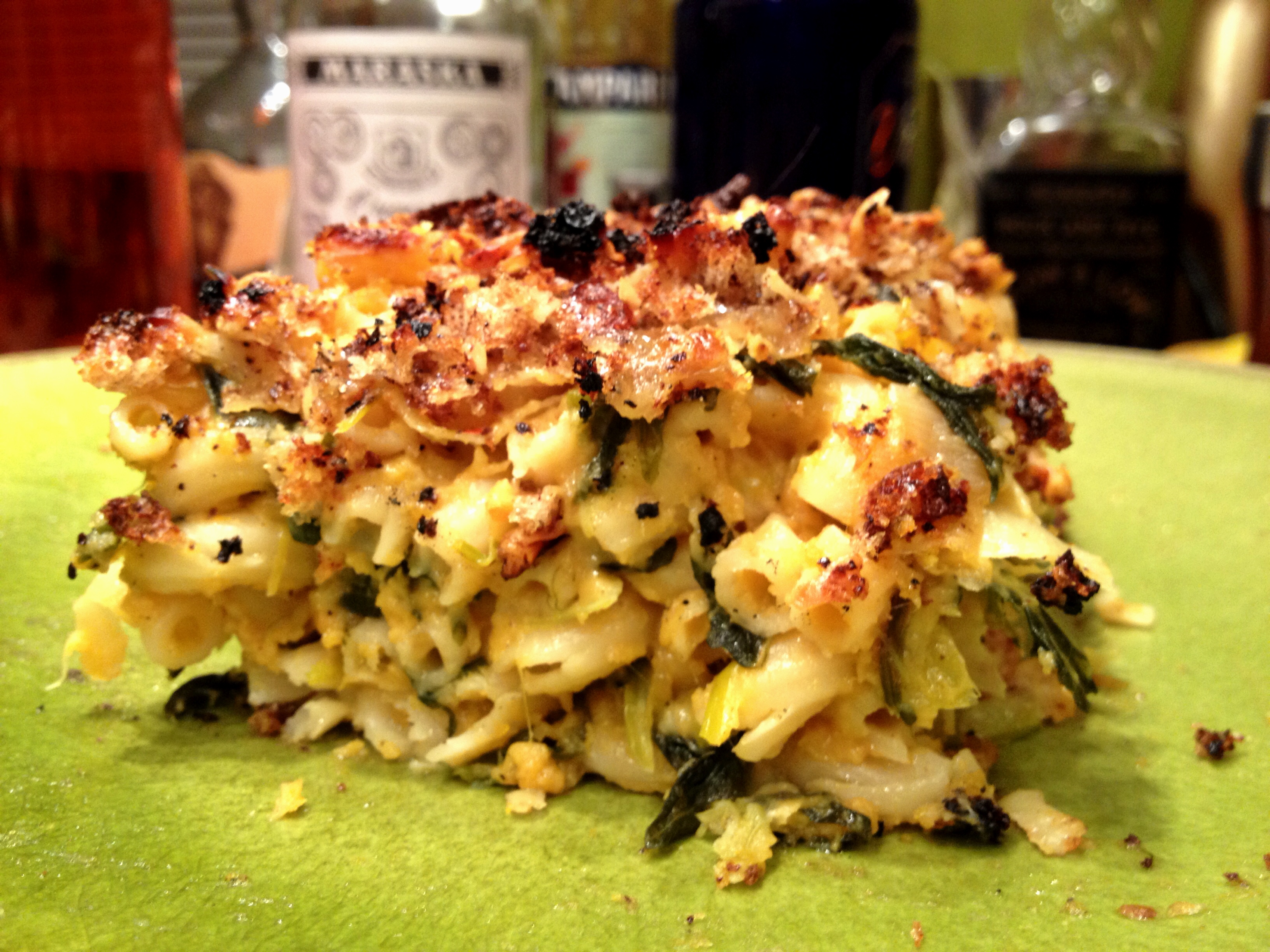
Butternut Mac and Cheese with Winter Greens

I’m headed out of town for a mid-Atlantic tour visiting friends and family. Between finishing up the semester, spearheading the year-end fundraising push at my job, and planning and attending various holiday events, my apartment has become something of a way station. Snow boots and shoes litter the floor. Root vegetables, fondue forks and half-unpacked boxes are stacked on the dining table. The bench in my bedroom is piled high with clothing of indeterminate cleanliness. But it’s the refrigerator that calls out for my attention.

As thanks for his services, I’ve invited my cat sitter over for dinner along with a few friends. (Dinner parties are way more fun than packing.) I will be gone for nine days and there are lots of odds and ends to use up before then. For breakfast, I had a fried egg atop pan-fried butternut squash, onions and fennel. But that still left a couple of pounds of cheese lifted from my office holiday party, two giant leeks left over from last weekend’s oyster extravaganza, an assortment of winter greens from my CSA share, dairy products of assorted “sell by” dates and more butternut squash.

A few months ago, I took my mom to Marcus Samuelsson’s Red Rooster, where we had his sinfully tasty Mac & Greens. A childhood friend has long touted the delight of macaroni and cheese with butternut squash. And so this dish was born.

Butternut Mac and Cheese with Winter Greens

  • 1 large butternut squash, peeled and cubed
  • 4 tablespoons olive oil
  • 2 large leeks, whites and greens slice and rinsed thoroughly
  • 6-8 cups chopped winter greens (kale, collards, spinach, chard, mustard greens, etc.)
  • pinch red pepper flakes
  • 1.5 pounds elbow noodles (You could use shells but, for macaroni and cheese, I am uncharacteristically a traditionalist.)
  • 4 tablespoons butter
  • 1 large shallot, minced
  • 4 cloves garlic, minced
  • 4 tablespoons flour
  • 1.5 cups whole milk and/or heavy cream
  • 2 teaspoons nutmeg
  • 3 tablespoons mustard powder
  • 2 tablespoons Dijon mustard
  • 1/2 teaspoon cayenne pepper
  • 1.5 pounds assorted cheese, shredded (Judging from my taste tests, I’m pretty sure I used white cheddar, gouda and Gruyère. But just about any cheese that melts well will work here.)
  • 1 cup bread crumbs (I used some I’d made from the remnants of a whole wheat sourdough loaf and then frozen a while back, but store bought are cool too.)
  • salt and pepper
  1. Toss the butternut squash with 2 tablespoons of olive oil and cook in a 425-degree oven until tender and just starting to brown. Puree in the food processor, adding a small amount of water if needed. Set aside.
  2. Bring the rest of the oil to medium-low heat in a large heavy-bottomed pot. Add the leeks and cook stirring frequently until they are soft. Stir in the red pepper flakes and chopped greens. Place a lid on and let cook for 10 minutes. Remove the lid, turn up to medium-high heat and cook stirring frequently until all liquid is gone. Set aside in separate bowl.
  3. Give your pot a quick rinse, fill with cold water, add some salt, and bring to a boil. Add the pasta and cook about halfway. Strain and set aside.
  4. Give your pot another quick rinse, add the butter and bring up to medium-low heat. Add the shallot, cook for a few minutes and then add the garlic. Cook for another couple of minutes before whisking in the flour. Your mixture should turn gummy and blonde. Whisk in the milk and/or cream plus the nutmeg, cayenne, mustard, mustard powder, a good pinch of salt and lots of pepper. When the mixture starts to thicken, whisk in the cheese in batches, reserving a cup or two for your topping. Once the cheese has melted, stir in the pureed squash, taste your mixture and add additional seasoning if needed.
  5. Stir the pasta and greens into your cheese mixture and then pour into a greased baking dish. Mix the reserved cheese with the breadcrumbs, salt and pepper. Sprinkle the mixture over the top, set aside and go about your business.
  6. About an hour before you are ready to eat, preheat the oven to 375. Bake for 30-40 minutes until your casserole is bubbling and your one-bedroom apartment is engulfed in the heady smell of melted cheese. If you want to get fancy, run it under the broiler for a couple of minutes to brown your crust. Let stand for 5-10 minutes before serving.

Butternut Mac and Cheese with Winter Greens

This paired nicely with a spinach and red onion salad with a Dijon and red wine vinaigrette. The recipe makes enough that five grown people can go back for seconds–and you’ll still have enough leftovers for your cat sitter to enjoy a home cooked lunch for another four or five days. As if hanging out with this adorableness wasn’t reward enough.

Oona

Sweet Potato Turkey Bisque with Collards

I am still working my way through the last of this season’s CSA share. Olive oil, habanero powder, salt and pepper are the only things in this dairy-free bisque that didn’t come directly from Windflower Farm or a nearby meat purveyor. This came out crazy tasty, which is a good thing since I will be eating it all week.

Sweet Potato Turkey Bisque with Collards

  • 2 pounds sweet potatoes
  • 4 tablespoons olive oil
  • 1 large red onion
  • 4-6 garlic cloves
  • 1/2 teaspoon habanero powder (cayenne would also work)
  • 1 pound ground turkey
  • 1 small sprig fresh rosemary (or 1/2 teaspoon dried)
  • six cups chicken stock (I used eight cubes of my frozen concentrated stock plus a couple of cups of water.)
  • 1 cup apple cider
  • 1 bunch collard greens
  • salt and pepper
  1. Preheat oven to 425. Peel the sweet potatoes and cut them into large hunks of roughly the same size. Place on a cookie sheet and mix with 2 tablespoons olive oil plus some salt and pepper. Pop these in the oven and cook until soft and starting to brown, approximately 15 minutes.
  2. Bring two tablespoons of olive oil up to medium heat in a large, heavy-bottomed pot. Chop the onion, add to the pot and sauté until soft. Press and add the garlic along with the habanero powder, adding more if you like things really spicy. (I used a heaping teaspoon and mine came out pretty damn hot.) Stir constantly for one minute. Then add the ground turkey. Cook, stirring occasionally, until all pink is gone. Season with salt and pepper.
  3. Puree the sweet potatoes, using water as needed to loosen the mixture. Add the purée plus the chicken stock, water and apple cider to your turkey mixture and bring to a boil. Lower heat and simmer for 30 minutes or so. Taste and adjust seasoning with salt and pepper.
  4. Strip the stems from your collards, roll them like a cigar and thinly slice into strips. Add these to the pot and simmer for another 10-15 minutes.

Sweet Potato Turkey Bisque with Collards

Hoppin’ John is Health Food

It is with a heavy heart that I announce that Windflower Farm‘s CSA season has come to a close. The winter season starts in a couple of weeks, so you can look forward to reports on root vegetables, hard squashes, and dark leafy greens.

In preparation for the slow and low cooking that these vegetables imply, I took the opportunity to place one last order for meat from Lewis Waite Farm, which partnered with my CSA for the first time this year. I worked from home this morning so that I could meet an unmarked van full of meat on a street corner near my house. Given that I already had a serious stockpile from my Carnivore Share, I may have gone a bit overboard.

Freezer Full of Meat

I took the afternoon off to catch up on some reading for school. I’m taking Contemporary Issues in Food Studies this semester and spent most of the weekend writing a paper on Taste, Culture and the Production of Cool. This week, we are shifting gears to examine the systems that create and perpetuate global hunger.

And so I find myself reading about the impact of The Green Revolution–which increased crop yields but came with a serious consequences in terms of individual health, the environment, economic equality and overall food security–while simmering a large pot of Hoppin’John chock full of whole grains, humane meat, organic legumes and locally-sourced vegetables.

It’s enough to make your head spin.

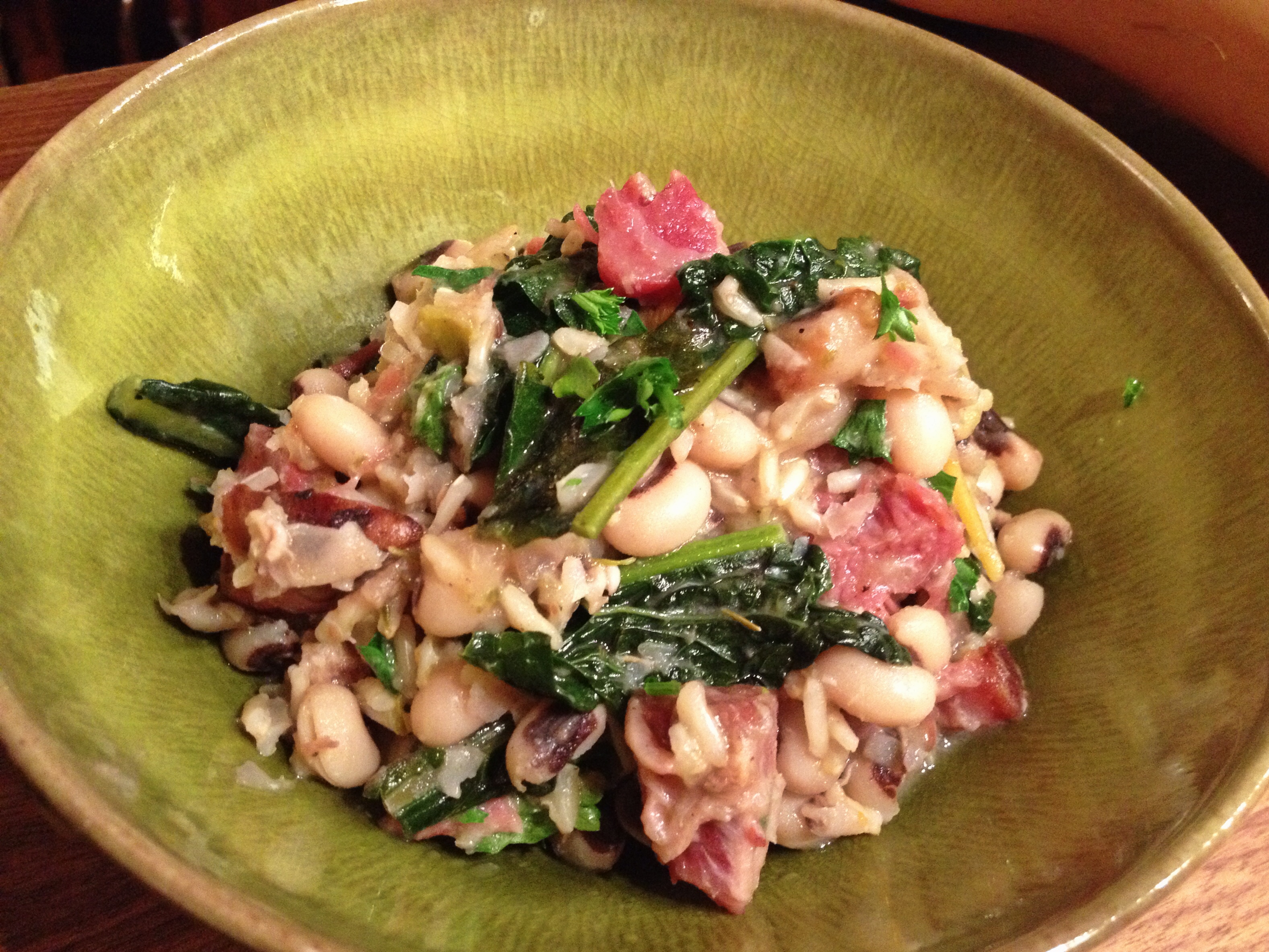
Hoppin’ John with Brown Rice and Kale

  • 1 pound dried black-eyed peas
  • 1 smoked ham hock or pork shank
  • 1 bay leaf
  • 4 whole garlic cloves
  • 2 tablespoons olive oil
  • 1 leek, sliced and rinsed (or an onion)
  • 1-2 jalapeño peppers (depending on their heat and your tolerance for heat), minced
  • 2 bell peppers, chopped
  • 1 teaspoon dried thyme (or a sprig of fresh if you have it)
  • 2 bunches lacinato kale or other dark leafy green, roughly chopped
  • 1 bunch parsley, chopped (optional)
  • apple cider vinegar or vinegar-based hot sauce
  • salt and pepper
  1. Dump the beans into a bowl, add enough water to cover by a few inches, and soak overnight, or for at least six hours.
  2. Cover the hock or shank with water in a large dutch oven. Add bay leaves and garlic and cook at a slow boil for one hour.
  3. Strain and rinse the black-eyed peas, add them to the pot along with a big pinch of salt and continue your slow boil for another 45-75 minutes until the peas are tender but not mushy.
  4. Transfer the pork shank to a cutting board and dispose of the bay leaves. Dump the peas into a bowl, put your pot back over medium heat and add the olive oil. Add your leeks and peppers. Stir occasionally while the vegetables soften, adding thyme after a few minutes. Meanwhile, pull the meat off of the pork bones, chop it up, and add it back to the pot. 
  5. Add a cup of long-grain brown rice, plenty of freshly ground pepper, two cups of the bean liquid, and two cups of water. Taste the broth and add salt if needed. Bring to a boil, then lower the heat, put a lid on it, and simmer for 40 minutes or until your rice is tender. 
  6. Stir in the kale, cover and let simmer for an additional 5 minutes. (I like my kale toothsome but, if you prefer more tender greens, add them a little earlier in the cooking process.)
  7. Mix in the parsley and the black-eyed peas, along with enough of their cooking liquid to give the dish a loose consistency. Add more salt and pepper as needed. I like to round out the flavor with a couple of tablespoons of vinegar. If your peppers aren’t as spicy as you might have liked, you can also use a vinegar-based hot sauce to get that tang.

Healthy Hoppin' John

For a little Hoppin’ John history, another tasty recipe featuring black-eyed peas and greens, and a glimpse at my Dollywood pilgrimage, check out A Hoppin’ New Year.

Sweet & Sour Curried Chickpeas with Spinach

Sometimes just making it to Friday night seems like a Herculean feat. I came home bruised, battered, and hungry. While I had just about made my way through the Homemade Hummus from last weekend’s chickpea extravaganza, I still had a pint and a half of whole chickpeas left to consume. Today was bitterly cold and I found myself craving something warm and spicy.

Sweet & Sour Curried Chickpeas with Spinach

  • 1 tablespoon cumin seeds
  • 1 tablespoon whole coriander
  • 1/2 tablespoon black peppercorns
  • 1/2 tablespoon whole fenugreek
  • 1 tablespoon coconut oil (Ghee or some sort of vegetable oil would be fine.)
  • 1 medium onion, finely chopped
  • 1 knob (large gumball sized) ginger, minced 
  • 1 jalapeño pepper, minced
  • 4 cloves garlic, minced
  • 1 tablespoon turmeric
  • 1/2 tablespoon garam masala
  • 1/2 pound dried chickpeas, cooked, with liquid (You could use a couple of cans in a pinch, but the texture will suffer.)
  • 2 tablespoons dried tamarind (If my crappy grocery store has it, yours will too.)
  • 1 tablespoon sugar
  • salt
  • 2 bunches fresh spinach, roughly chopped
  1. Bring the oil up to medium heat in a medium-sized heavy-bottom pot. Add the onion and sauté stirring frequently. After a few minutes, add the ginger and jalapeño. 
  2. Meanwhile, toast the cumin, coriander, fenugreek and peppercorns in a dry cast iron skillet, shaking frequently, until they begin to pop and release their smell. Grind these using a mortar and pestle or an electric grinder.
  3. Add the garlic to your onion mixture. Stir constantly for about one minute. Then add your ground toasted spices plus the turmeric and garam masala and continue stirring for one minute, allowing the spices to hydrate in the oil. 
  4. Add the chickpeas with their liquid, the tamarind, the sugar and a nice pinch of salt. (There is probably some dentist-approved way to handle the tamarind, but I just tore it into small pieces with my hands and then fished out whatever seeds I could spot as the fruit disintegrated into the sauce. I recommend doing a better job than I did, though I managed to avert a trip to Dr. Czarnik.) Bring to a boil and then reduce the heat and let simmer for a while, adding water as needed.
  5. This is a good time to put some rice on. (While basmati would be traditional, I used some brown Jasmine rice, because that’s what I had, and added turmeric and salt.) When your rice is just about done, taste your chickpeas and adjust the seasoning with salt and sugar as needed. Then add the spinach in batches, stirring to speed the wilting process, and cook until the leaves are just tender.

The resulting meal was a delightful mashup of my favorite Indian takeout dishes. But, with no dairy and just a tablespoon of oil for about four servings, it was much lighter–which is a good thing when you need to buckle down and write a paper at the end of a very long week.

Sweet and Sour Curried Chickpeas with Spinach