
Ground lamb with garlic scapes and Ras el Hanout on a brioche bun topped with harissa-paprika mayo makes for a lovely Father’s Day cookout.

Ground lamb with garlic scapes and Ras el Hanout on a brioche bun topped with harissa-paprika mayo makes for a lovely Father’s Day cookout.
This is a big week. CSA season started and the teenage vegan is making her annual pilgrimage to New York. Rather than camp out on an air bed in my living room, my baby sister will be interning with the Powerhouse Theater for six weeks and, much to my delight, bunking in my old dorm. She was scheduled to fly into LaGuardia at 3:00 this afternoon. It is now after 8:00pm and her flight to White Plains (yes, White Plains) has yet to depart. This is Eliana and the plane that may or may not bring her to New York tonight.

I had planned a lovely vegan dinner for two. Alas, it looks like I will be dining alone.
Happy Rich, Seitan and Shiitake Stir-Fry

Polish off half of this with the remainder of the surprisingly full-bodied Pinot Gris you’ve been nursing all week. Pack the rest in a recycled takeout container to present to the teenage vegan–if and when she arrives.
On Saturday I took a break from schoolwork to meet up with a friend for brunch (shakshuka for me, a tuna melt for my date) followed by manicures and pedicures (swimming pool blue and fire engine red for me, sunset orange for her).
Afterwards, we swung by the Fort Greene Park Greenmarket where I thought I might pick up something for dinner. I had a guest due at 8:00 and a mountain of reading to get through, so I was looking for a dish that could cook in the oven without much tending. On a whim, I bought a 4.5-pound whole Moulard duck from Hudson Valley Duck Farm.
I arrived home to find my neighbor Chris planting daffodils and pansies in the planters outside our apartment buildings. As we chatted, I set down my heavy tote bag and mentioned the duck inside. Chris, who is no slouch in the cooking department (he had made Momfuku’s Korean pork for a work potluck just the day before), wished me luck, noting that he had never cooked a whole duck. Come to think of it, neither had I.
Back in my apartment, none of the cookbooks included recipes for a whole duck. I flipped through some online recipes, each with more elaborate preparations than the last. It seemed that I should have started preparing my duck a couple of days ago. Then I remembered that the woman working the stand had encouraged me to check out Melissa Clark’s video on The New York Times website. Three and a half minutes later, I was good to go. Clark provides a simple, straightforward technique that you can riff on in an endless number of ways–the ideal recipe, in my book.
I rinsed the bird, hacked off the neck, made small incisions all over the skin (taking care not to nick the flesh), and rubbed it down with salt, pepper, cayenne powder, and some Chinese five-spice powder that I had on hand. Then I set it in the refrigerator uncovered and got down to my reading.
A few hours later, I removed the duck and let it come to room temperature while I preheated the oven. I stuffed the bird with large hunks of fresh ginger and garlic and half a lemon left over from a previous meal. At the last minute, I decided to drizzle the duck with a bit of soy sauce and honey.
Aside from some temperature adjustments and one flip, the duck took care of itself for the next couple of hours. As the heady scent filled my apartment, I realized that none of the wines I had in the house would hold up to the bold flavors, so I ran to the wine shop four blocks away. The shopkeeper could smell the duck and spices on me and, after some consideration, we settled on a Riesling and an Old Vine Zinfandel.
The duck rested draped lightly in tinfoil while I prepared rice and purple kale with leeks, soy sauce and rice wine vinegar.
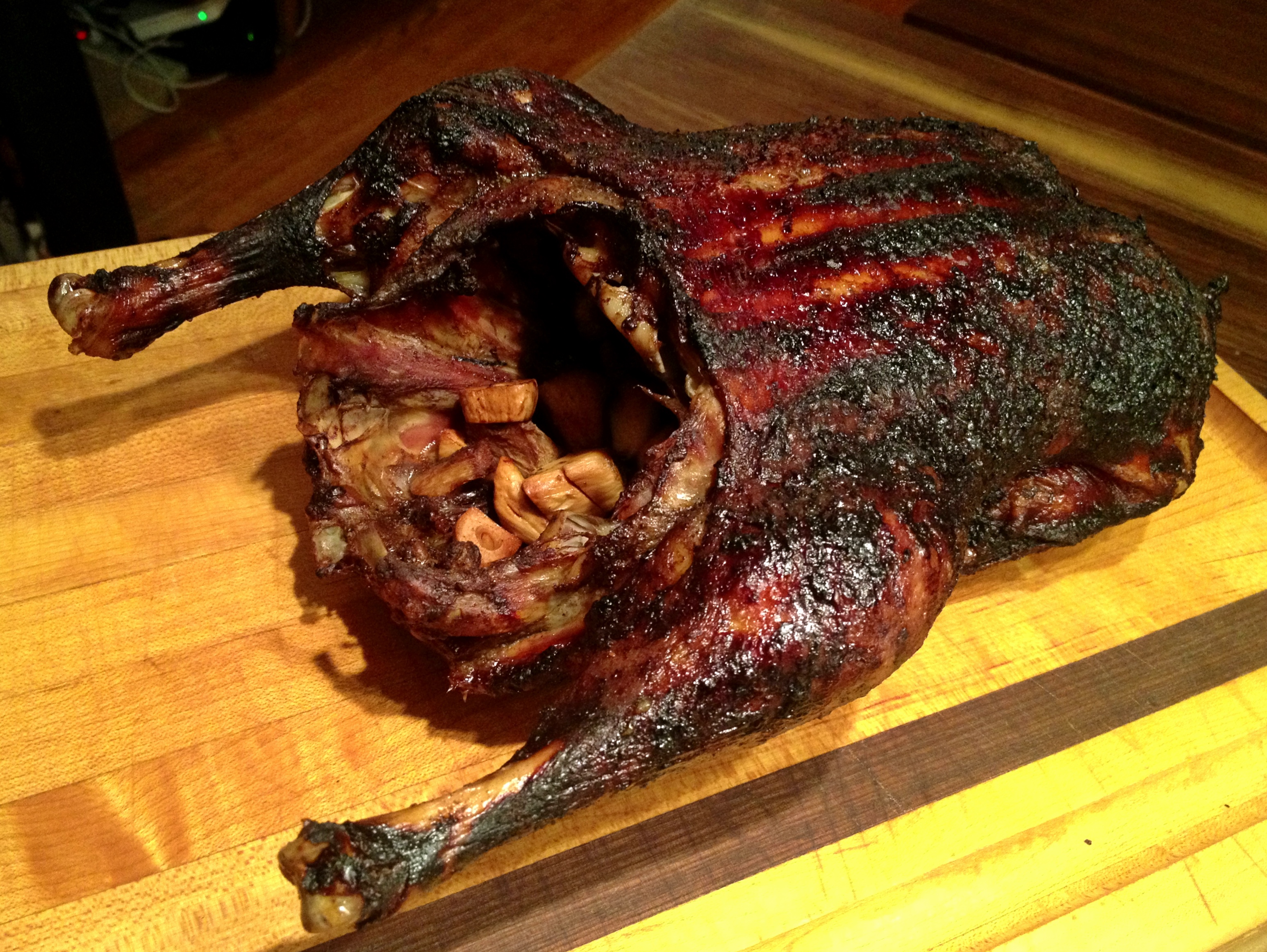
The duck was excellent–so much so that, by the time we had finished picking, there was nothing left but the carcass and half a breast.
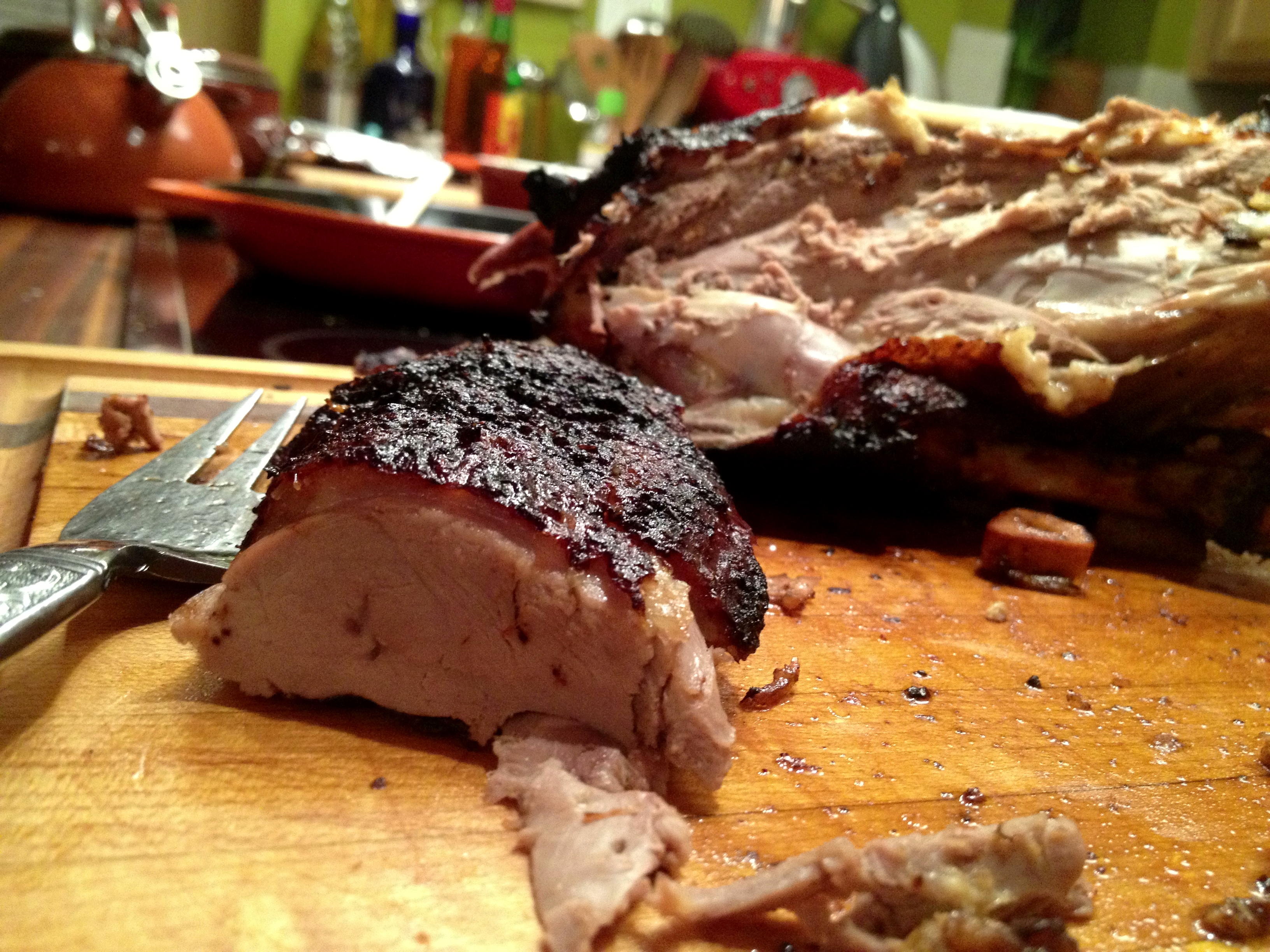
I awoke this morning feeling better than expected given how much wine we drank. I was determined to get as much as I could out of my duck. I was also determined to procrastinate on the day’s schoolwork. I made some coffee and got to work.
First up, I chopped the leftover meat and rendered it in a small skillet over medium heat before adding some finely sliced mustard greens. Once the greens had wilted, I added a bit of soy sauce and rice wine vinegar. Breakfast was served.

Following instructions I found online, I put some water in a small pan, added the excess fat and skin that I had trimmed from the duck prior to roasting, and brought it to a simmer over medium heat. An hour or so later, I poured the concoction through a fine mesh sieve and into a gravy separator which I stuck it in the fridge. Once the fat had congealed, I poured off the residual water and was left with some truly glorious looking duck fat. I imagine I’ll use it to pan fry some potatoes and as the foundation for a roux.

While my duck fat rendered, I preheated the oven to 400. I broke the duck carcass into as many pieces as I could manage (really must get a cleaver) and added it to a roasting pan along with the trimmings from last night’s leeks, a bunch of bedraggled scallions I found in the crisper, a few carrots, some celery, and some roughly chopped garlic. I drizzled this with a tablespoon or so of duck fat I had spooned out of the roasting pan last night and popped it in the oven for an hour.
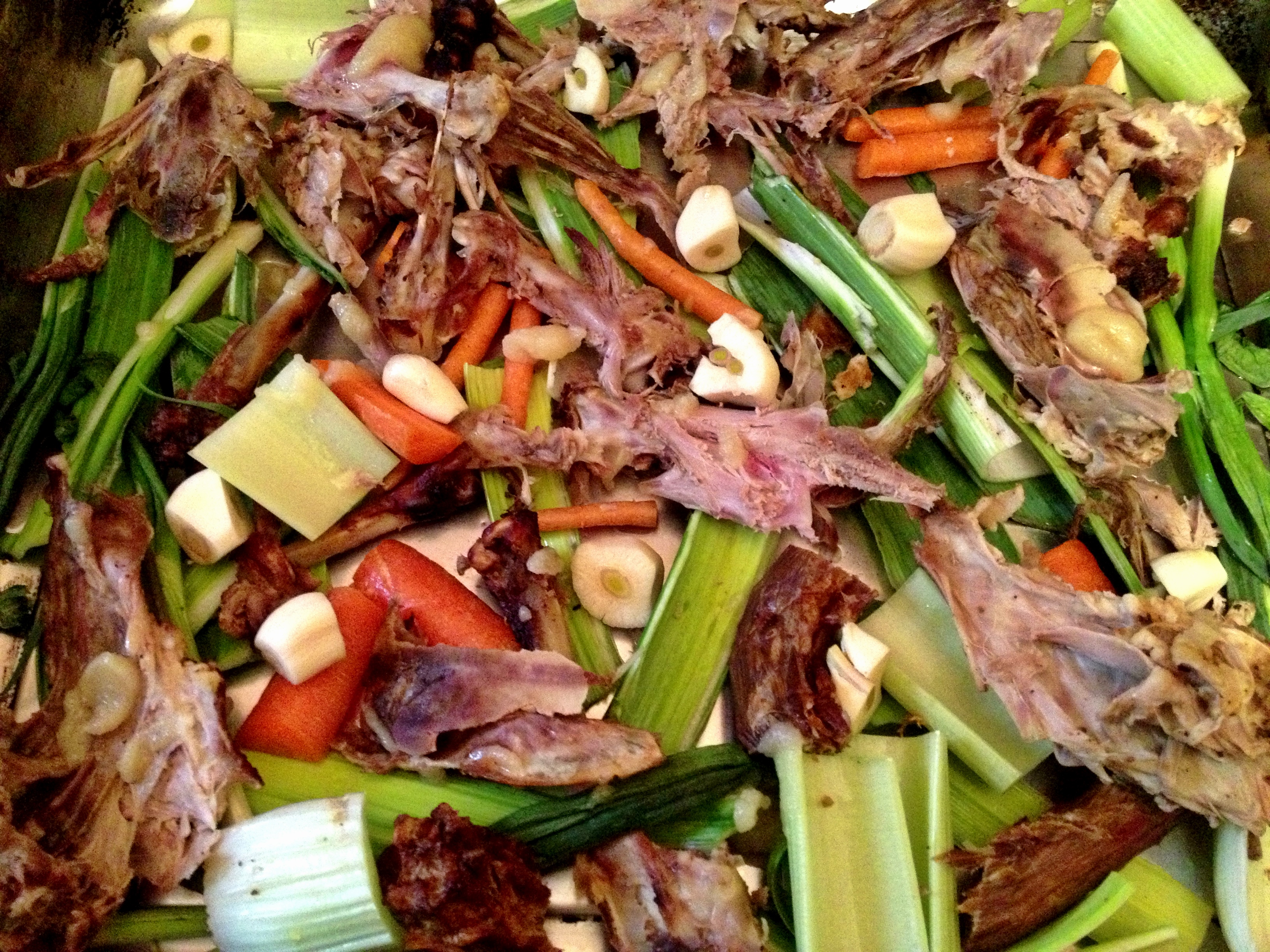
The roasted bones and vegetables then went into a medium-sized pot along with a bay leaf, several whole black peppercorns, a pinch of dried thyme, and enough water to cover. This simmered over medium-low heat while I continued studying.
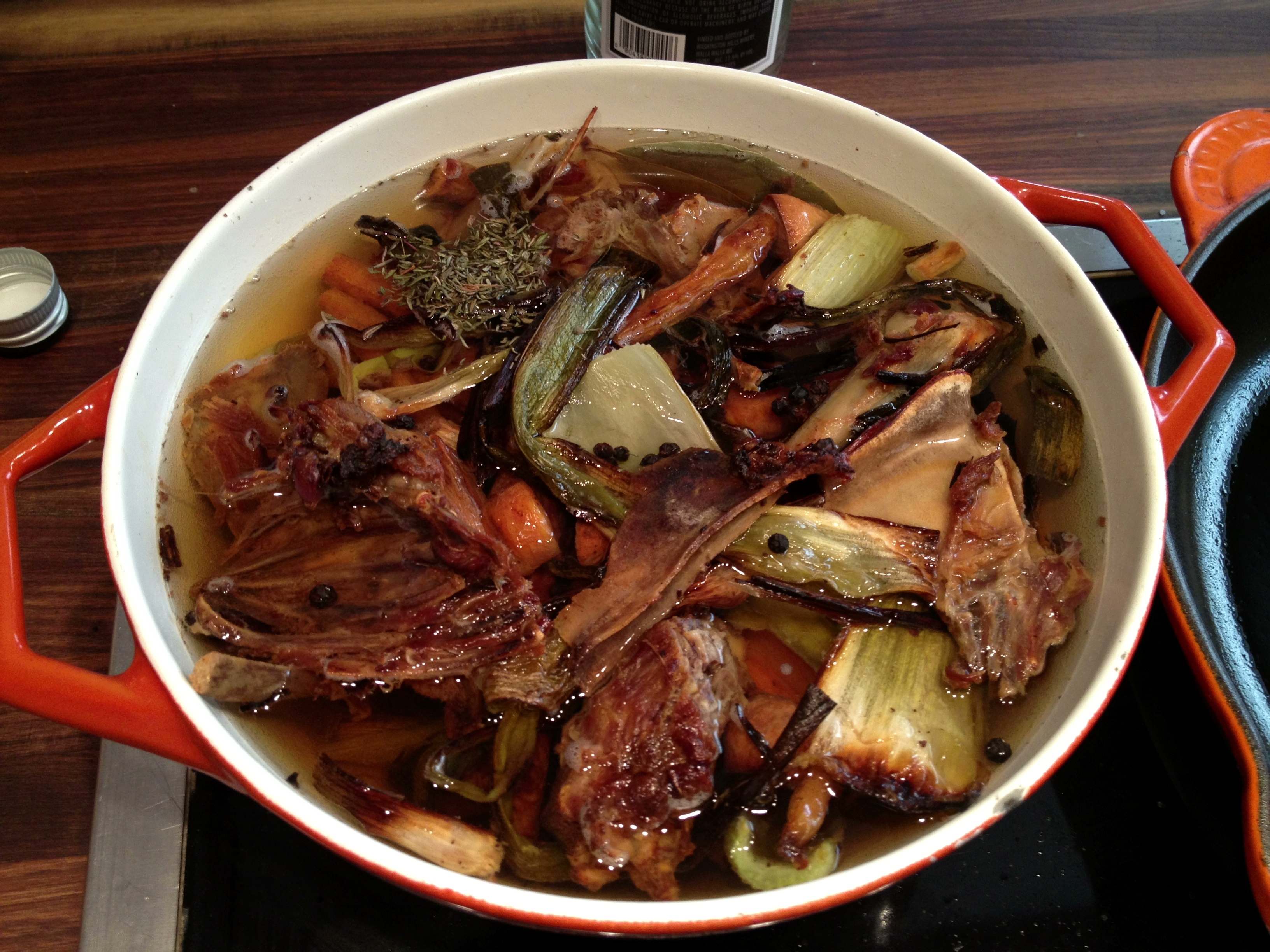
After a couple of hours, the liquid was a rich brown color and my apartment smelled unbelievable.

I strained the broth into a bowl and stuck it in the fridge. After an hour, I scraped off the fat that had accumulated on the surface and poured the stock through a fine mesh sieve into a container that I stuck in the freezer. I see some killer gumbo in my future.
I flew home last Tuesday from an intense two-week study trip to New Orleans. OK, there may have been a little fun thrown in there. But, since then, it’s been all about work and school. I spent most of the weekend reading and writing, but I did manage to carve out some time to cook those beautiful yellow eye beans from Cayuga Pure Organics that I picked up last month.
Dried beans may seem intimidating, but they are infinitely better than canned and it’s honestly hard to screw them up. They’re also cheap and a great source of nutrition. Ideally, you soak them overnight, after which they should look something like the photo below. But the quick-soak method is just fine. Add the beans along with enough water to cover them to a pot, bring to a boil over high heat for a few minutes, and then let soak for a couple of hours. Whichever method you choose, be sure to drain them.

Yellow Eye Bean Stew
Before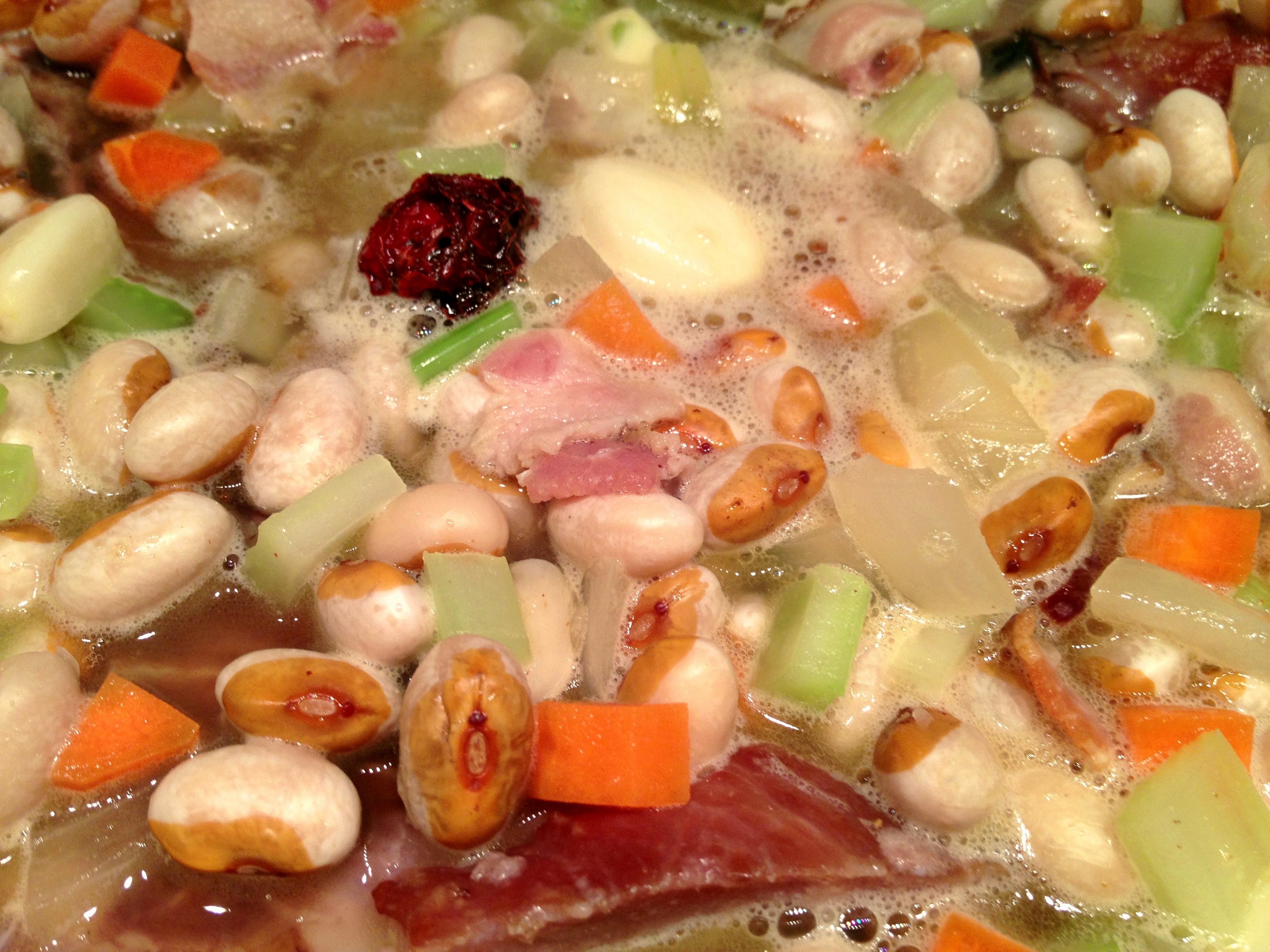
After
I love me some beans. And I love them even more when they’re served with greens. I cooked these up on Sunday night, took a nice helping over to my neighbors’ apartment, and have been eating the rest throughout the week along with some mustard greens that I had in the fridge.
Last night, I tossed the beans, raw mustard greens, and some cherry tomatoes with an apple cider and whole-grain mustard vinaigrette.

Tonight, I heated the beans up with some additional water, added the mustard greens, and simmered until they were lightly cooked. A few splashes of a vinegar-based hot sauce was the finishing touch.

There’s a new kid at the Grand Army Plaza Greenmarket. Founded in 2003, Cayuga Pure Organics‘ mission is to create a food system that works. Along the way, they are producing some beautiful dried beans and grains. On Saturday I bought some exceptionally pretty yellow-eyed peas, which I look forward to reporting on in a future post.
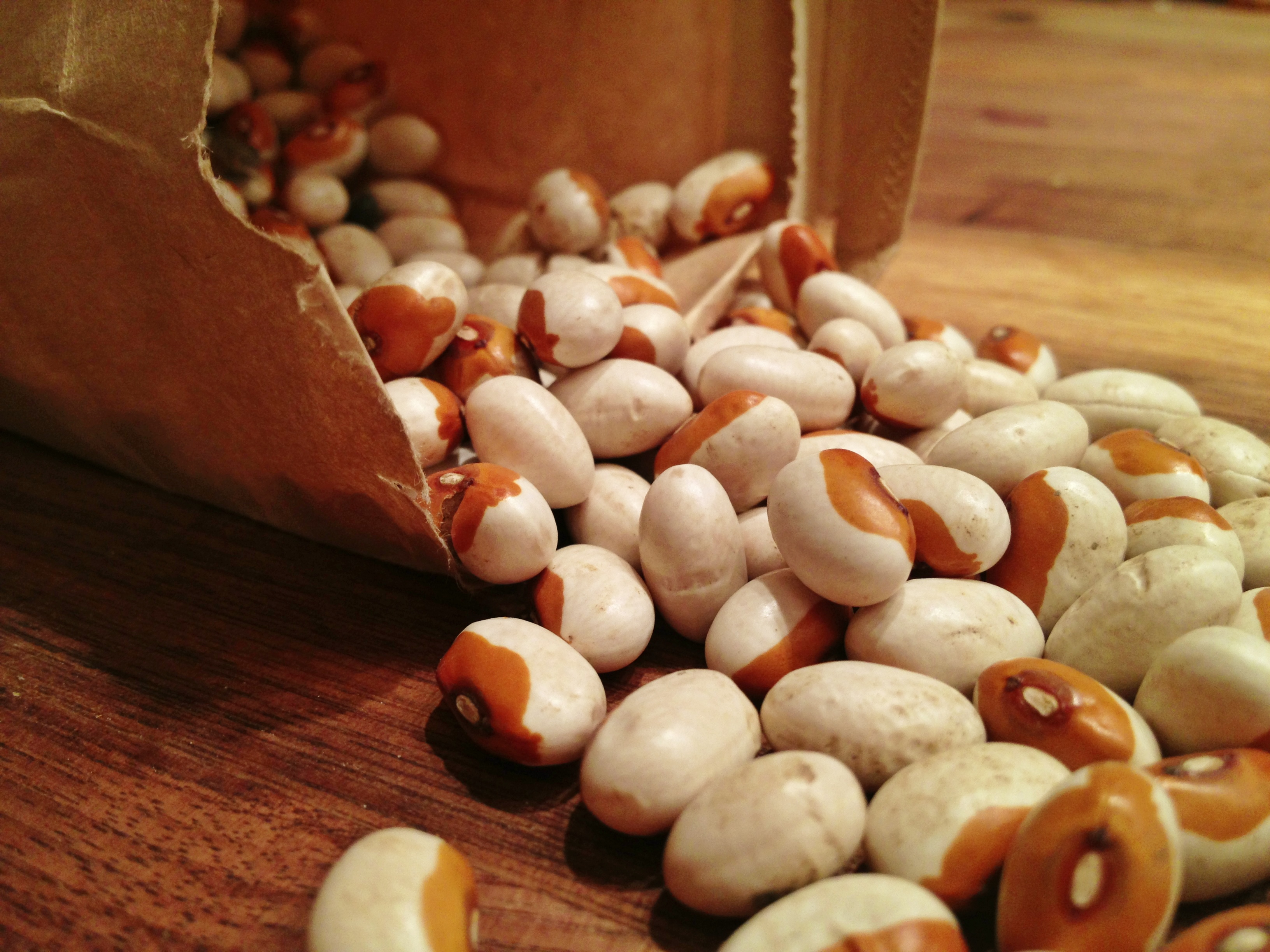
I also bought half a pound of freekeh, a grain I’d heard of but didn’t know much about. The Internet tells me that it’s actually green wheat that has been burned to remove the straw and chaff, giving it a smoky flavor. Like many whole grains, it’s high in protein and fiber and has a low glycemic index. My hunch that it would be toothsome and hold up to the lima beans I was planning to cook proved to be true.
Lima Beans with Ham and Freekeh

WARNING: This makes a lot of food and is very filling. I ate a decent portion, gave some to my neighbors (who hit me back with some tasty steamed mussels), and still have five portions waiting in the fridge–which is not such a bad thing given that I have a ton of reading to do this week, a big work event on Thursday, and a research paper due on Friday.
I awoke Thursday to yet another glorious morning in San Juan. It was sunny and the temperature was holding steady around 82. I was staying a couple of blocks from Ocean Park Beach, where I’d spent a lot of time dozing and gazing at the view.

Tragically, it was the last day of vacation. My flight arrived at JFK in the depths of winter. An 80-degree temperature drop in a little over four hours is no joke. I survived the taxi line and the ride home clad in yoga pants, a tank top, a cardigan, and a pair of flats that still had sand inside. I walked in the door of my apartment and immediately donned silk long underwear, which I have been sporting pretty much ever since.
I managed to make the trek up to the Upper West Side that night for the New York Abortion Access Fund‘s Celebrate Access Awards, but there was no way I was leaving my house on Friday. A hearty dish was in order, something that would necessitate leaving the oven on for an extended period of time. I had some French navy beans I’d picked up during a shopping spree at Kalustyan’s and a wide variety of root vegetables from my January CSA share. This plus whatever meat I had socked away in the freezer would surely warm me.
Cassoulet is a slow-cooked casserole originating from the South of France. As with many classic French dishes, cassoulet involves very specific ingredients and elaborate preparation. I have had it once or twice and it is tasty, for sure. But it’s hard to go wrong with beans, meat, and a slow braise. And so I present you with…
Cassoulish
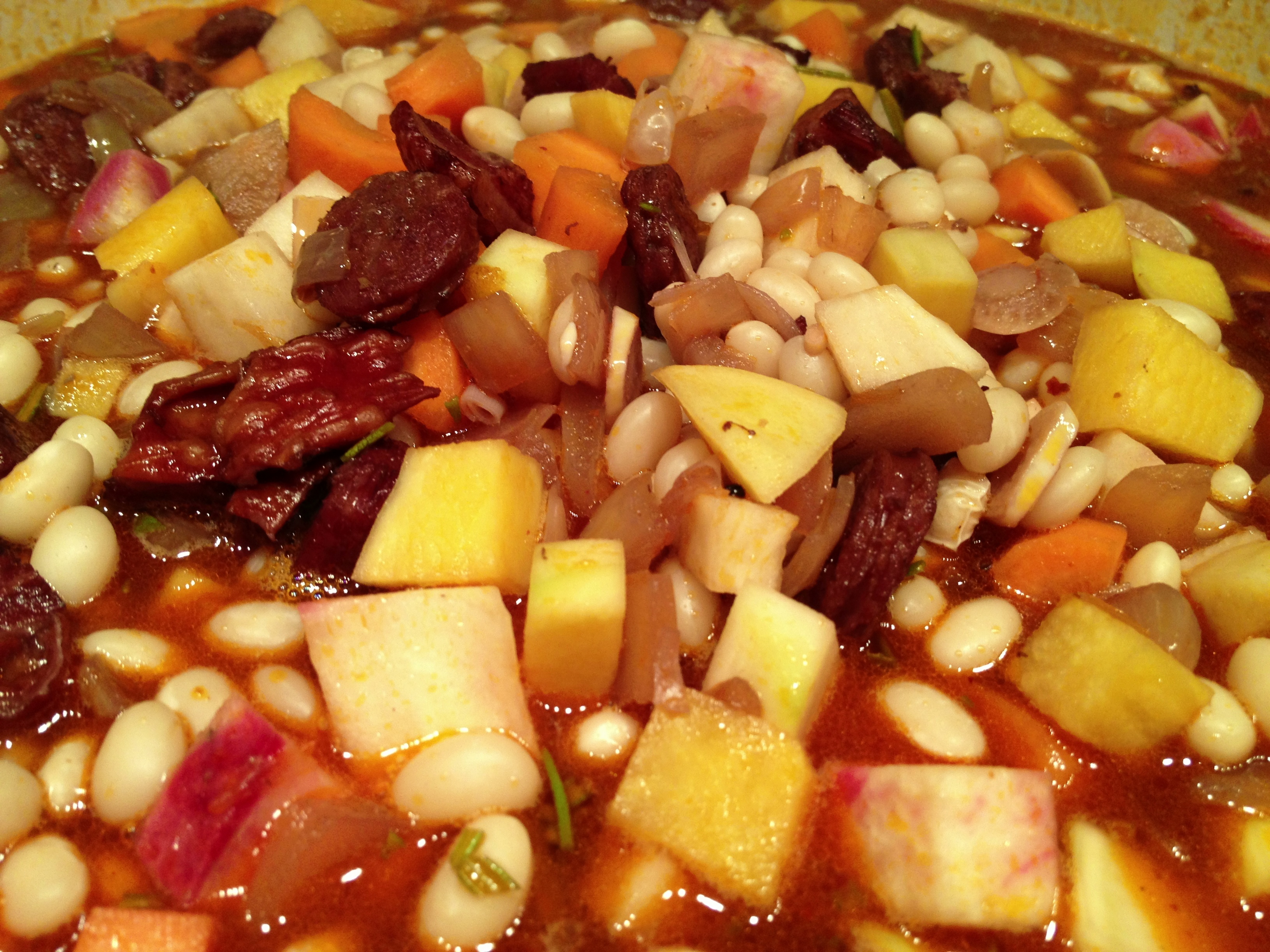
This make a lot of food, as evidenced by this photo of the Dutch oven minus my serving.
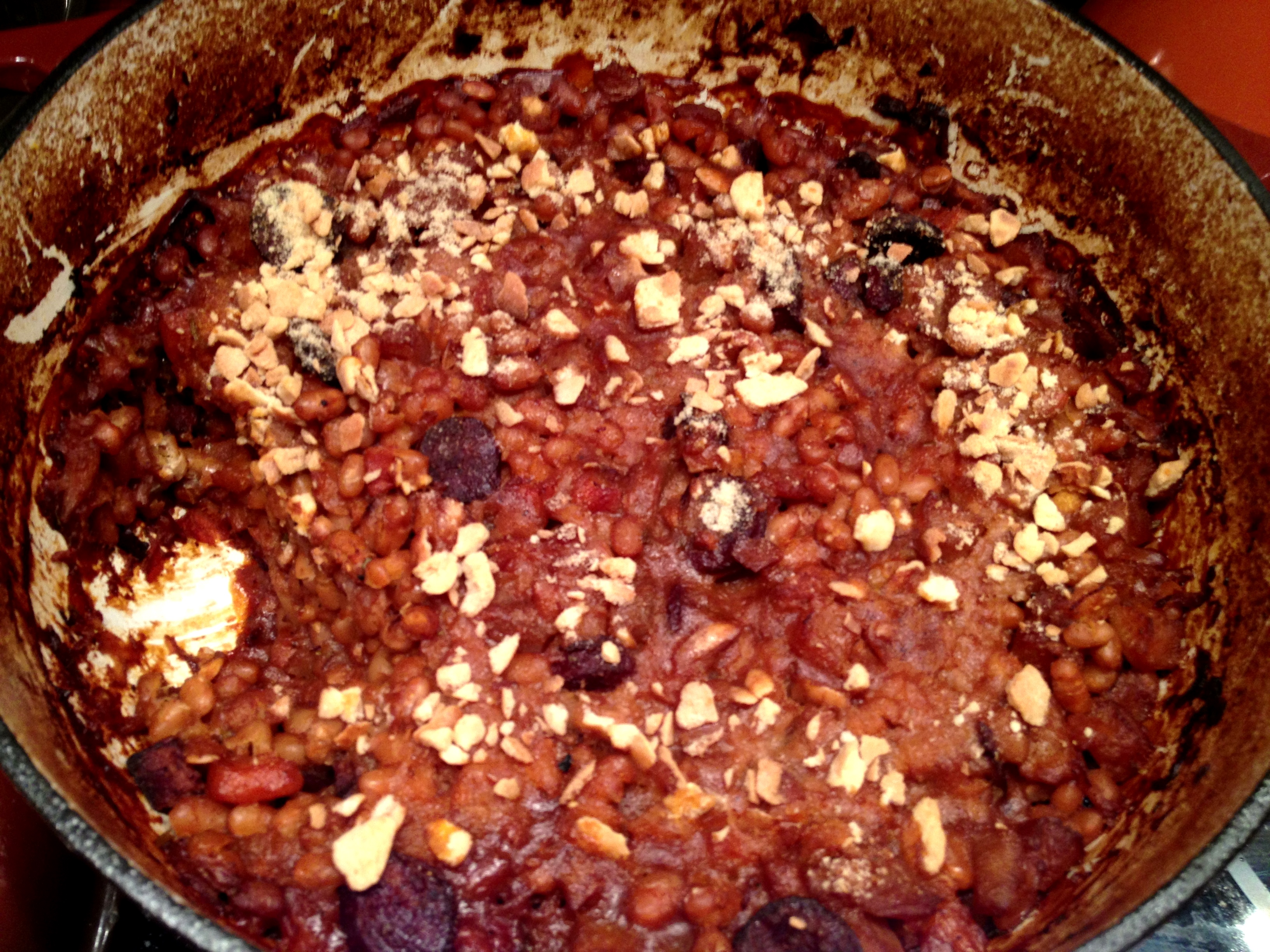
Fortunately, it reheats brilliantly in the oven. Just stuff some into an individual ramekin, top with some water and bake in the oven until your blog post is done–or until the smell overwhelms you and you decided that you’ve earned a break.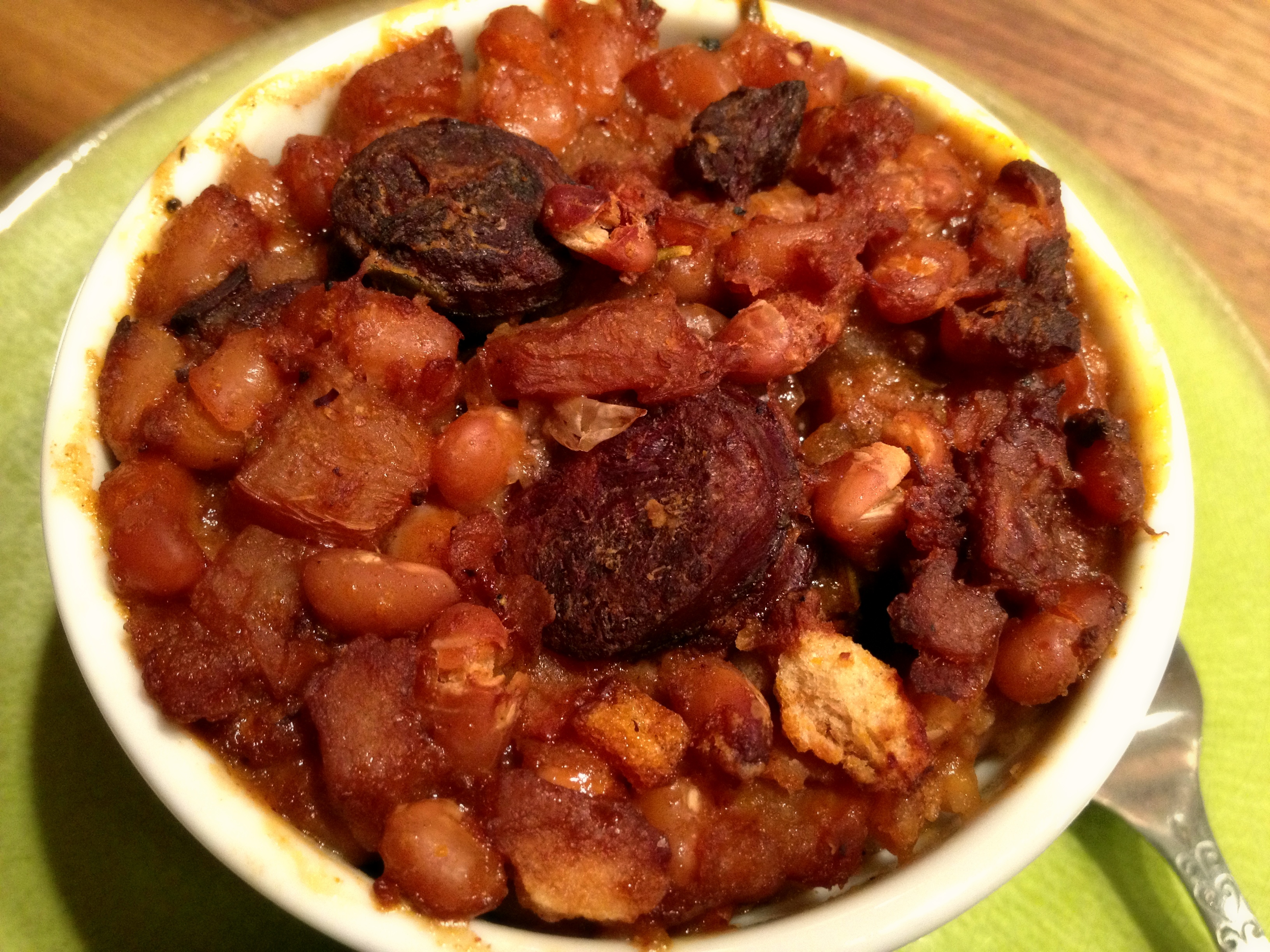
I put the finishing touches on my first grad school research paper a little after 1:00am on December 20th, sacked out for five hours, worked a full day, and then attended my final class. I arrived home around 9:00pm, stuffed some food into my mouth and some clothes into a suitcase, and hit the road for the twelve-hour drive to Gatlinburg, Tennessee. Needless to say, I was not in great shape by the time we arrived. I spent the first couple of days mentally and physically recovering.
When I came to, I found myself in a lovely house nestled in the Smoky Mountains, surrounded by good friends who’d driven in from Nashville and from Athens, Georgia. There were two wood-burning fireplaces, a pool table, a (kinda) hot tub, and plenty of booze. I was the first person up each morning and spent the earliest hours of my day under a blanket on the couch in front of a picture window. I alternated between indulging in a juicy novel and watching the mountains disappear and reappear though the mist.

On December 23rd, we hit Dollywood, Dolly Parton’s amusement park in Pigeon Forge. I don’t go in much for heroes, but Dolly certainly is one of mine and I have wanted to visit Dollywood ever since I learned of its existence.
We managed to hit all four of the excellent roller coasters, twice. My favorite was the Wild Eagle, a triumph of engineering in which you are hanging in a seat with nothing above or below. After a delightfully unnerving initial drop, the sensation is one of soaring. Our fear was replaced by a feeling of weightlessness that left us giddy.

The Chasing Rainbows Museum offered a staggering array of photos of Dolly with celebrities (Grace Jones being my personal favorite), a look back at her childhood and early years in Nashville, and an impressive collection of fan art.

Downstairs were case upon case of clothing from Dolly’s movies and tours. My closet suddenly seems so drab.

We also got to check out Dolly’s tour bus and one of her (in)famous wigs.

The quirky guy leading the tour got a shot of our whole group.
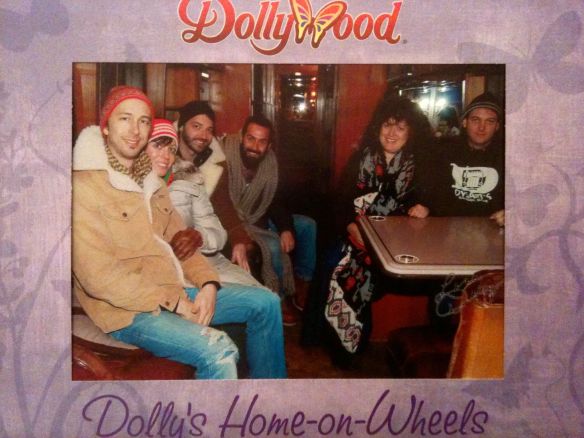
Our day at Dollywood concluded with a Christmas-themed light parade led by a zealous woman with a banjo.

The next day was Christmas Eve, our last night in Gatlinburg. After taking stock of our food reserves, I headed out do some final grocery shopping. (Miraculously, the booze supply had held.) I knew that I wanted to use the dried black-eyed peas that our Nashville friends had brought, so I was thinking Tex-Mex as I walked into the local Food City. But one look at the freestanding cooler full of collard greens and I had a new plan. These greens were glorious–and huge; one bunch would be plenty to feed all six of us. A few aisles later, I stumbled on a shockingly large display of smoked hog jowl. This store and I were clearly on the same wavelength.
The nice young man who checked me out took one look at my cart and said, “You’re a little early, aren’t you?” For those that don’t know, collards and black-eyed peas are both traditional New Year’s foods in the Southern United States. The peas offer luck and the greens symbolize wealth. Black-eyed peas, which are generally served with rice in a dish called Hoppin’ John, came over with West African slaves. Collard greens, which were considered weeds by many plantation owners, were a mainstay of the slave diet. The hog jowl and other less desirable cuts would have been more readily accessible to the slaves. This combination of ingredients is cheap, easy to cook, and can simmer away untended.
My version is a bit fancified, to be sure, but its spirit is true–as its ability to heal after a night of over imbibing.
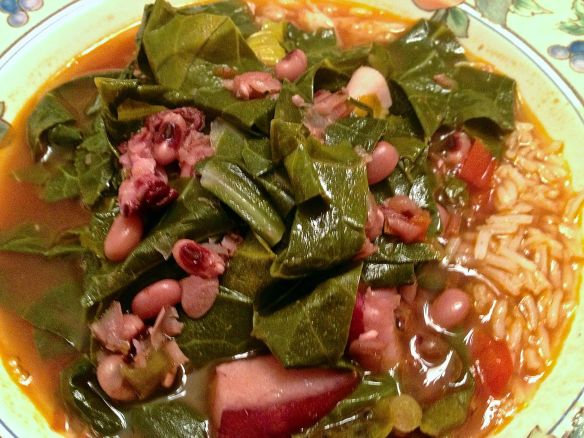
New Year’s Day Stew

I spent Thanksgiving with my family in South Florida. My 92-year-old grandparents finally relocated this past spring to be near my mom. It was a treat to spend the holiday with them after more than 25 years. While there were only six of us for Thanksgiving dinner, I ended up making a total of 11 dishes in order to satisfy various constituencies–including the aforementioned nonagenarians and a 16-year old vegan. And that doesn’t include dessert!

Here’s my 92-year-old grandma keeping guard over her wing while the bird rests. I was particularly gratified that she liked the butternut squash and creamed kale gratin, which was a divergence from her usual fare.

I got home to Brooklyn late last night. While I wasn’t thrilled to return to winter, I welcomed the opportunity to cater to my own tastes in my own kitchen. Best of all, I was able to cobble together the ingredients for this comforting dish without having to put on pants.
French Lentils
This makes a great bed for just about any protein. I cooked the first half of these lentils for a dinner party a few months ago and served them with pan-roasted Scottish salmon to great effect. Tonight I went with a fried egg. The rich, oozy yolk was a perfect marriage with the earthy lentils.
Last Monday’s class included a discussion of Reflections on Fieldwork in Morocco, which chronicles Paul Rabinow’s experience conducting anthropological research in Morocco in the late 1960s. This particular course is from 6:45pm to 8:25pm–prime eating hours. At the beginning of the semester, we agreed to take turns bringing snacks to help us power through. I was up last week.
Some of my fellow students in the NYU Food Studies program are professional chefs. I’d be lying if I said that I didn’t feel a certain amount of pressure. Clearly, it needed to be Moroccan or, at least, Moroccan-ish. I’ve had success with a few variations on a tajine, but this seemed highly impractical given that I had to put in a full day at the office and would not be able to reheat anything. I also did not want to endanger my classmates’ notebooks and iPads.
I studied in Jerusalem for six months when I was an undergrad and have fond memories of meze–elaborate spreads of small dishes that are common throughout the Mediterranean and Middle East. Think hummus, olives, stuffed grape leaves, falafel and yogurt-based dips. Meze can be the precursor to a meal or, as is my preference, a meal unto itself.
Lamb and Date Kaftah
 These would make great sliders. Formed into balls and served with toothpicks, they would be a delightful hors d’oeuvres for a cocktail party. A couple of months ago, I made a similar version and served them hot over a Moroccan-seasoned ratatouille.
 In this case, I packed the kaftah in additional layers of paper towels and stashed them in the refrigerator along with a roasted eggplant dip and a labeneh-lemon dip. Another classmate brought a spicy carrot salad, mint tea, dates and almond cookies. We served it all with white and whole wheat pitas. It was a delightful feast.
Kindly neighbors collected my CSA share on Tuesday. A bag full of fresh produce on your doorstep is a welcome sight after a 13-hour workday, but it was all I could do to shove the vegetables into the refrigerator alongside the remnants of last week’s haul. Tonight’s meeting was canceled, leaving me with a single, glorious unscheduled evening. I got home from class around 8:00, eager for some home cooking. The broccoli rabe and kale from last week were looking a little worse for the wear but still edible–as were the greens that topped this week’s turnips. Now for some protein. I unearthed a can of Portuguese sardines in olive oil from the cupboard. I could work with this.
Sardines and Greens
I bet this would be tasty as a sauce for whole wheat pasta with toasted breadcrumbs sprinkled on top, but I opted for a scattering of ricotta salata, a Brooklyn Lager and an old Law and Order episode. It’s been a long week.

 the drunken fig