Masoor Dal with Kale

Temperatures in New York City soared above 70 today, inducing a collective giddiness. Unfortunately, save for a quick dash outside to pick up lunch and some specialty lightbulbs (good lighting being a bit of an obsession for me), I spent the day at my desk. It is the end of a very long week. By the time 6:00 rolled around, it was all I could do to swing by the health food store for some red lentils and cilantro before heading home. I was craving something spicy that would make use of the kale I picked up last weekend at the Union Square Greenmarket. (It’s tough to use up your vegetables when you get home after 10:00 each night.)

Masoor Dal with Kale

  • 1 cup red lentils
  • 1 knob ginger (about the size of the last joint of your thumb)
  • 1 tablespoon turmeric powder
  • 1 tablespoon ghee (substitute coconut oil if you’re going for a vegan dish)
  • 1/2 tablespoon whole cumin seeds
  • 1/2 tablespoon whole coriander, ground
  • 1/4 teaspoon cayenne (or to taste)
  • 1 medium onion, diced
  • 3 cloves garlic, finely minced
  • 1 bunch kale, roughly chopped
  • zest of 1 small lime
  • 2 tablespoons finely minced cilantro
  • salt
  1. Add your lentils, ginger, turmeric and four cups of water to a medium-sized heavy bottomed pot and bring to a boil. Reduce heat to a very low simmer and place lid on top, leaving open a crack. If you suddenly realize that you need beer, now is the time. Your lentils need to simmer for an hour-plus, so walk those extra five blocks to the good place–and feel free to sample. A growler of Great South Bay Brewery‘s Misfit Toy Black IPA? Don’t mind if I do.
  2. When you get home (about 30 minutes later), give the lentils a stir. (They will have turned to mush; do not be alarmed). By the time you put on some music and pour yourself a beer, it should be time to start the rice. Basmati would be ideal, but I went with Thai Jasmine because that’s what I had on hand. You can follow the instructions on the package, but I’d recommend sautéing the rice in half a tablespoon of ghee or coconut oil for a couple of minutes before adding your water. A good pinch of salt is also key.
  3. Bring a tablespoon of ghee or coconut oil up to medium heat in a small skillet. Add the cumin, coriander and cayenne and cook stirring continuously until the spices are nice and toasty but not burnt (2-3 minutes). Add the onions and the garlic and cook stirring frequently until your onions are crisp and brown at the edges. 
  4. Add the onion and spice mixture to your lentils along with the kale and a couple of healthy pinches of salt and cook for 10 minutes or more, depending on how toothsome your greens are. Taste and adjust your seasoning with additional salt and/or cayenne as needed. Add the lime zest and cilantro off the heat.
  5. Damn, that was easy. But wait, you ask, wouldn’t it be a good idea to remove the giant hunk of ginger before you bite into it? Yes, yes it would.

Masoor Dal with Kale

This dish is best consumed with a second beer, in your underwear, trusty cat by your side, while watching 8 Mile (which you’ve been meaning to see for years).

EAT THIS: Leftover Steak and Kale Tacos

Leftover Steak and Kale TacosYou know that surprisingly chewy steak that’s been sitting in your fridge since last weekend? Slice it thin against the grain, fry it up in a cast iron skillet along with your leftover onion jam and some lacinato kale, nestle it in a couple of corn tortillas, and top it with a sweet and spicy salsa. Boom, a delicious lunch in under 10 minutes.

Hoppin’ John is Health Food

It is with a heavy heart that I announce that Windflower Farm‘s CSA season has come to a close. The winter season starts in a couple of weeks, so you can look forward to reports on root vegetables, hard squashes, and dark leafy greens.

In preparation for the slow and low cooking that these vegetables imply, I took the opportunity to place one last order for meat from Lewis Waite Farm, which partnered with my CSA for the first time this year. I worked from home this morning so that I could meet an unmarked van full of meat on a street corner near my house. Given that I already had a serious stockpile from my Carnivore Share, I may have gone a bit overboard.

Freezer Full of Meat

I took the afternoon off to catch up on some reading for school. I’m taking Contemporary Issues in Food Studies this semester and spent most of the weekend writing a paper on Taste, Culture and the Production of Cool. This week, we are shifting gears to examine the systems that create and perpetuate global hunger.

And so I find myself reading about the impact of The Green Revolution–which increased crop yields but came with a serious consequences in terms of individual health, the environment, economic equality and overall food security–while simmering a large pot of Hoppin’John chock full of whole grains, humane meat, organic legumes and locally-sourced vegetables.

It’s enough to make your head spin.

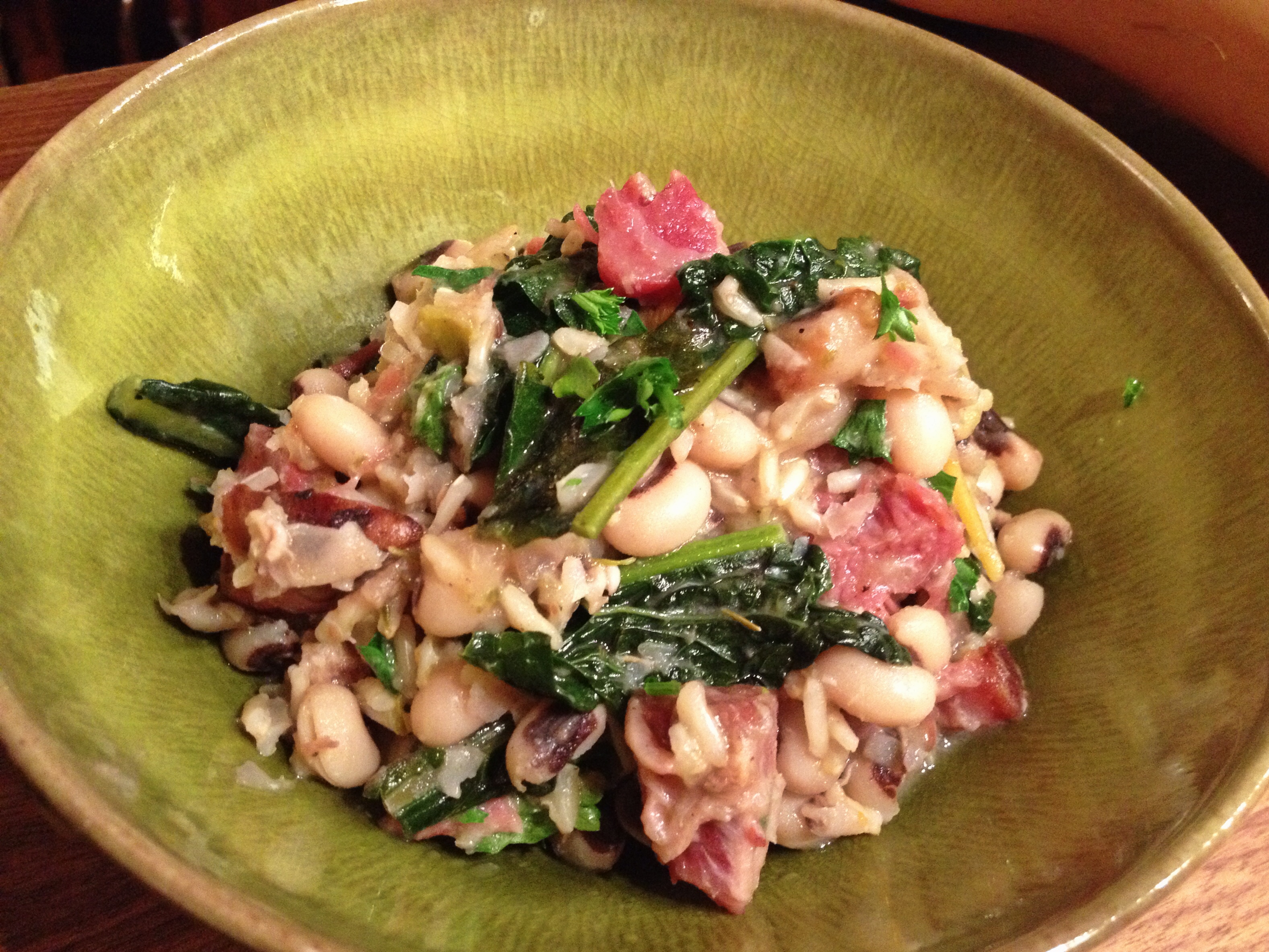
Hoppin’ John with Brown Rice and Kale

  • 1 pound dried black-eyed peas
  • 1 smoked ham hock or pork shank
  • 1 bay leaf
  • 4 whole garlic cloves
  • 2 tablespoons olive oil
  • 1 leek, sliced and rinsed (or an onion)
  • 1-2 jalapeño peppers (depending on their heat and your tolerance for heat), minced
  • 2 bell peppers, chopped
  • 1 teaspoon dried thyme (or a sprig of fresh if you have it)
  • 2 bunches lacinato kale or other dark leafy green, roughly chopped
  • 1 bunch parsley, chopped (optional)
  • apple cider vinegar or vinegar-based hot sauce
  • salt and pepper
  1. Dump the beans into a bowl, add enough water to cover by a few inches, and soak overnight, or for at least six hours.
  2. Cover the hock or shank with water in a large dutch oven. Add bay leaves and garlic and cook at a slow boil for one hour.
  3. Strain and rinse the black-eyed peas, add them to the pot along with a big pinch of salt and continue your slow boil for another 45-75 minutes until the peas are tender but not mushy.
  4. Transfer the pork shank to a cutting board and dispose of the bay leaves. Dump the peas into a bowl, put your pot back over medium heat and add the olive oil. Add your leeks and peppers. Stir occasionally while the vegetables soften, adding thyme after a few minutes. Meanwhile, pull the meat off of the pork bones, chop it up, and add it back to the pot. 
  5. Add a cup of long-grain brown rice, plenty of freshly ground pepper, two cups of the bean liquid, and two cups of water. Taste the broth and add salt if needed. Bring to a boil, then lower the heat, put a lid on it, and simmer for 40 minutes or until your rice is tender. 
  6. Stir in the kale, cover and let simmer for an additional 5 minutes. (I like my kale toothsome but, if you prefer more tender greens, add them a little earlier in the cooking process.)
  7. Mix in the parsley and the black-eyed peas, along with enough of their cooking liquid to give the dish a loose consistency. Add more salt and pepper as needed. I like to round out the flavor with a couple of tablespoons of vinegar. If your peppers aren’t as spicy as you might have liked, you can also use a vinegar-based hot sauce to get that tang.

Healthy Hoppin' John

For a little Hoppin’ John history, another tasty recipe featuring black-eyed peas and greens, and a glimpse at my Dollywood pilgrimage, check out A Hoppin’ New Year.

Kale, Sausage & Potato Stew

This recipe was inspired by caldo verde, a traditional Portuguese soup of kale and potatoes garnished with spicy sausage. While caldo verde is usually served for celebrations, I was able to whip this up in under an hour with ingredients I had on hand, making it a fine midweek supper. The ingredients are simple and the recipe is straightforward, but the resulting dish is delightfully complex.

Kale, Sausage & Potato Stew

  • 2 tablespoons olive oil
  • 12 ounces fresh spicy sausage (I used some loose hot Italian turkey sausage from Di Paola Turkey Farms, which sells its wares at greenmarkets throughout New York City, but whatever you’ve got in the freezer is cool.)
  • 2 leeks, thinly sliced and rinsed
  • 2 cloves garlic, thinly sliced
  • 1 teaspoon crushed red pepper flakes
  • 1 tablespoon herbes de provence
  • 2 bunches kale, thinly sliced (I used lacinato, but pretty much any kind of kale or collards would work.)
  • 2 cups chicken broth (I used about six cubes of frozen contracted stock.)
  • six small yellow potatoes, halved and cut into quarter-inch slices
  • 1 tablespoon hot paprika
  • salt and pepper to taste
  1. Bring the oil up to medium heat in a large dutch oven. Add your sausage and stir until cooked through. Add the leeks and garlic and cook until limp. Stir in the herbes de provence and red pepper flakes.
  2. Add the kale in batches, stirring until there is room for more. Add the chicken stock and bring to a boil. Add the potatoes and enough water to cover. Stir in the paprika, a generous amount of fresh black pepper, and salt if needed
  3. Let simmer until the potatoes are tender, approximately 30 minutes. 

Kale, Sausage and Potato Stew

Kale & Quinoa

I’m working from home today in a desperate bid to focus on the 300-page curriculum that needs to be edited by Friday. Fortunately, I picked up a new stash of CSA vegetables last night, so I had plenty of food on hand for my working-from-home lunch.

And so, in honor of National Kale Day, I present you with a recipe fit for ladies who lunch (in their sweatpants)…

Kale and Quinoa Salad

  • 1 cup uncooked quinoa
  • 4 tablespoons olive oil
  • 2 small onions, thinly sliced
  • 2 garlic scapes or garlic cloves, thinly sliced
  • 1 jalapeño, seeded and minced
  • 2 sweet peppers, any color but dark green, diced
  • 2 tablespoons Dijon mustard
  • 2 tablespoons white wine vinegar
  • 1 bunch kale, cut into thin strips
  • 1 bunch curly parsley, roughly chopped
  • 1/4 cup raw sunflower seeds
  • Salt and pepper
  1. Thoroughly rinse the quinoa, add two cups of water, and bring to a boil along with a good pinch of salt. Lower heat and simmer for 10-15 minutes until quinoa is tender and water is absorbed.
  2. Heat 2 tablespoons of the olive oil in a cast iron skillet over medium low heat and add the onion, stirring frequently until soft and starting to brown. Then add the garlic and cook for a few more minutes before adding your peppers. Cook until the peppers are tender but still firm. Turn off the heat and add some salt and black pepper.
  3. Whisk the Dijon mustard, white wine vinegar and some black pepper in the bottom of a large bowl. Gradually whisk the remaining two tablespoons of olive oil into your dressing and then add the kale, stirring to ensure that each piece is coated.
  4. When the kale is just starting to wilt and the quinoa, peppers and onions have all cooled a bit, mix them together along with the parsley and sunflower seeds. Let sit for 20 minutes or until you need a copyediting break.

Kale and Quinoa Salad

This recipe makes enough for three or four lunches and is perfectly happy to marinate for a few days in the fridge. Double it and you’ve got a great contribution to a potluck picnic. I threw some halved cherry tomatoes on top for my lunch and may add some feta cheese when I have it for dinner.

Cotton Candy to Kale

I am generally the one working the fancy fundraiser, so the Prospect Park Alliance‘s annual Summer Soiree is a real treat for me. This year I managed to exercise restraint at the bar and at the silent auction table. (It occurs to me as I type this that the two might be related.) I could not, however, pass up the cotton candy–the embodiment of all that is forbidden to those of us who grew up with hippie parents.

Cotton Candy

Despite having imbibed only moderately, I felt a little funky this morning. Good quality nutrients were in order in the form of kale fajitas.

I brought a cast iron skillet up to medium heat with a tablespoon of olive oil. In went a small onion, cut pole to pole, and a thinly sliced jalapeño pepper. When the onions and pepper has started to blacken, I added a bunch of freshly rinsed and chopped kale. The water that clung to the kale steamed it a bit. And the relatively small quantity of oil allowed the leaves to crisp and char at the edges, much as chicken or steak would in traditional fajitas. I finished it off with a bit of oregano, some smoked salt (to heighten that chargrilled effect), and a good dose of freshly-ground black pepper. I then toasted some tortillas in the same pan and plated the fajitas up, garnishing them with a mild feta cheese and some pickled radishes I made this past winter. Tomatoes, salsa or avocado would have been great, but I didn’t have any on hand.

Kale

Last Night’s Bulgur-Kale Pilaf

Yesterday was the longest day of the year–and a glorious one at that. A classmate, neighbor and new friend joined me for a wine-soaked celebration of the season’s bounty. Turns out we have even more in common than expected. This includes an inability to pass up a farmers market. Between our mutual addiction and our individual CSA shares, we had quite a few vegetables on hand. We also had some lovely pork chops thanks to Lewis Waite Farm.

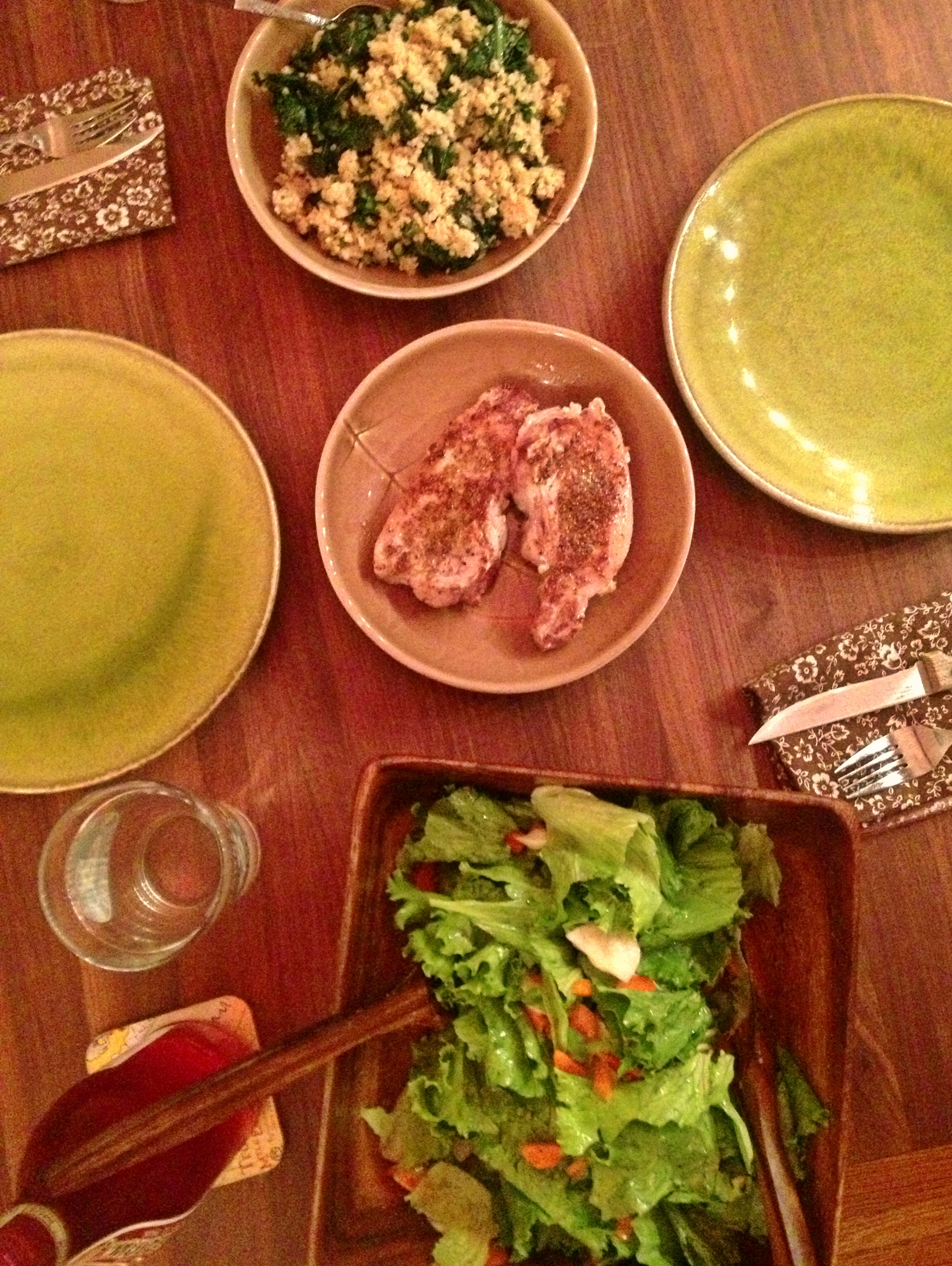
Several glasses of wine and a couple of hours of gossip later, we sat down to a bulgur-kale pilaf with garlic scapes, green onions and parsley; coriander, cumin and fennel-crusted pork chops; and a green salad with celery, carrots, turnips and a goat milk yogurt vinaigrette.

Summer Solstice Dinner

We rounded the night out with a little rum and some armchair astrology circa 1980.

Sex SignsThis morning found me downing a cup of coffee before dashing out to run errands. A friend was in the area with her dog, which led to more coffee (iced this time) and a little too much sun. Naturally, I had to swing by the Grand Army Plaza Greenmarket for yet more vegetables. By the time I arrived home, it was after 1:00 and I was in serious need of some food to cushion all of that caffeine.

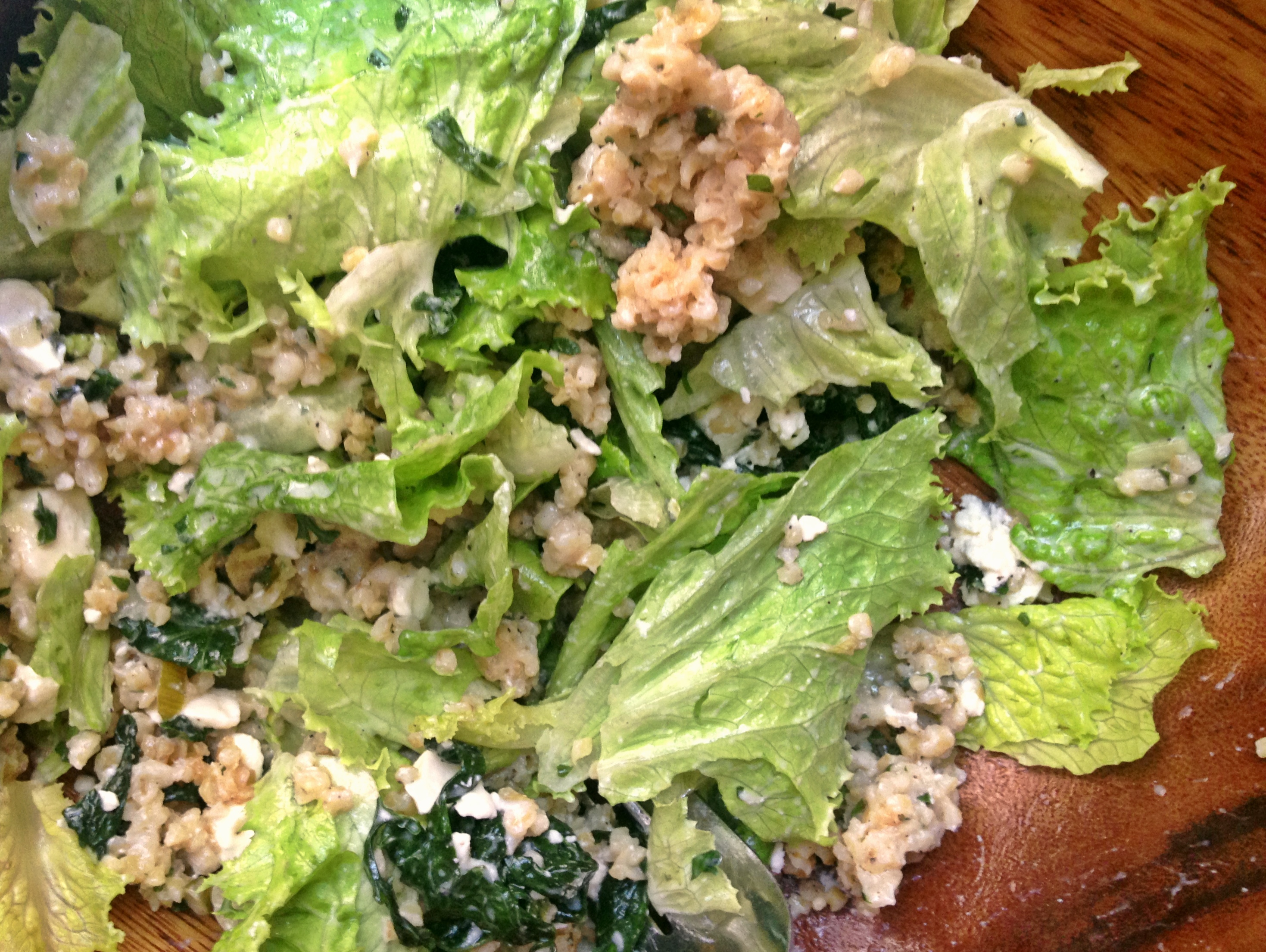
Luckily, in my tipsy state, I had still managed to pack up the leftover bulgur-kale pilaf. (Even better, Sara had done ALL of the dishes.) I replicated last night’s vinaigrette, using two tablespoons of goat milk yogurt, one tablespoon of white wine vinegar, one tablespoon of olive oil, a pinch of salt and some freshly-ground black pepper. I tossed this in a bowl with some green leaf lettuce, the leftover pilaf and an ounce or so of crumbled feta. You could do the same with leftover rice, quinoa, or pretty much any grain and whatever vegetables you have on hand. This makes an ideal light summer lunch that you can whip together in minutes.Bulgur-Kale Pilaf

A Day in the Life of a Food Studies Grad Student

My first year in the Master’s Program in Food Studies at NYU is barreling to a close. Holding down a full-time job–one where I am expected to be both physically and mentally present–while taking two courses is rough. And it gets worse at the end of the semester. This past weekend I swore off social engagements and locked myself in my apartment in a desperate bid to make some headway on the first of my two research papers. When the fog lifted on Monday morning, I had some rather impressive spreadsheets, maps, and charts. I also had a lot of leftovers.

It is a common misconception that Food Studies involves cooking. While most of my classmates love cooking and many hold culinary degrees and/or have made a living working in kitchens, Food Studies is an academic discipline and most of our time is spent slogging through old cookbooks, historical documents, scholarly journals, and online databases.

In my experience, this disjuncture gives rise to a unique form of procrastination. Allow me to present A Day in the Life of a Food Studies Grad Student (as Told through the Medium of Food)…

Saturday, 6:00pm – Having dutifully stayed home on Friday night in order to research the geography and history of New Orleans’ Bywater neighborhood, and recognizing the importance of quality food to keeping my energy and my spirits up, I allowed myself a foray to the Grand Army Plaza Greenmarket earlier in the day. This meant there were Cayuga Pure Organics cannellini to rinse, sort, and soak.

Cannellini

I also bought a chicken and some andouille from Flying Pigs Farms. The sausage went into the freezer for some future use and the bird got rubbed down with salt, pepper, and Herbes de Provence. I would soon make short work of the leeks, kale, rosemary, chives, and apples that I toted home.

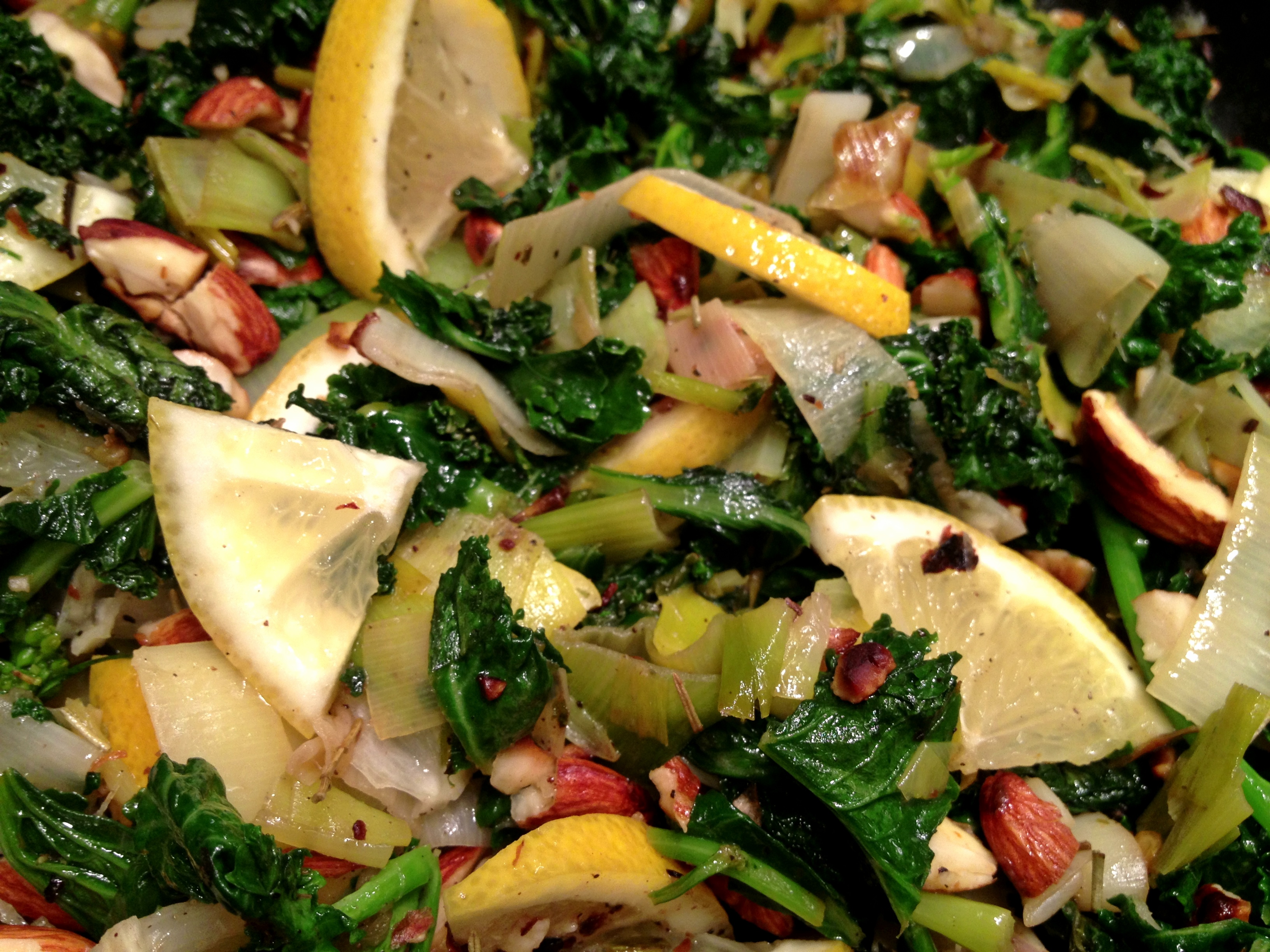
Saturday, 8:00pm – My eyes were starting to go in and out of focus as I struggled through a spreadsheet detailing census data. Assuming it was some combination of fatigue and hunger, I decided it was time for a break. While the oven preheated, I cracked open a beer and set to work making a stuffing of kale, leeks, lemons, fresh rosemary, and toasted almonds. (Shout out to my dear friend Louis for the almond inspiration.)

Leek, Kale, Almond and Lemon Stuffing

Saturday, 8:30pm – It had been several hours since my lunchtime salad and the beer had gone straight to my head. There was a light rapping at my door. A neighbor who had spent the day on a silent meditation hike and knew that I was grounded for the weekend wordlessly handed me a very full glass of red wine. That is the only excuse I can come up with for this compromising photo of my beautiful stuffed heritage chicken.

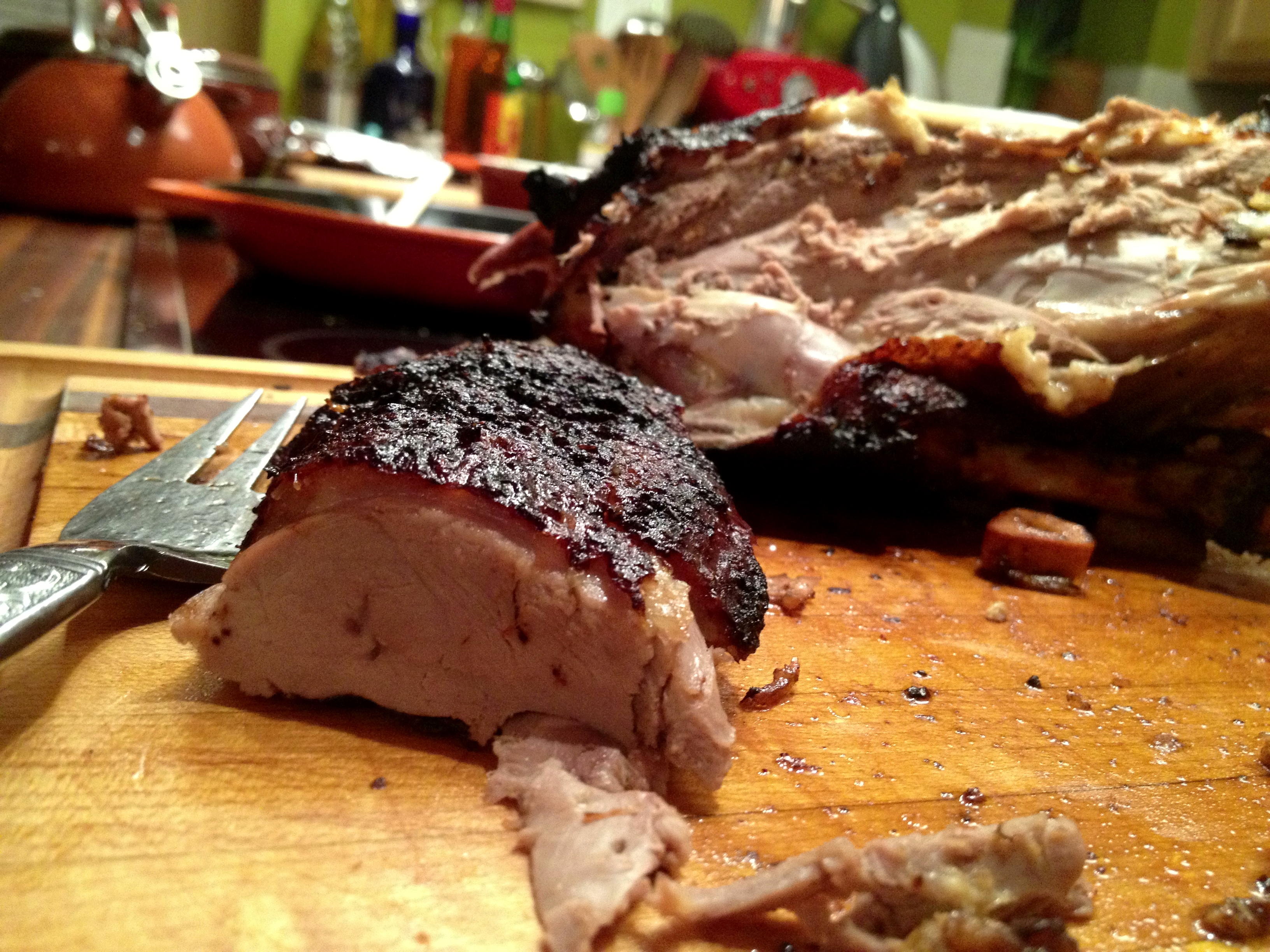
Stuffed Chicken

Saturday, sometime after 10:00pm – I am not sure what I did while the chicken roasted (save for ponder whether my oven temperature was accurate), but at some point the bird was finally, mercifully done. Even better, my makeshift roasting rack had proven a success. I hacked off a leg, scooped out some stuffing, and went to town.
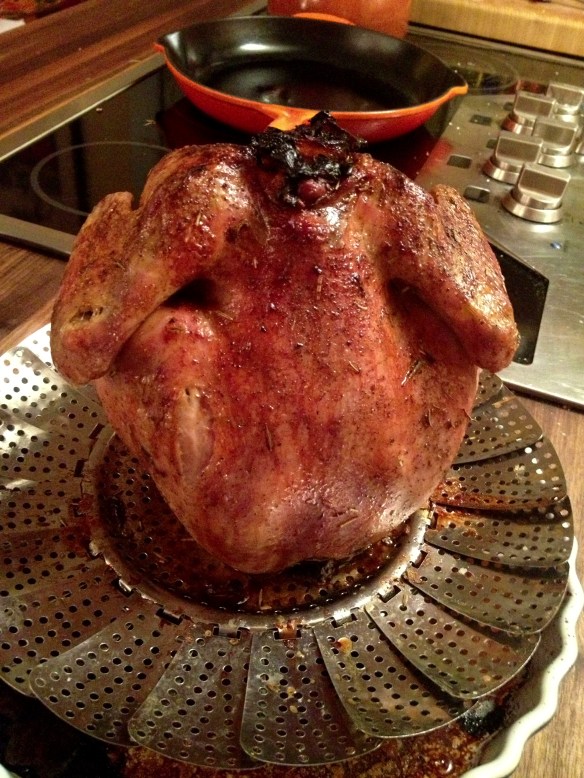
Roasted Chicken

Sunday, 9:30am – After a leisurely hour sipping a latte and catching up on the gossip blogs, it was time to get back to work. Well, first it was time for an omelette made with whatever bits and ends were in the fridge. In this case, it was red onion, red pepper, and feta accompanied by a slice of toasted whole wheat sourdough and arugula and (past their prime) grape seed tomatoes dressed with lemon juice and olive oil.
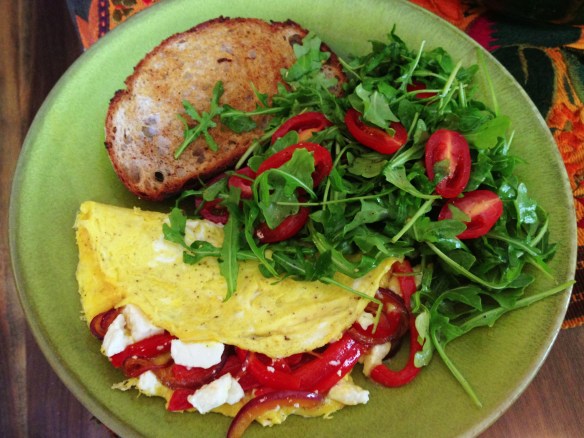
Omelette

Sunday, 10:00am – Just one more task before I got to work. I needed to get some vegetable stock going for those cannellini beans. In went the tops from the previous night’s leeks, a large onion, some garlic, a carrot, a few desultory celery stalks, some dried shiitake mushrooms, the grape seed tomatoes that hadn’t made the cut for breakfast, and some whole black peppercorns.

Vegetable Stock

Sunday, 12:00pm – Having put in a couple of solid hours researching mentions of New Orleans and the Bywater in The New York Times, my vegetable stock had achieved a rich caramel hue. I strained it into a bowl, pressing on the solids to squeeze out any additional broth. I was about to discard the dregs when I remembered the chicken carcass I had drunkenly picked before bed. The bones and the leftover vegetables went back into the pot with whatever was left in the fridge – another onion, some garlic, and a bit more celery. This all simmered for a couple of hours before being strained and placed in the fridge.

A couple of days later (tonight, in fact, when I happened to remember it while rooting for the leftover roast chicken), I pulled the bowl of stock out of the fridge. I skimmed off the fat that had congealed on top and added it to the jelly jar labeled “schmaltz” that occupies a place of honor in the freezer. I then spooned the stock into ice cube trays, which I will transfer to a plastic freezer bag once they are set. (If you haven’t already done so, be sure to check out my tips for making stock.) The warm color and the Jell-o consistency tell me that this is going to be good stuff.

Chicken Jell-o

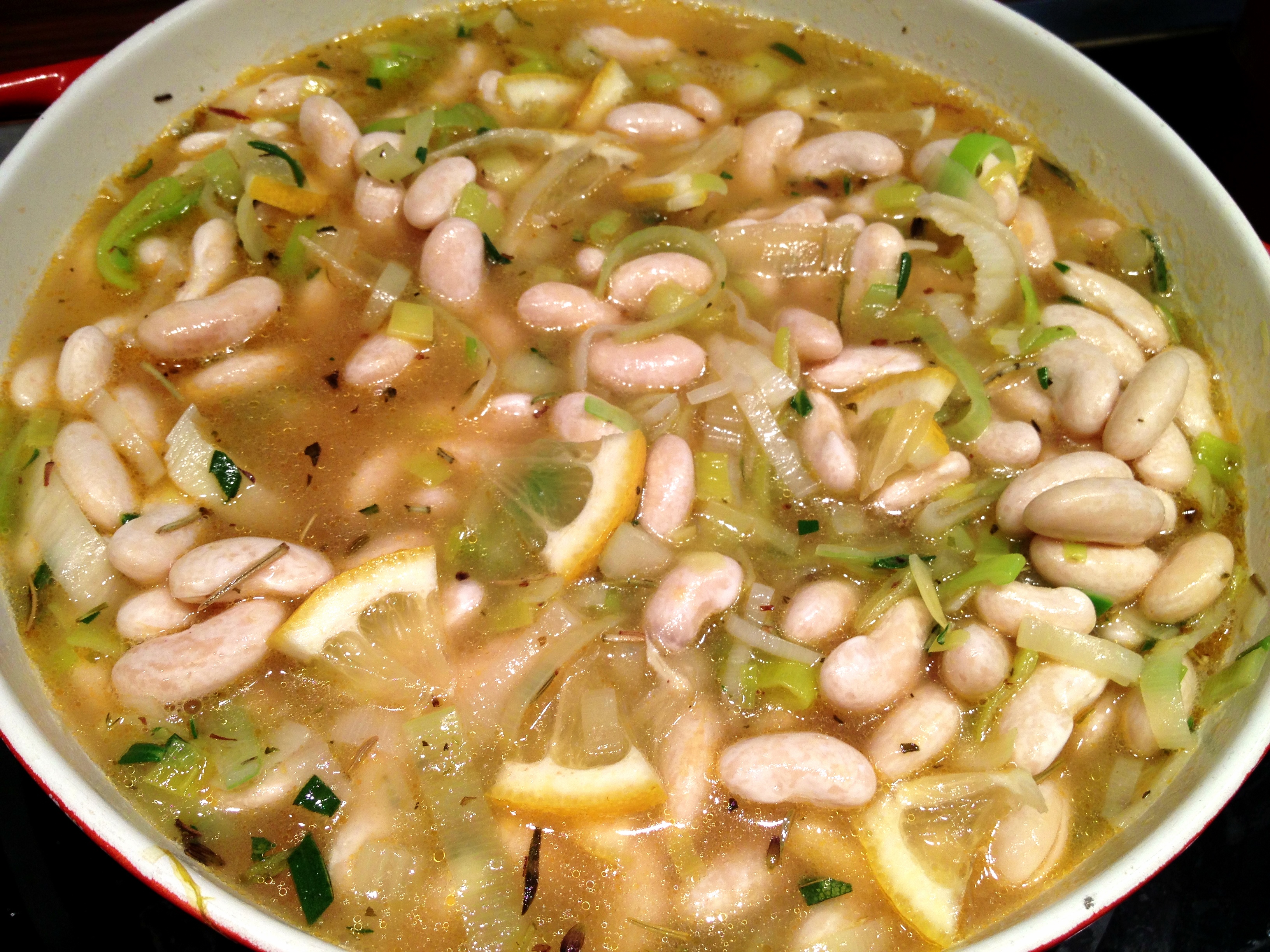
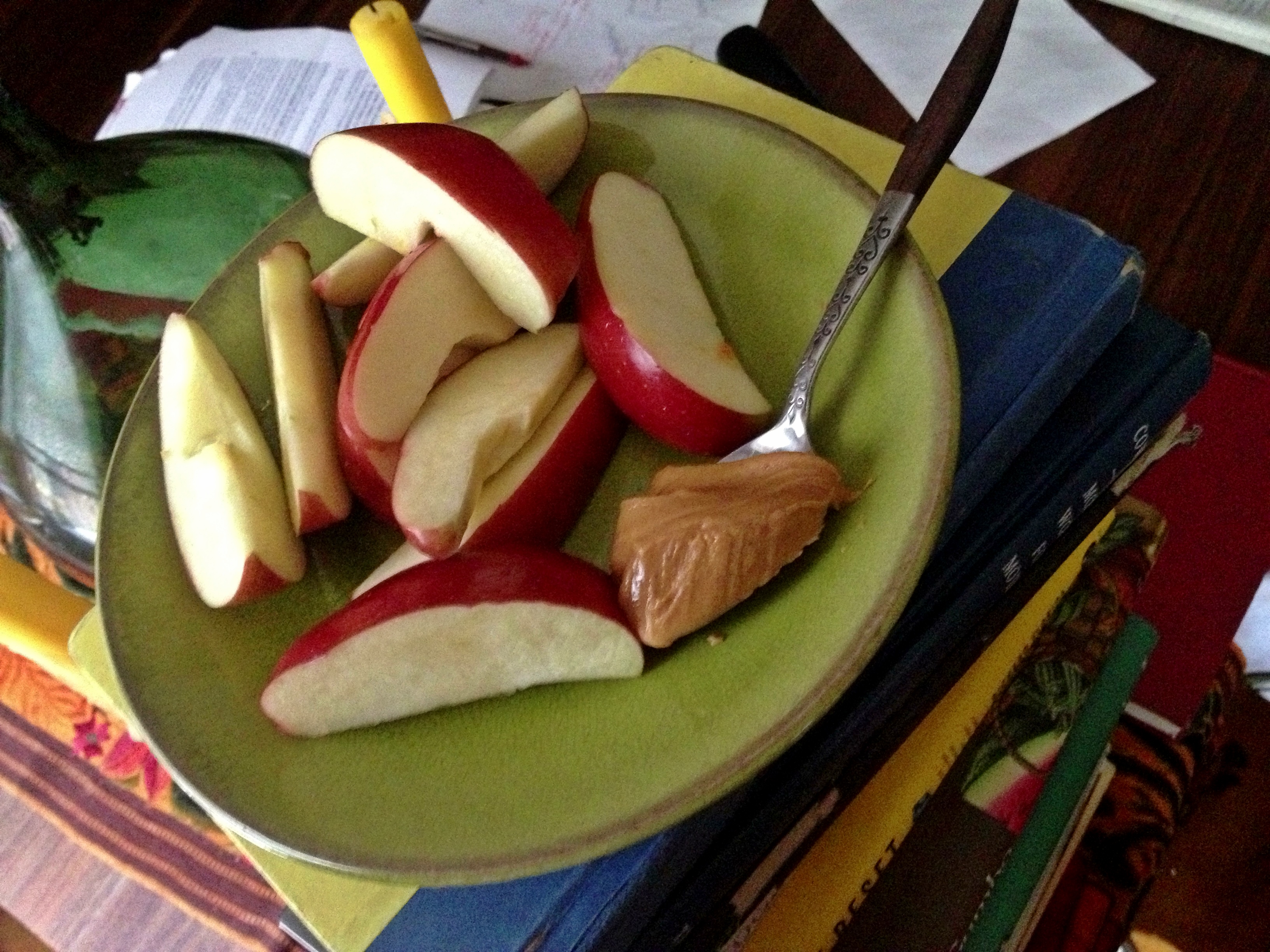
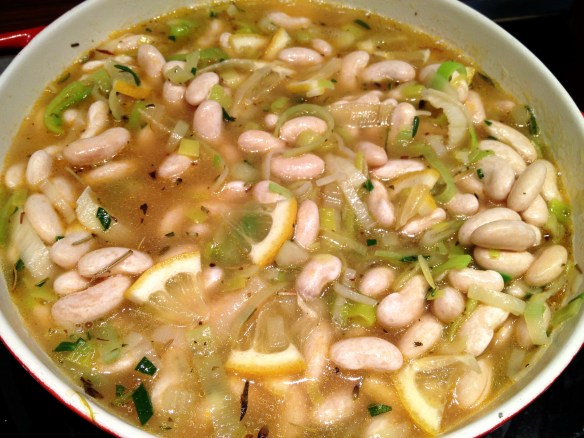
Sunday, 2:30pm – Time to get the cannellini going. I very loosely followed an online recipe that someone had adapted from Sara Forte’s The Sprouted Kitchen, a book I had not previously encountered. (If this recipe is any indication, I’d say it’s worth giving a look.) From what I can recall, my alterations included adding a whole lemon sliced into thin pieces, the rind from a hunk of hard cheese (the ham hock of the vegetarian world), some fresh rosemary, and the aforementioned homemade vegetable stock. It’s safe to assume I took some other liberties.Stewed CannelliniSunday, 3:30pm – Sometimes it’s hard to differentiate between distractedness and hunger. Better safe than sorry, so I cut up an apple, added a spoonful of peanut butter, and got back to the books.
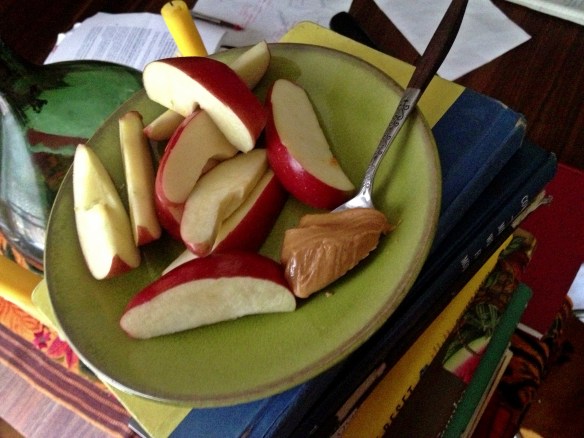
Peanut Butter, Apple and Books

Sunday, 4:00pm – OK, it really was hunger. Next up: peanut butter and raisins. This is one of my all-time favorite snacks, which I picked up from a friend of my parents who lived with us when I was somewhere under the age of four. He and I were the morning people in the household. (I grew out of it.) One of my earliest memories is hanging out in the icy cold kitchen of our farmhouse taking turns scooping spoonfuls of peanut butter and raisins while my parents slumbered upstairs. (Our roommate preferred to add the raisins to–and eat straight from–the jar.)

Peanut Butter and Raisins

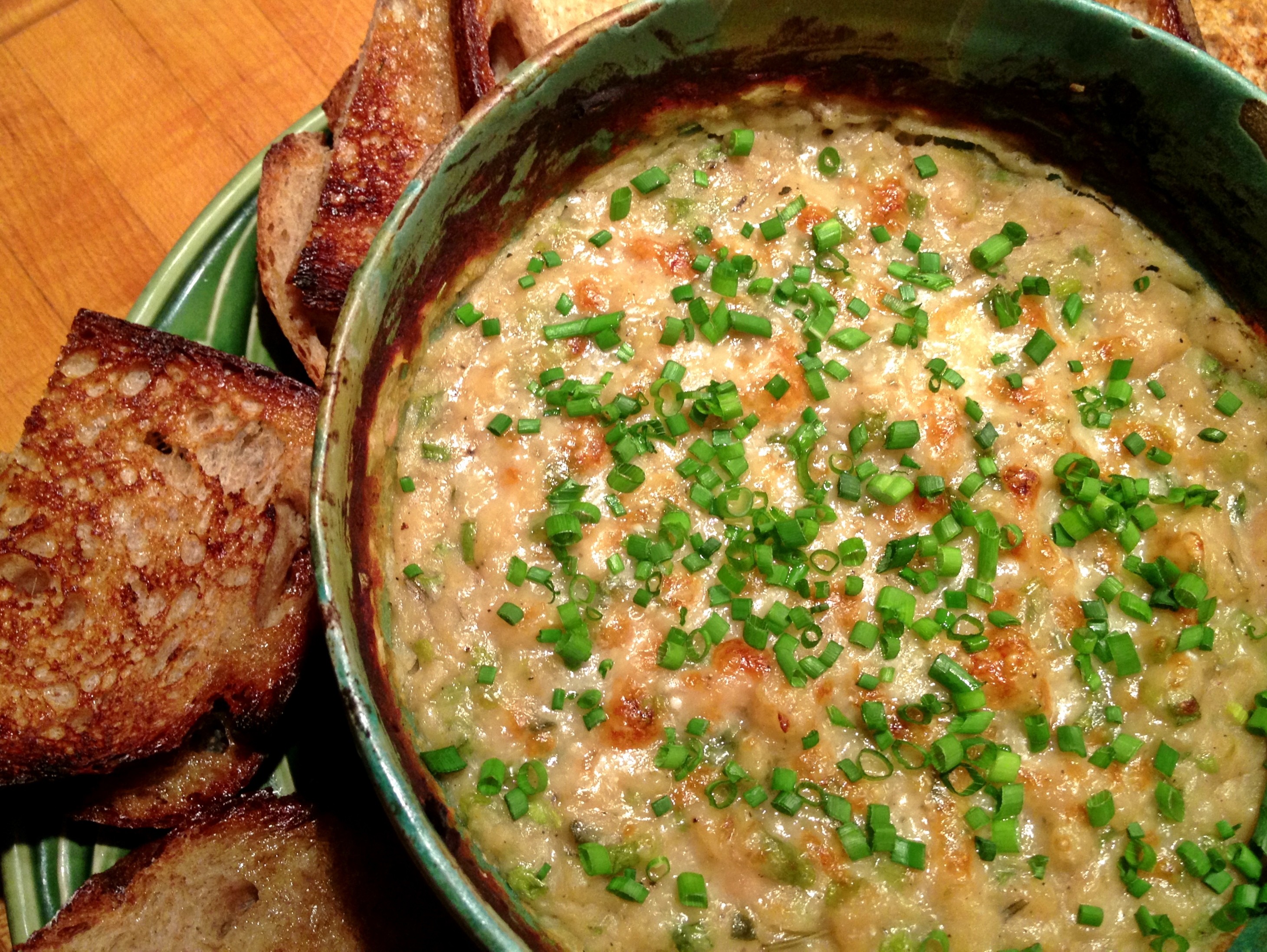
Sunday, 5:30pm – I had an early dinner party with neighbors scheduled, so I scooped about half the beans into a bowl left over from my short-lived ceramics hobby. I mashed them up, folded in shredded parmesan cheese and chives, dusted a bit more cheese on the top, and popped it under the broiler. While the cheese browned, I toasted slices of the whole wheat sourdough in a cast iron skillet with a little olive oil. I garnished the dip with additional chives and headed downstairs for some much-needed human contact.
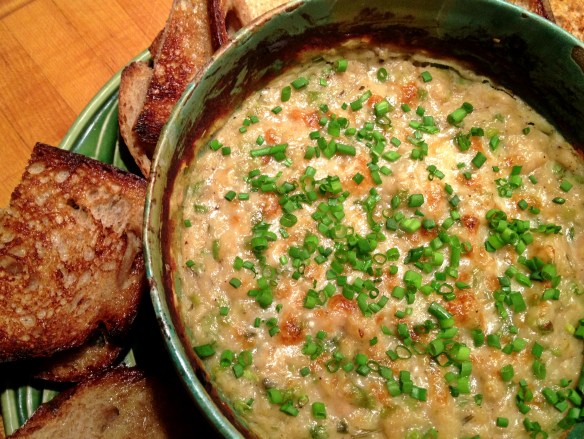

Leek and Cannellini Dip

What the Duck?

On Saturday I took a break from schoolwork to meet up with a friend for brunch (shakshuka for me, a tuna melt for my date) followed by manicures and pedicures (swimming pool blue and fire engine red for me, sunset orange for her).

Afterwards, we swung by the Fort Greene Park Greenmarket where I thought I might pick up something for dinner. I had a guest due at 8:00 and a mountain of reading to get through, so I was looking for a dish that could cook in the oven without much tending. On a whim, I bought a 4.5-pound whole Moulard duck from Hudson Valley Duck Farm.

I arrived home to find my neighbor Chris planting daffodils and pansies in the planters outside our apartment buildings. As we chatted, I set down my heavy tote bag and mentioned the duck inside. Chris, who is no slouch in the cooking department (he had made Momfuku’s Korean pork for a work potluck just the day before), wished me luck, noting that he had never cooked a whole duck. Come to think of it, neither had I.

Back in my apartment, none of the cookbooks included recipes for a whole duck. I flipped through some online recipes, each with more elaborate preparations than the last. It seemed that I should have started preparing my duck a couple of days ago. Then I remembered that the woman working the stand had encouraged me to check out Melissa Clark’s video on The New York Times website. Three and a half minutes later, I was good to go. Clark provides a simple, straightforward technique that you can riff on in an endless number of ways–the ideal recipe, in my book.

I rinsed the bird, hacked off the neck, made small incisions all over the skin (taking care not to nick the flesh), and rubbed it down with salt, pepper, cayenne powder, and some Chinese five-spice powder that I had on hand. Then I set it in the refrigerator uncovered and got down to my reading.Rubbed Duck

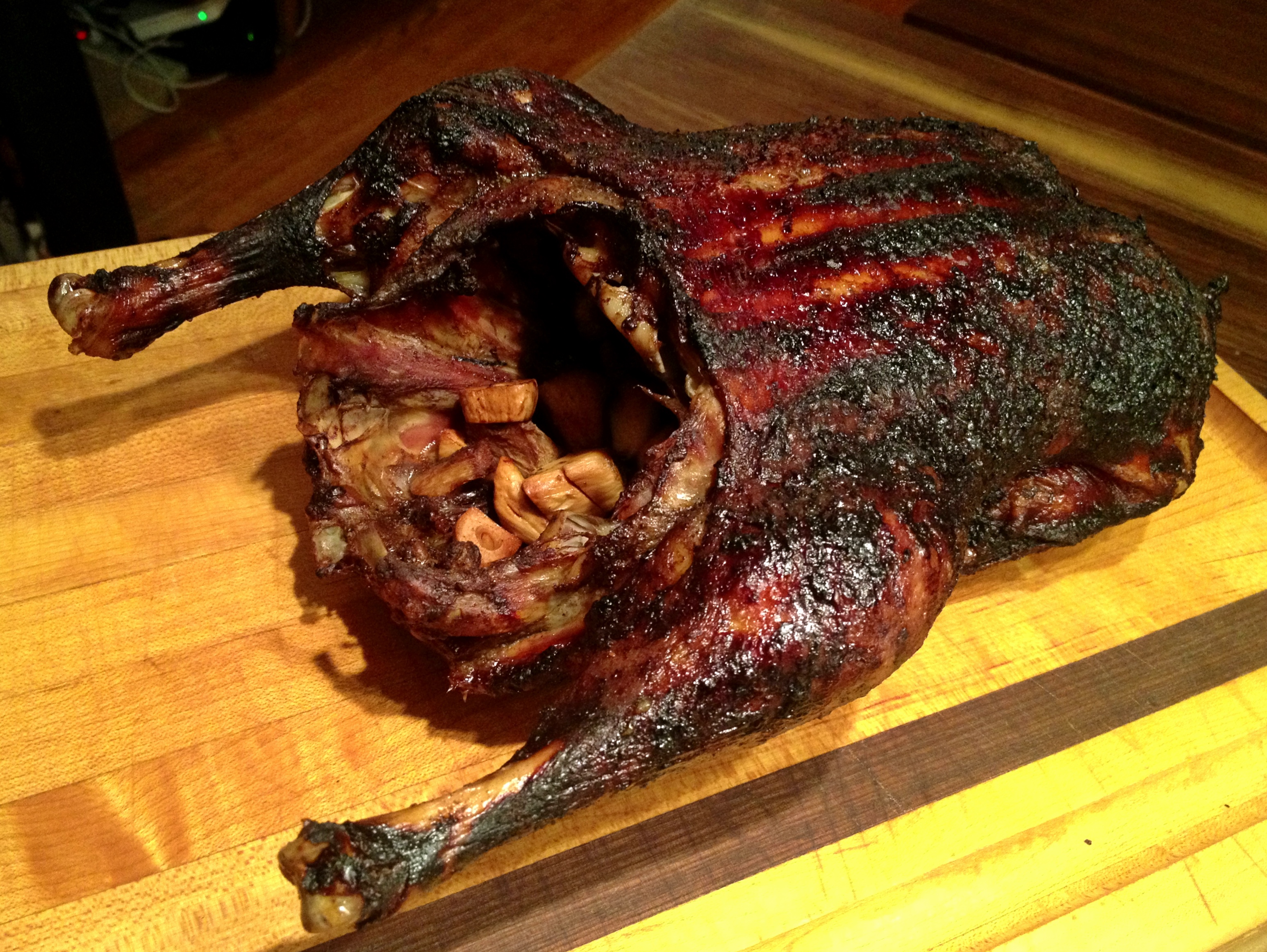
A few hours later, I removed the duck and let it come to room temperature while I preheated the oven. I stuffed the bird with large hunks of fresh ginger and garlic and half a lemon left over from a previous meal. At the last minute, I decided to drizzle the duck with a bit of soy sauce and honey.

Aside from some temperature adjustments and one flip, the duck took care of itself for the next couple of hours. As the heady scent filled my apartment, I realized that none of the wines I had in the house would hold up to the bold flavors, so I ran to the wine shop four blocks away. The shopkeeper could smell the duck and spices on me and, after some consideration, we settled on a Riesling and an Old Vine Zinfandel.

The duck rested draped lightly in tinfoil while I prepared rice and purple kale with leeks, soy sauce and rice wine vinegar.

Five-Spice Duck

The duck was excellent–so much so that, by the time we had finished picking, there was nothing left but the carcass and half a breast.

Duck Carcass

I awoke this morning feeling better than expected given how much wine we drank. I was determined to get as much as I could out of my duck. I was also determined to procrastinate on the day’s schoolwork. I made some coffee and got to work.

First up, I chopped the leftover meat and rendered it in a small skillet over medium heat before adding some finely sliced mustard greens. Once the greens had wilted, I added a bit of soy sauce and rice wine vinegar. Breakfast was served.

Duck with Mustard Greens

Following instructions I found online, I put some water in a small pan, added the excess fat and skin that I had trimmed from the duck prior to roasting, and brought it to a simmer over medium heat. An hour or so later, I poured the concoction through a fine mesh sieve and into a gravy separator which I stuck it in the fridge. Once the fat had congealed, I poured off the residual water and was left with some truly glorious looking duck fat. I imagine I’ll use it to pan fry some potatoes and as the foundation for a roux.

Duck Fat - After

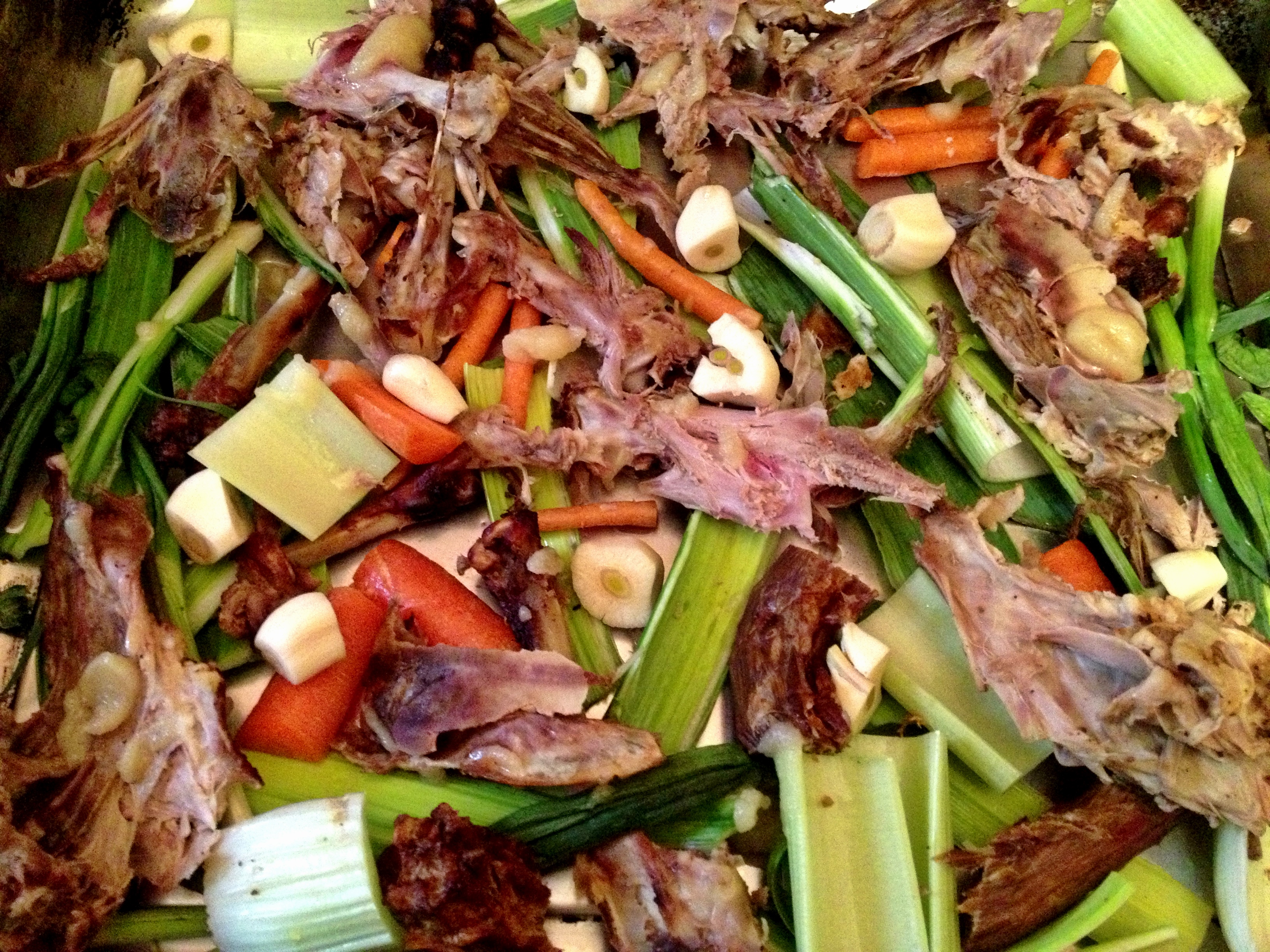
While my duck fat rendered, I preheated the oven to 400. I broke the duck carcass into as many pieces as I could manage (really must get a cleaver) and added it to a roasting pan along with the trimmings from last night’s leeks, a bunch of bedraggled scallions I found in the crisper, a few carrots, some celery, and some roughly chopped garlic. I drizzled this with a tablespoon or so of duck fat I had spooned out of the roasting pan last night and popped it in the oven for an hour.

Duck Stock Fixings

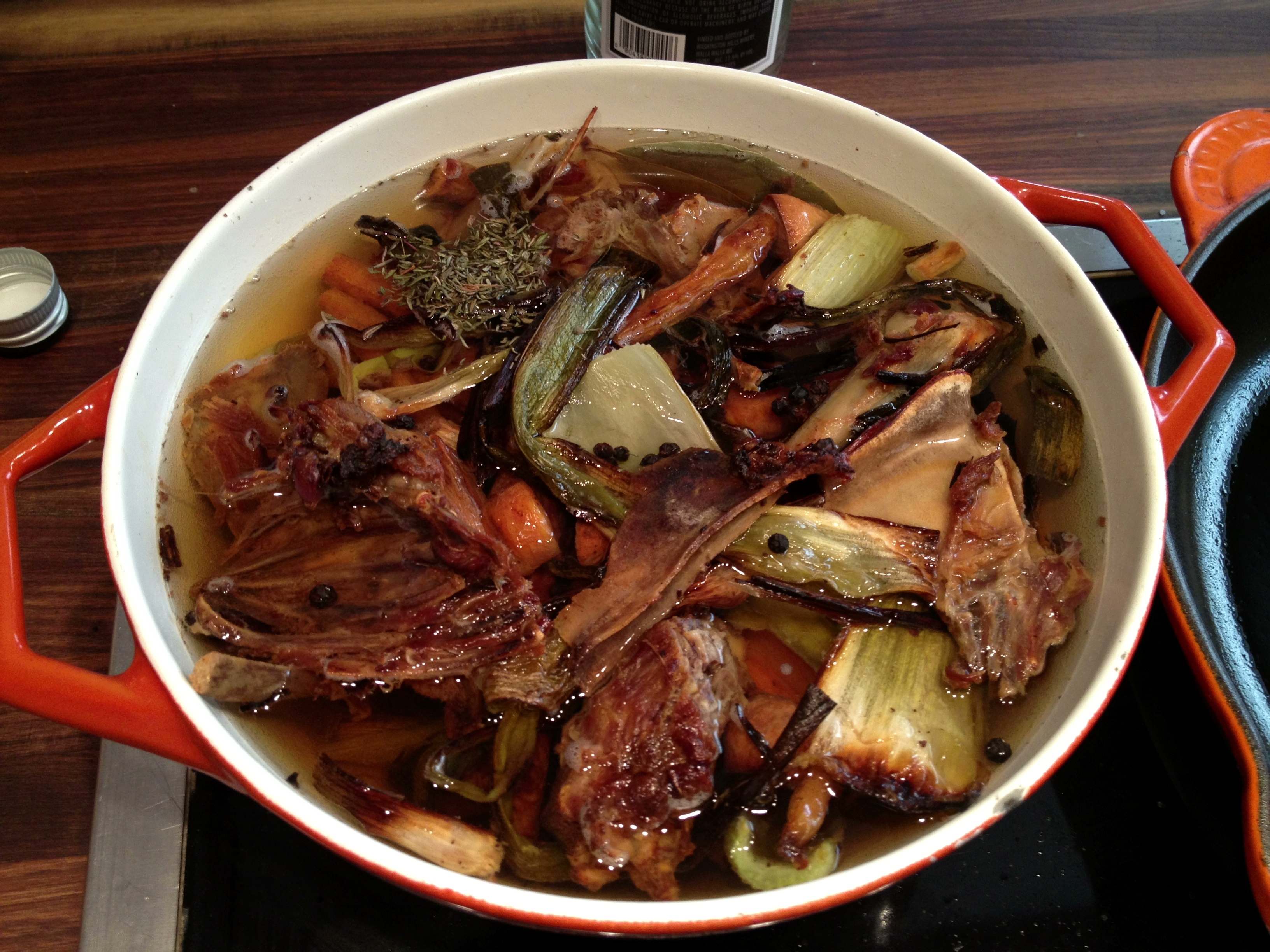
The roasted bones and vegetables then went into a medium-sized pot along with a bay leaf, several whole black peppercorns, a pinch of dried thyme, and enough water to cover. This simmered over medium-low heat while I continued studying.

Duck Stock - Before

After a couple of hours, the liquid was a rich brown color and my apartment smelled unbelievable.

Duck Stock - After

I strained the broth into a bowl and stuck it in the fridge. After an hour, I scraped off the fat that had accumulated on the surface and poured the stock through a fine mesh sieve into a container that I stuck in the freezer. I see some killer gumbo in my future.

Pesto Redux

I find myself working from home today while trying to fend off an illness whose most notable symptom is the sensation that there is a vise across the bridge of my nose. I left work early yesterday and it was all I could do to swing by the drugstore for some (to be used for legal purposes only) decongestants.

I rolled out of bed this morning, made some coffee, and got to work. By 12:30 I had sent 43 emails and held two conference calls. (Remember when sick days were a thing?) The vise was tightening. I was hungry and I had failed to stock the fridge. It was chilly and gray and I had no interest in donning pants. I was going to have to make do with what I had.

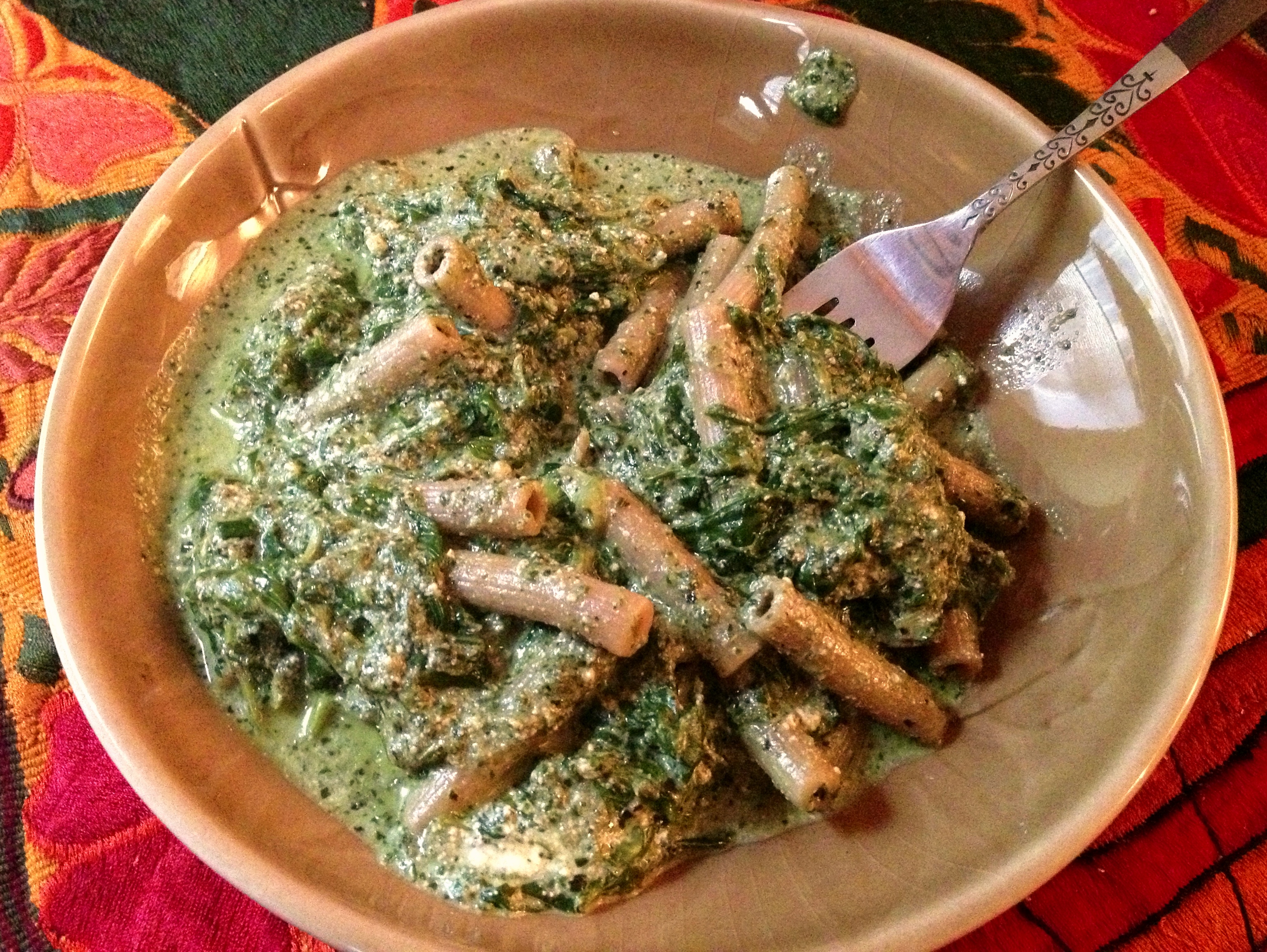
There was some kale from my CSA, a quarter cup of ricotta cheese that seemed to still be good, and an open bag of whole wheat penne. While I am not above making this a meal, it seemed a little sad. Then I remembered that rosemary-basil pesto I had frozen during the last gasps of summer and it all came together. Twenty minutes later, I was sitting down to a delicious lunch – and my next conference call.

Image